
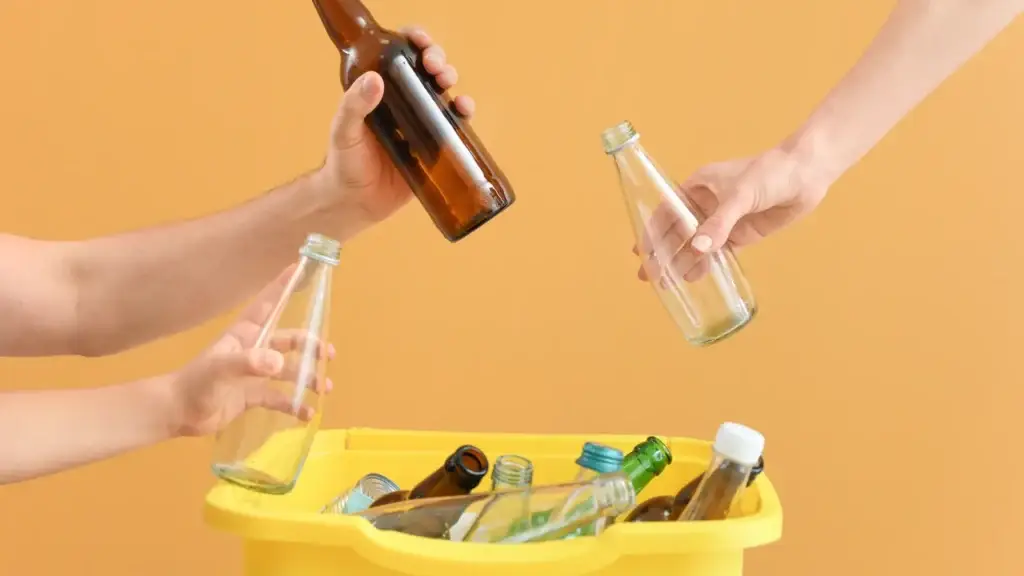
Quick answer: Yellow lids usually mean recycling, red lids usually mean general waste and green lids usually mean garden organics, sometimes with food scraps. Lid colours and accepted items differ by state and council, so the sticker on your bin and your council’s website are the rules that apply at your address.
If you are clearing a rental and have junk your council’s bins will not take, rubbish removal for rental clear-outs through the Urgent Pro network can take it away. Providers on the network refuse hazardous items such as paint, chemicals and batteries, so those need a separate route (covered below).
The yellow lid bin: recycling
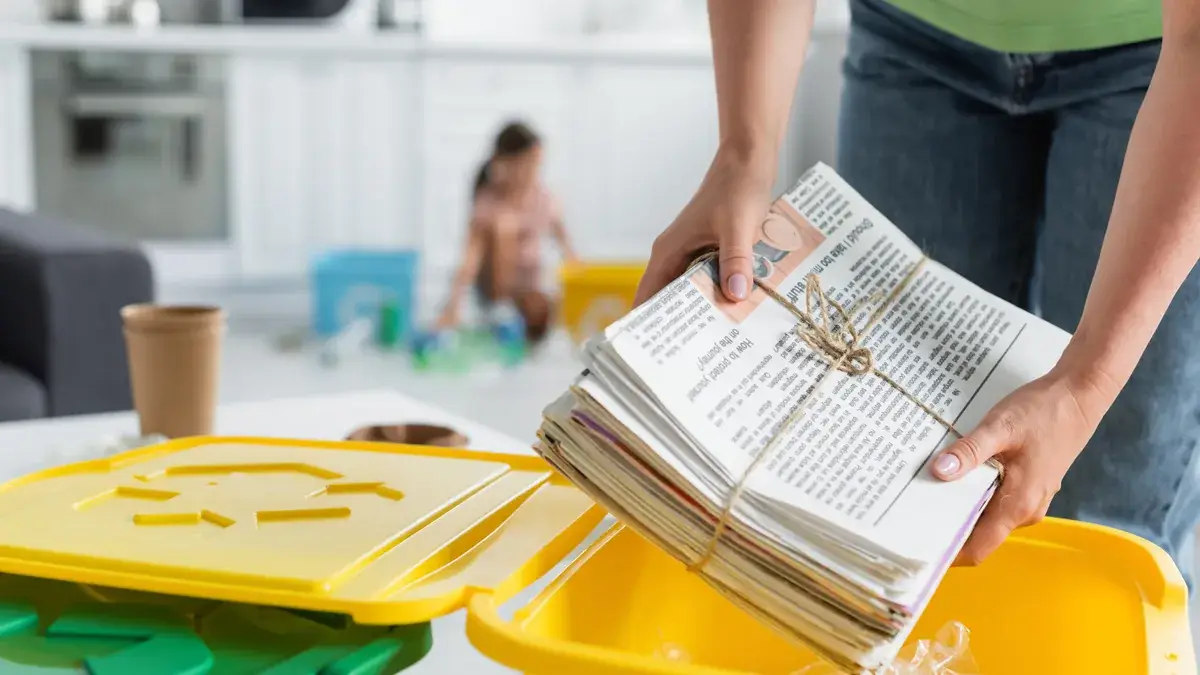
A yellow lid usually means mixed recycling. Everything goes in the one bin, and the contents are sorted later at a material recovery facility.
Councils publish their own lists. As one example, Brisbane City Council’s guide to what goes in each bin accepts paper, cardboard, firm plastics, glass containers and metal containers in the yellow bin. It says to leave lids on empty bottles, containers and jars, because lids that are not attached are too small to be processed and go to landfill. It also says not to put recycling in a plastic bag.
The same Brisbane list keeps polystyrene, soft plastics, plastic bags, drinking glasses, Pyrex-style containers and light bulbs out of the yellow bin. Other councils have different lists, and the lid sticker on your bin is the one that applies to you.
For single items, Brisbane City Council also runs an item search tool that says how a specific item should be disposed of. It lists empty aerosol cans, aluminium foil, aluminium trays, butcher’s paper and pizza boxes for the yellow bin. It lists baking paper, cling wrap, bubble wrap and waxed or plasticised cardboard for the red bin. Check whether your council has a similar lookup.
Light globes are not recycling-bin items in Brisbane, and what to do with old light globes is covered separately. Electronics have their own national scheme, and where old electronics should go explains it.
The red lid bin: general waste
A red lid usually means general waste, the bin for items with no recycling or organics pathway. Brisbane City Council lists soft plastics, food waste, wrappers, nappies and general waste for its red bin.
Some items are not safe in any kerbside bin. Brisbane City Council says asbestos, batteries, gas bottles, chemicals and paint tins do not go in the red bin. According to B-cycle, batteries in household bins can be crushed or damaged during collection and processing, causing sparks and fires, so where used batteries should go is worth reading before your next clear-out. Check your council’s website for the right pathway for the other items.
The green lid bin: garden organics or FOGO
A green lid usually means garden organics. Some councils also take food scraps in the green bin (food organics and garden organics, or FOGO), and some do not, so check before you add food.
Brisbane City Council’s green bin takes grass clippings, palm fronds, garden cuttings, weeds, flowers, small plants, leaves, loose bark, small branches and bamboo plants. It does not take food scraps, animal waste, loose dirt or fill, treated timber, general waste or recycling. Garden waste goes in loose, not in a plastic bag.
If a clear-out produces more garden waste than the bin holds, private green waste collection is an alternative to making several trips.
Why sorting matters
The National waste and resource recovery report 2026 says about 1.9 million tonnes of mixed recyclables from households and businesses were sorted at material recovery facilities, and about 20 per cent of that material was unsuitable and was disposed of in landfill.
The simplest thing a household can do is sort before the bin goes out: check the lid sticker, keep the wrong items out, and take hazardous items to the right place.
What to do with items that fit no bin
Bulky items that do not fit any kerbside bin may suit a council collection, and when to use a hard rubbish collection explains how those work. For a larger clear-out, what a skip bin will accept lists what skips take and refuse.
Weighing a skip against a pickup is a separate decision, and choosing between a skip and a pickup compares the two.
FAQs
What goes in the yellow-lid bin?
Usually paper, cardboard, firm plastics, glass containers and metal containers. Brisbane City Council’s yellow bin takes those five types and refuses polystyrene, soft plastics, plastic bags, drinking glasses, Pyrex-style containers and light bulbs. Other councils differ, so check your lid sticker.
What goes in the red bin?
Usually general waste with no recycling or organics pathway. In Brisbane that includes soft plastics, food waste, wrappers and nappies. Asbestos, batteries, gas bottles, chemicals and paint do not go in the red bin and need a separate disposal route.
What goes in the green bin?
Usually garden waste such as grass clippings, leaves, prunings and weeds. Some councils also take food scraps (FOGO), but Brisbane’s green bin does not. Treated timber and loose dirt are not accepted in Brisbane’s green bin. Check your council before adding anything else.
Why was my bin not collected?
Check your council’s website for your collection day and for how to report a missed collection. Brisbane City Council, for example, has an app that tracks the collection day for an address.
Why do the rules differ between councils?
Councils set their own rules for what goes in each bin, so lid colours and accepted items differ by state and council. The bin lid sticker and your council’s website are the rules that apply at your address.
Can pizza boxes go in the yellow bin?
In Brisbane, yes: the council lists pizza boxes under the yellow bin. Other councils differ, so check your council’s list.