
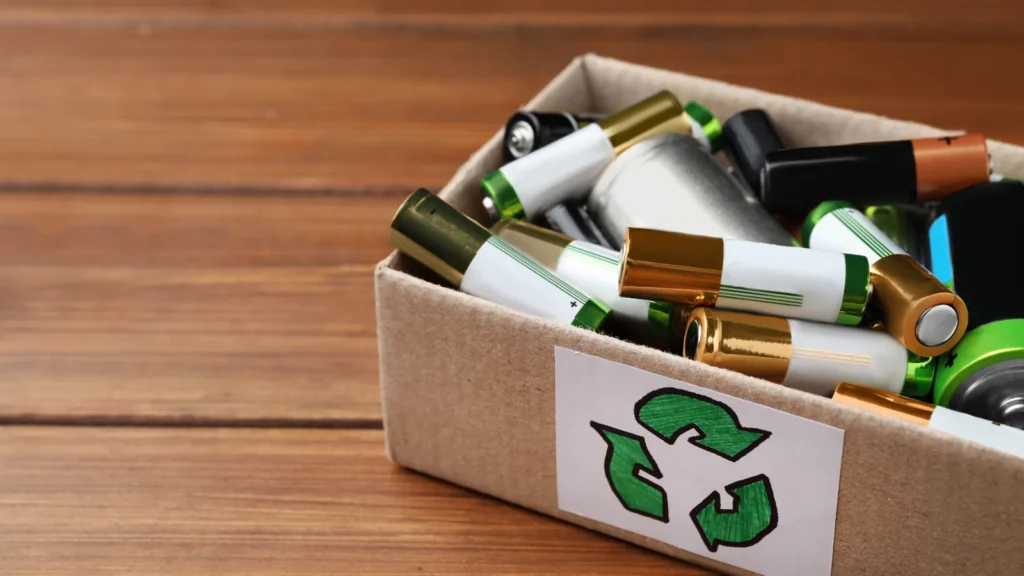
Used batteries should never go in a household rubbish or recycling bin. Tape the terminals with clear sticky tape and take them to a B-cycle drop-off point, which is free, or to the scheme that handles your battery type. Car batteries, phone batteries, laptop batteries and damaged batteries each have their own pathway.
Batteries also cannot go out with a rubbish removal. Providers who take rubbish removal bookings through Urgent Pro refuse batteries of every type, so set them aside before a clearout and drop them off separately.
Why batteries do not belong in the bin
According to B-cycle, batteries in household bins can be crushed or damaged during collection and processing, causing sparks and fires. In landfill, they can corrode over time and release hazardous materials into soil and waterways.
Small batteries are also a risk at home. B-cycle advises keeping batteries away from children, especially small batteries that can be swallowed, such as button batteries.
The B-cycle scheme
B-cycle is Australia’s official battery recycling scheme. It is administered by the Battery Stewardship Council and authorised by the Australian Competition and Consumer Commission (ACCC). Dropping off used batteries is free for households and businesses.
According to B-cycle, 95 per cent of Australians live within a 15-minute drive of a drop-off point. The drop-off locator on the B-cycle website finds the nearest one by postcode.
There is a 5 kg drop-off limit. If you have more than 1 kg of batteries, call the drop-off point first to make sure it can accept the quantity and type.
Officeworks no longer takes batteries. Officeworks says it ceased battery collection in store from February 2024 and directs customers to the B-cycle website to find a drop-off point. Its Bring it Back program still takes pens and markers, ink and toner cartridges, laptops, computers, tablets and technology accessories.
What B-cycle accepts, and where the rest goes
B-cycle accepts small, loose and easily removable batteries. Several other battery types have their own stewardship schemes.
| Battery type | B-cycle drop-off | Where it goes if not accepted |
|---|---|---|
| AA, AAA, C, D, 9V, 6V and button batteries | Yes | |
| Handheld rechargeable batteries, all chemistry types, up to 5 kg | Yes | |
| Power banks | Yes | |
| Easily removable batteries (power tools, digital cameras, hearing aids) | Yes | |
| E-bike and e-scooter batteries | Yes | |
| Mobile phone batteries | No | MobileMuster drop-off point |
| Laptop and TV batteries | No | NTCRS drop-off point |
| Lead acid batteries | No | A used lead acid battery recycler listed by ABRI |
| Exit lighting batteries | No | ExitCycle drop-off point |
| Vapes, solar panel, home energy storage and caravan batteries | No | Your local council or transfer station |
| Batteries embedded in devices | No | Your local council or transfer station |
| Electric vehicle batteries | No | Not part of the scheme yet |
The full, current list is on B-cycle’s accepted battery types page.
Phones, laptops and other devices are e-waste as well as batteries. The rules for disposing of e-waste cover televisions, computers and other electronic items.
Car and lead-acid batteries
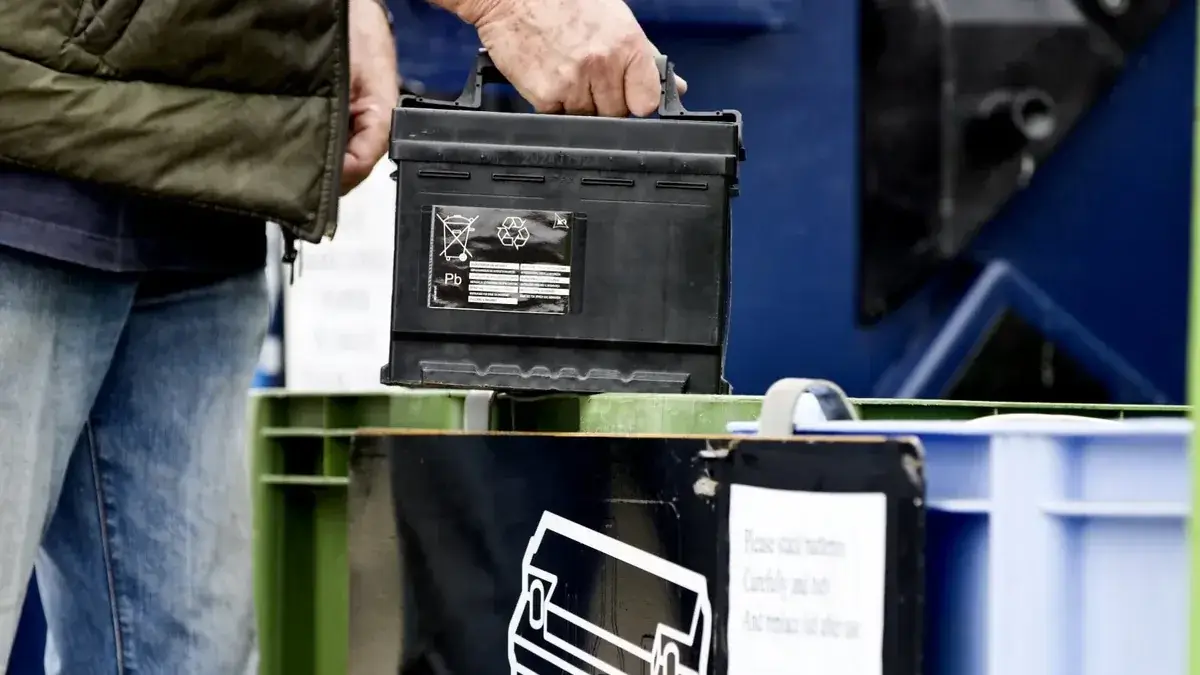
Lead acid batteries from cars, motorbikes and similar equipment are not accepted at B-cycle drop-off points. B-cycle points to ABRI, the Australian Battery Recycling Initiative, to find a used lead acid battery recycler. Your local council or transfer station can also tell you where to take one.
A car battery should never go in a household bin, and rubbish removal providers on the Urgent Pro network will not take one as part of a removal.
Lithium-ion, damaged and embedded batteries
Lithium-ion batteries power phones, laptops, power tools, power banks, e-bikes and e-scooters. Loose or easily removable ones, including power banks and e-bike and e-scooter batteries, go to a B-cycle drop-off point. Phone and laptop batteries go to MobileMuster and NTCRS.
Batteries embedded in a device, meaning built in and not designed to be removed, are not accepted by B-cycle. Contact your local council or transfer station to find out where the device can be safely recycled.
Badly damaged, swollen or bulging batteries can be a fire risk. B-cycle asks that they are not brought to a drop-off point or put in a household bin. Place the battery in a fire-resistant container, such as a non-airtight glass container, and contact your local council or transfer station to find out whether it can accept damaged batteries. If they cannot help, a B-cycle accredited collector can advise on safe disposal.
Light globes are another household item with their own disposal rules. Disposing of light globes and tubes covers LEDs, CFLs and fluorescent tubes.
Storing used batteries before drop-off
Most households collect a few used batteries before making a trip to a drop-off point. B-cycle’s storage advice:
- Tape the terminals with clear sticky tape. AA-type batteries have terminals at both ends, 9V batteries have both terminals at one end, and button batteries should be covered in clear tape on all sides.
- Store them in a glass container that is not airtight, as pressure can build up.
- Do not use a metal container or store batteries with metal objects, as they can spark.
- Keep the container in a cool, dry place away from heat sources, and out of reach of children.
- Do not put batteries in paper bags.
If a battery is leaking but otherwise looks normal, handle it with gloves, place it in a zip-lock plastic bag and take it to a B-cycle drop-off point. Dispose of the gloves and wash your hands.
B-cycle’s battery safety guide shows how to tape each battery type.
Clearing a property with old batteries
Old batteries often turn up in drawers and garages during a move-out or a clearout. Keep them out of the rubbish pile and the skip, tape them, and take them to a drop-off point before the rubbish is collected.
For bulky household items, how kerbside hard rubbish collections work explains what councils collect from the kerb and how to book it.
FAQs
Can I put batteries in the bin?
No. B-cycle says used batteries should never go in a household rubbish or recycling bin. They can be crushed during collection and processing, causing sparks and fires, and in landfill they can release hazardous materials into soil and waterways. Tape the terminals and take them to a B-cycle drop-off point.
Where can I drop off old batteries?
Use the drop-off locator on the B-cycle website and search by postcode. Dropping off is free. If you have more than 1 kg of batteries, call the drop-off point first. Officeworks stopped collecting batteries in store in February 2024.
What does B-cycle accept?
B-cycle accepts small, loose and easily removable batteries, including AA, AAA, C, D, 9V, 6V and button batteries, rechargeable batteries, power banks, and removable batteries from power tools, digital cameras and hearing aids. It also takes e-bike and e-scooter batteries. Phone batteries go to MobileMuster and laptop batteries go to NTCRS.
How do I dispose of a car battery?
Lead acid car batteries are not accepted at B-cycle drop-off points. Find a used lead acid battery recycler through ABRI, or ask your local council or transfer station. Never put a car battery in a household bin.
Why are batteries a fire risk in bins?
If battery terminals touch, they can spark and catch fire. In a rubbish or recycling bin, batteries can also be crushed or damaged during collection and processing, which causes sparks and fires. Taping the terminals with clear sticky tape reduces the risk.
What should I do with a leaking or damaged battery?
A leaking battery that otherwise looks normal can go in a zip-lock bag to a B-cycle drop-off point; wear gloves and wash your hands afterwards. A badly damaged, swollen or bulging battery should not go to a drop-off point. Put it in a fire-resistant, non-airtight glass container and contact your local council or transfer station.