
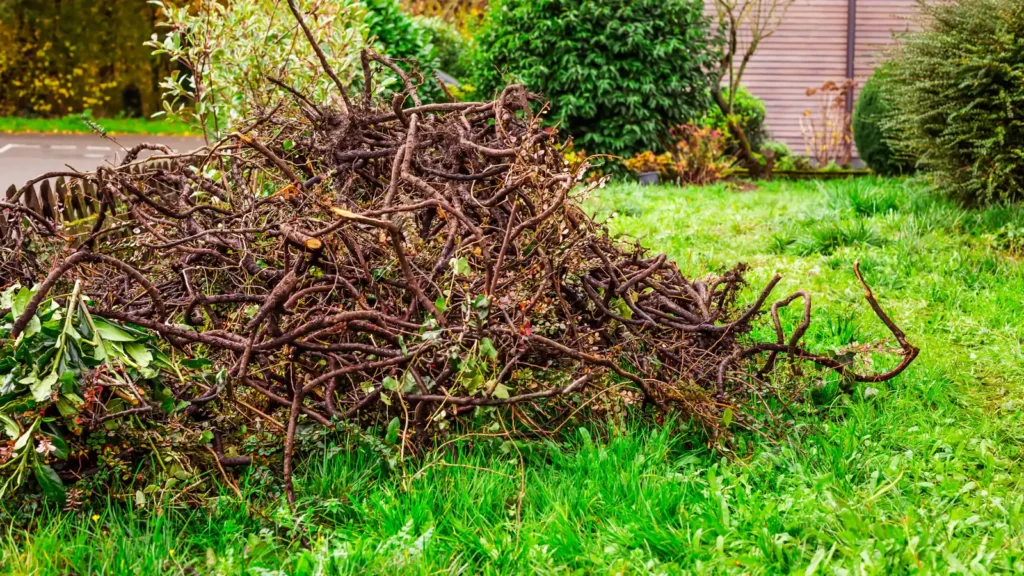
A clean load of garden organics (prunings, clippings and leaves) generally costs less to dispose of than mixed waste, because it can go to a composting facility instead of landfill. A single contaminant, such as a bag of general waste, can see the whole load treated as mixed waste, which costs more to dispose of.
It is worthwhile first assessing what your local council already offers, what a ‘clean load’ is and how to correctly measure your load, before ringing around for collections.
What councils offer for free
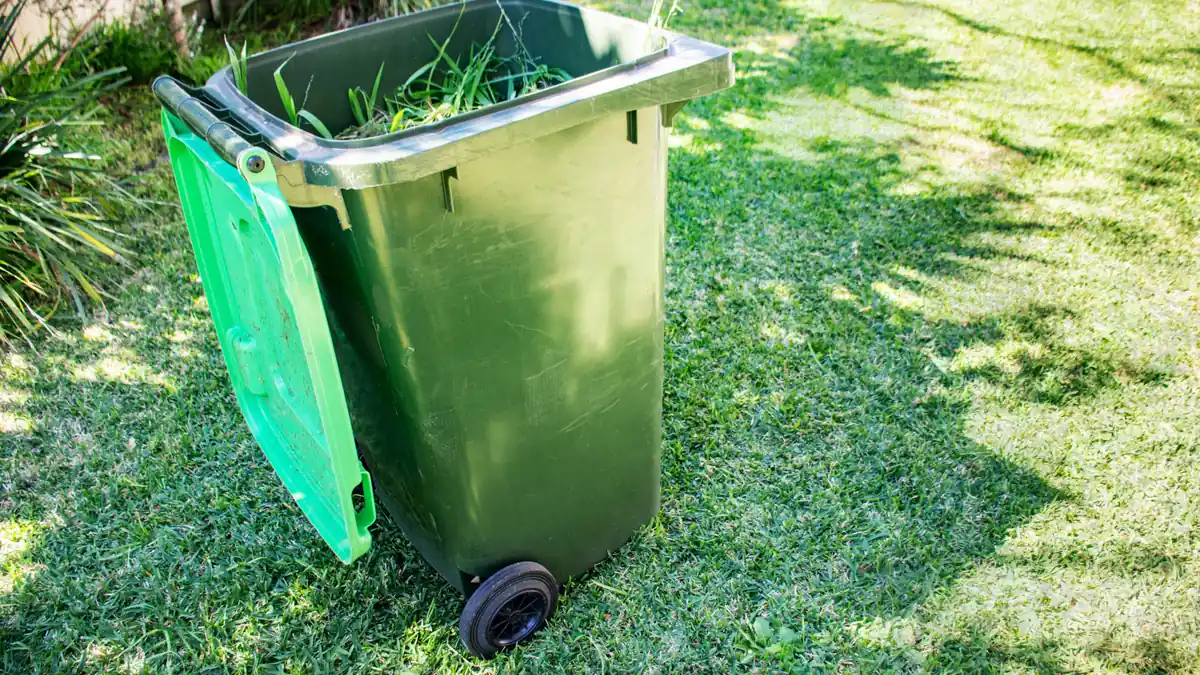
Before paying for a collection, check what your council already offers for garden waste. Some of it may already be covered by your rates.
Green bin
Check whether your council runs a green-lid bin for garden waste, how often it is collected, and whether it is included in your rates or charged separately. The green bin is meant for routine garden waste such as grass clippings, small branches and leaves.
The green bin only holds so much. If the bin is full and the waste has a firm deadline, booked green waste removal through Urgent Pro gives you a written, GST-inclusive quote before any work begins.
Trip vouchers, transfer stations and drop-offs
Your council may run a transfer station or resource recovery centre where residents can drop off garden waste outside the regular bin collection. It suits a load too big for the green bin but too small to justify a booked collection, as long as you can transport it yourself.
Before you load up, check the site’s opening hours and fees, whether your council offers tip vouchers, what identification the site needs, and whether it takes the material you have. Arriving with the wrong material means a wasted trip.
Ask your council whether its bulk kerbside collection takes green waste, and do not put green waste on the nature strip until a collection is confirmed. If it does take green waste, ask about its rules, such as a maximum branch length, stacking rather than bagging, and when the pile can go out.
What determines if a load is clean, and why a clean load costs less
A load is assessed as a whole at the gate. A load of clean prunings with a single bag of household rubbish at the top is a mixed load. A composting facility will not sort your load for you. The difference between a clean and a contaminated load is the route the material takes for disposal, and the gate rate charged for it.
For a booked collection, operators who run clean loads often know the organics rate at their composting facility and can quote against it with confidence. A vague enquiry will attract a contamination buffer, because the operator has no way of determining for sure what they are quoting against. A photo of a pile will remove that buffer. Send two photos, one of the pile and one of the access route from the pile to the street, and include something of known size in frame so the scale reads correctly.
Your council’s green bin guide lists what it takes and what it refuses. Check it before adding plastic bags (including those labelled compostable), soil, rocks, treated timber or bamboo. For a booked collection, branches under 10cm in diameter are accepted as green waste.
Palm fronds
Palm fronds are bulky and hard to cut down. Check your council’s bin guide before putting them in the green bin. If it does not take them, the options are a resource recovery centre, a green waste skip or a booked removal.
Estimating your volume before calling
It is easy to underestimate the cubic metres in a garden pile. Calling for a small truck means an expensive second trip. Air space in a pile of loose prunings and branches increases the volume considerably. Similarly, cutting material into lengths and stacking in one direction takes up less space than loose material. Time spent cutting and stacking before a collection can noticeably reduce the volume on a larger clear-out.
For scale, one 240-litre wheelie bin holds 0.24 cubic metres.
You can work out the volume of a pile by multiplying length x width x average height (in metres). In the case of an irregular heap, use the average height and not the greatest height.
Protect yourself from an unprepared truck and get a more accurate quote by letting the operator know the measured volume in cubic metres, the type of material and if it has been cut.
When a booked collection makes sense
You can use a booked green waste removal to take care of your green waste if transporting it yourself is not a practical option, or if the volume exceeds your wheelie bin and the drop-off facilities at the council tip. Urgent Pro connects you with verified independent rubbish removal providers.
Green waste bookings start from $220 (GST inclusive) for smaller volumes. Prices are indicative and confirmed in your written quote. The cost scales with volume, access and how clean the load is. Bookings are priced higher if the load is mixed with other rubbish. A load in the driveway or at the kerb is the most convenient for the provider. Loads in the backyard or behind a narrow side gate take more time to load and transport. This is also the case for loads on streets where large trucks cannot park. These loads take more time and are quoted a bit higher. If you are calling for a price quote, please send a picture of the access route to the load. This detail is most often missing from quotes, and causes the biggest variation in price.
Full pricing and detail for all waste removal bookings is available on the Urgent Pro indicative price list.
Skip bin or a booked team: which works best for you?
A green waste skip bin works well when you need to complete a job over a couple of days. You can load the bin at your own pace and it stays on your property during the entire process. If you place the bin on the public road or footpath, check with your council whether you need a permit. A bin left open on a nature strip for a week creates a real risk of contamination. One bag of household waste added to the bin overnight can ruin the entire load.
A booked team works best when you have a pile of green waste that is cut and ready to go. A collection resolves the job in one visit, and there is no risk of contamination from a bin left in a public space. A skip is more flexible when the load is staged over days. If the pile is ready, a booked collection is faster and more convenient.
What the Urgent Pro rubbish removal warranty covers is set out on its own page.
How organics collection is changing in Australia
The collection of household organics is changing, with more councils offering a food organics and garden organics (FOGO) bin. In New South Wales, the NSW Parliament has passed legislation requiring councils to provide a FOGO service by 1 July 2030 to every household that receives a red-lid general waste collection. Supermarkets, some institutions and hospitality businesses must separate food organics in stages from 1 July 2026, starting with the largest generators.
This means more Australian households will have access to an organics bin over the coming years. Your council’s website lists what its organics bin accepts.
FAQs
How much does green waste removal cost?
A green waste removal job booked through Urgent Pro starts from $220 (GST inclusive). The price depends on volume, how clean the load is and access, and is confirmed in your written quote. Clean green waste generally costs less to dispose of than general waste, because it can go to a composting facility rather than landfill.
Will the council take green waste for free?
It depends on your council. Check whether your rates include a green-lid bin, whether the local transfer station or resource recovery centre takes garden waste free or with a tip voucher, and whether a bulk green waste collection is offered. Your local council can confirm.
Does mixing rubbish with green waste increase the cost?
Yes. A load with general rubbish, soil, and treated timber increases the cost, since the load is considered mixed waste. Mixed waste goes to landfill. A clean green load of the same volume generally costs less to dispose of, because it can go to a composting facility. A load is assessed as a whole when it reaches the facility.
Are palm fronds accepted in the green bin?
It depends on your council. Check your council’s bin guide first, because a bin that is not collected stays full until the next collection.
Can green waste go in a skip bin?
Yes, if you hire a skip meant for green waste. Make sure to verify with the operator that green waste is acceptable and that they use a legitimate composting facility. A green waste skip left open on a nature strip creates a risk of contamination from household rubbish being added to the bin.
What can go in a green bin?
Grass clippings, leaves, flowers, plants and small branches are typical green bin contents, but each council sets its own list. Check your council’s green bin guide for what it accepts and refuses.