
Damage Claims Policy. Master Document
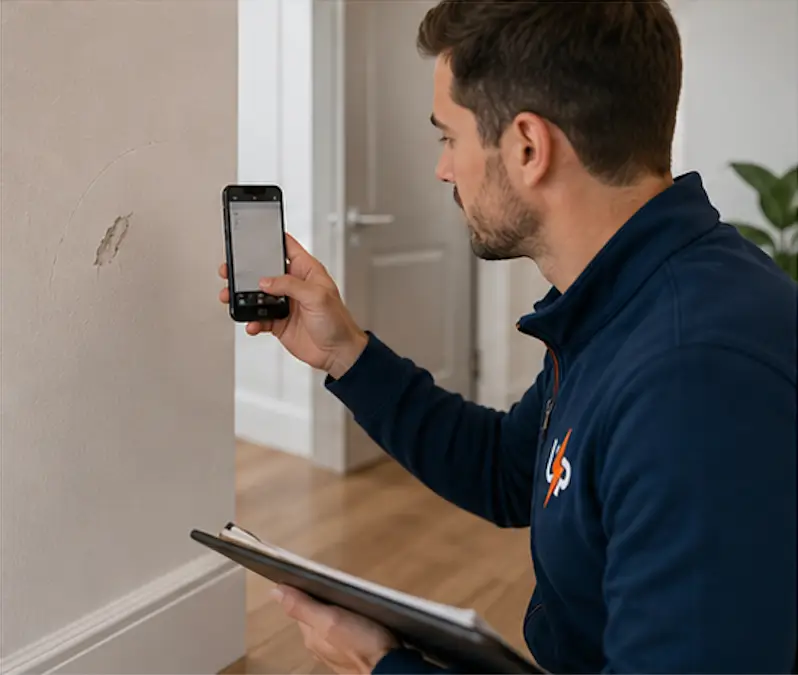
1. Preamble and Purpose
URGENT Pro operates a digital marketplace that connects customers with independent home-service contractors across Sydney, Melbourne, Brisbane, the Gold Coast and Perth. URGENT Pro is not itself the supplier of the services; the contractor you book is the supplier and operates as an independent business under the contractor's own ABN, insurance and licences. This document, Damage Claims Policy, sets out how damage to a customer's property or items that occurs during a service booked through urgentpro.com.au is identified, evidenced, assessed, paid out and escalated.
This policy is the damage policy. It is deliberately and structurally distinct from the Service Warranty Suite, which deals with the quality of the service (whether the work performed meets the standard a reasonable customer would expect). The line between the two policies is simple:
- Service Warranty Suite applies when the work itself falls short, for example, a cleaner missed half the kitchen, a lawn was left unfinished, or a handyman installed a shelf out of level. The remedy is to re-perform the work.
- Damage Claims Policy (this document) applies when something is broken, marked, scratched, cracked, snapped, stained, gouged or destroyed as a direct result of the service. The remedy is to repair, replace or compensate the customer for the damaged item or surface.
This policy is funded primarily by the public liability insurance that each independent contractor is required, by URGENT Pro's onboarding rules, to hold. An URGENT Pro Damage Backstop sits behind it for goodwill resolution where a contractor's policy fails to respond, where a contractor is uninsured in breach of platform rules, or where a customer would otherwise be left without a remedy that the Australian Consumer Law (ACL) plainly entitles them to. This policy is not funded out of the contractor's held payment for the job, because withholding payment for a quality dispute (Service Warranty) is a structurally different mechanism from compensating a damaged item (Damage Claims): conflating them disadvantages both customers and contractors.
2. The Seven Key Principles
This policy is built on seven principles. They are not legal disclaimers; they are operating rules that decide whether a claim is covered, conditionally covered, or excluded.
1. Functional and Undamaged Threshold. A damage claim is only valid where the item or surface was fully functional and undamaged immediately before the service began. An item already cracked, already loose, already split, already off-track or already weathered cannot be "damaged" in the legal sense by the service. It can only be revealed.
2. Customer Disclosure Obligation. Customers must disclose, before the service begins, anything brittle, fragile, damage-prone, high in monetary or sentimental value; any areas off-limits; any pre-existing damage; and any concealed hazard (loose hinges, hidden steps, pets, biohazards, buried sprinkler lines, asbestos-era materials, etc.). Non-disclosure is contributorily negligent within the meaning of state apportionment legislation and can reduce or extinguish a claim.
3. Pre-Existing Condition Principle. A contractor is not liable for items that fail under ordinary, reasonable handling because they were already weathered, aged, brittle, deteriorated, UV-degraded, fatigued, end-of-life or otherwise compromised before the service began.
4. Right to Decline. Contractors have an absolute right to decline or modify part of a service where they observe visible damage, brittle fixtures, hazards or unreasonable risk to themselves, the customer's property or third parties. Exercising this right is a protective act, not a refusal of service: the contractor must offer alternatives where practical, document the reason and notify URGENT Pro.
5. Movement and Access Principle. Where a service requires items to be moved or accessed (cleaner moving a couch to vacuum, removalist moving a wardrobe, handyman shifting a fridge), the contractor is liable only for unreasonable handling. Hidden weaknesses, loose components, pre-existing structural compromise, weight beyond reasonable solo-handling thresholds, and concealed fixings are excluded.
6. Photographic Burden Principle. Both parties share documentation responsibility. The contractor's five-minute arrival inspection photographs are critical evidence; so are the customer's photos of items, areas of value and pre-existing conditions. The party that holds better contemporaneous photographs holds the stronger position in any dispute.
7. ACL Floor Principle. Statutory rights under ACL ss 60, 61, 62 survive any voiding factor. Where this policy would otherwise produce an outcome inconsistent with the ACL, for example, where damage results from the contractor's own breach of the s 60 due-care-and-skill guarantee, the ACL outcome prevails and URGENT Pro will not enforce the contrary policy rule.
3. Definitions
- "Damage"
- physical harm to a customer's property or item that did not exist immediately before the service and that was caused, in whole or in material part, by the contractor's actions during the service.
- "Pre-existing damage"
- any crack, chip, split, dent, scratch, mark, missing piece, broken component, loose fixing, weathering, fade, rust, mould, water stain, paint defect, hairline fracture or veneer lift present before the service began.
- "Wear and tear"
- gradual deterioration consistent with normal use over time, including UV fading on plastics, edge softening on timber, rust on outdoor metal, grout shrinkage, paint chalking and seal hardening on appliances.
- "End of life"
- the point at which an item's design service life has been reached or exceeded. Indicative thresholds used by this policy: plastic vertical blinds 5–7 years, venetian blinds 8–10 years, quality roller blinds 10–15 years, flexible plumbing braided hoses ~10 years, silicone seals ~5–7 years, oven door hinges within their typical 10,000–50,000-cycle rating.
- "Brittle or fragile item"
- any item that under ordinary handling would not be expected to fail but that, owing to age, material, design or prior condition, has a materially elevated risk of failure. Includes thin glass shelves, antique veneers, plaster cornicing, UV-degraded plastic vertical blinds, single-glazed older shower screens, and crystalware.
- "Hidden hazard"
- any risk not reasonably visible to a contractor performing a normal arrival inspection, including buried sprinkler lines, concealed electrical wiring, loose roof tiles, asbestos behind plaster, pet faeces in concealed corners, and structural compromise concealed by furniture.
- "Reasonable contractor handling"
- the standard of conduct that a competent, careful service provider of average skill and experience in the same trade would apply in the circumstances, as required by ACL s 60.
- "Service performance"
- the contractor's act of carrying out the booked service, including arrival, setup, performance, packdown and departure.
- "Property"
- the customer's land, dwelling, fixtures, fittings, contents, vehicles and items present at the service address; and, where adjoining, neighbouring property reasonably affected by access (e.g., a shared driveway).
4. What Is Covered
This policy covers physical damage to your property or items where all of the following are satisfied:
- The item or surface was functional and undamaged immediately before the service began (Functional and Undamaged Threshold);
- The damage was caused, in whole or in material part, by the contractor's actions during the service;
- The damage is not within the universal exclusions in Part 5 or any service-specific exclusion in the relevant Annex;
- You report the damage within the timeframe set out in Part 8 for the relevant service;
- You can provide reasonable evidence, typically a photo of the damaged item, a description of how it occurred, and (where helpful) proof of value such as a receipt or independent quote.
4.1 Coverage Limits and Insurance Backing
The standard public liability backing for all contractors on the URGENT Pro platform is $10 million, aligning with the requirement applied across the major Australian platform economy. Comparable platforms confirm this benchmark. Airtasker publishes that its $10 million AUD liability insurance is provided by Insurance Australia Limited trading as CGU Insurance. Jim's Group states that all Jim's Franchisees have current public liability insurance with minimum $10 million coverage. Removalists accredited by the Australian Furniture Removers Association are required to carry Public Liability Insurance of up to $10,000,000 for both their protection and the safety of their clients.
The per-claim excess payable in the first instance by the contractor under standard Australian market public-liability policies for home-service trades commonly falls in the A$500–A$2,000 range (Australian broker market norms). URGENT Pro will publish, on its onboarding portal, the typical excess range for each service category to reduce friction.
Where the cost of damage is below the contractor's policy excess, the contractor is expected to settle directly with the customer. URGENT Pro may intervene to facilitate a fair settlement.
The URGENT Pro Damage Backstop is a contingent goodwill layer that may pay up to A$2,500 per claim at URGENT Pro's discretion where (a) the contractor's policy does not respond within 30 days, (b) the contractor is uninsured in breach of platform rules, (c) the excess gap leaves the customer with no practical remedy, or (d) where ACL ss 60–62 require an outcome that the contractor's policy alone will not produce. The backstop is operated as goodwill and does not constitute insurance; it does not displace the customer's ACL rights or right to pursue the contractor directly.
Items of extraordinary value (artworks, antiques, watches, jewellery, musical instruments, collectible items above A$2,000 individual value) require pre-service disclosure. A$2,000 is the default threshold: where a service annex sets its own disclosure threshold, the annex figure applies instead (the Cleaning Damage Annex sets A$500 for cleaning jobs). Without disclosure, these items are limited to a maximum of A$500 per item under this policy; with disclosure, full insurance value applies up to the contractor's public liability limit.
4.2 Payment Process
Where the damage is verified and the contractor accepts liability, payment is made through one of the following channels and timeframes:
- Repair. The contractor (or a third party engaged by them or their insurer) repairs the item to a like-for-like standard within 14 days where practicable.
- Replacement. The contractor (or insurer) replaces the item on a like-for-like basis, taking account of age and depreciation where the item has a finite service life.
- Monetary compensation, paid into the customer's nominated bank account within 14 business days of acceptance for claims under A$1,000; within 30 business days for larger claims that require insurer involvement.
- Credit toward future service, only with the customer's express written consent, never as the default remedy. This is consistent with ACCC guidance that a refund cannot be substituted with store credit unless the consumer chooses to accept it.
5. What Is Not Covered (Universal Exclusions)
The following are not covered under this policy (subject always to the ACL Floor):
- Pre-existing damage, including the worsening of pre-existing damage under ordinary, careful handling.
- Wear and tear and end-of-life failure, items that fail because their normal service life has been reached.
- Hidden defects and concealed weaknesses, loose hinges, internal cracks in glass not visible from the surface, rotted timber inside a frame, corroded fixings, weakened structural members concealed under finishes.
- Customer non-disclosure, items, hazards, restricted areas or conditions the customer was reasonably aware of and did not disclose. May reduce the claim under contributory negligence apportionment legislation in each state (e.g., Law Reform (Miscellaneous Provisions) Act 1965 (NSW) s 9; Wrongs Act 1958 (Vic) Part IV; Civil Liability Act 2003 (Qld); Civil Liability Act 2002 (WA)).
- Customer's own actions, damage caused or contributed to by the customer, household members, pets, children, tenants or other visitors during or after the service.
- Third-party actions, damage caused by other contractors, neighbours, weather events, power surges or theft.
- Consequential and indirect loss not within ACL, loss of income, loss of enjoyment, sentimental value beyond ACL "indemnity value", consequential business loss, except where the ACL specifically permits recovery as foreseeable loss arising from the breach.
- Acts of nature and force majeure, storms, floods, hail, lightning, earthquakes and similar.
- Excluded activities under the contractor's public liability policy, typically including damage to the contractor's own work product (the contractor's general liability does not cover the quality of the work performed. That is Service Warranty territory).
Where damage falls within an exclusion but the customer would, under ACL ss 60, 61 or 62, be entitled to a remedy nonetheless, the ACL Floor applies and URGENT Pro will work with the contractor and insurer to provide that remedy.
6. Customer Obligations
To preserve your rights under this policy you must:
- Disclose before or at the start of the service: any high-value items (above A$500 individual value), any brittle or damage-prone items, any pre-existing damage in the area to be serviced, any restricted areas, any hazards, the location of any pets and any biohazard.
- Permit arrival inspection, allow the contractor 3–5 minutes on arrival to walk through, observe and photograph the work area and any items they will move or work around.
- Restrict access where needed, secure pets, lock away valuables, remove or cover items the contractor should not handle, identify and label items the contractor should not move.
- Notify within the reporting window for the relevant service category (see Part 8). Late notification severely weakens a claim because intervening causes (post-service damage by a household member, another contractor, the customer themselves) become impossible to exclude.
- Preserve evidence, keep the damaged item, photograph from multiple angles in good light, retain receipts and proof of purchase, retain witness contact details, do not throw away packaging or fragments.
- Cooperate with assessment, allow reasonable photo evidence requests, allow an independent inspection where the claim is contested, provide proof of value where available.
7. Contractor Obligations
The contractor must:
- Conduct an arrival inspection. A 3–5 minute walk-through, photographing the work area, items to be moved or worked around, and any visible pre-existing damage. Time-stamped photos with EXIF data are the gold standard.
- Document the start condition, keep photographs for a minimum of 12 months.
- Exercise the Right to Decline where appropriate, refuse to clean a visibly cracked shower screen, refuse to mow a lawn full of visible hidden hazards, refuse to move a wardrobe that is structurally compromised. Where they decline, they must (a) explain to the customer in plain language, (b) offer an alternative where reasonable, (c) note the reason in the job record, and (d) notify URGENT Pro support.
- Apply the standard of care, perform the service to the standard of a competent, careful provider of average skill and experience in the same trade (ACL s 60).
- Notify damage promptly, where damage occurs, alert the customer before leaving the site where possible, and notify URGENT Pro within 24 hours.
- Cooperate with claims, provide arrival photos, complete claim forms, engage with their insurer promptly and respond to URGENT Pro requests within 7 days.
- Maintain valid public liability insurance, current certificate of currency on file with URGENT Pro, minimum $10 million cover.
8. Claims Process
8.1 Reporting Timeframes by Service Category
The reporting window is calibrated to each service's risk profile and to industry standards. Each window is shorter than tribunal limitation periods but longer than the intervening cause horizon for that service.
| Service | Reporting Window | Anchor / Rationale |
|---|---|---|
| Cleaning | 48 hours from end of service | Aligns with published industry standards; a short window keeps intervening household cause out of the analysis. |
| Removalists | 7 working days from delivery for hidden damage; immediate / day of delivery for visible damage noted on inventory | Aligns with the AFRA-linked NSW Government removalist contract requirement that claims be addressed no later than 7 working days, and the broader industry practice of 3–7 days for hidden damage. |
| Rubbish removal | 24 hours from completion | Driveway, lawn, fence damage is immediately visible; a longer window cannot exclude post-service vehicle traffic. |
| Lawn & garden | 72 hours from completion | Allows time to inspect irrigation, hidden lawn marks and plants once the area dries and is walked. |
| Handyman | 14 days for the work-quality-adjacent damage (e.g., leak under sink); 48 hours for surrounding property damage | Some work-adjacent damage requires use to reveal (a tap drip after pressure cycles); surrounding damage is visible immediately. |
8.2 Documentation Requirements
A valid claim requires, at minimum:
- Photographs of the damaged item or area (multiple angles, in good light, with timestamps where possible);
- A written description of when and how the damage was discovered and what the customer believes caused it;
- The booking reference;
- Proof of value where applicable (receipt, online listing, comparable item link, or independent repair quote);
- Witness statements where available.
8.3 Assessment
URGENT Pro's Trust & Resolution team triages every claim within 2 business days. Most claims under A$500 are resolved on photo evidence alone. Claims above A$500, claims where liability is contested, and claims involving items of extraordinary value may require an independent inspection at the contractor's insurer's expense.
8.4 Valuation Methodology
URGENT Pro applies ACL "indemnity value" principles, consistent with state tribunal practice in NCAT, VCAT, QCAT and the WA Magistrates' Court / SAT:
- Repair value is preferred where the item can be restored to a like-for-like condition.
- Replacement value applies where repair is not economic or not possible, and is calculated on a like-for-like basis, not "new for old" where the item has a finite life. A 7-year-old microwave is replaced with the depreciated equivalent value, not a brand-new top-of-range unit.
- Depreciation curves broadly used: appliances 10-year straight-line; carpets 10–15 years; blinds per the end-of-life table in Part 3; furniture 15–20 years for quality items; electronics 5–7 years.
- Items of extraordinary value are valued at independent expert assessment.
8.5 Remedy Options and Resolution Timeline
Customers can choose between repair, replacement or monetary compensation. The standard resolution timeline is 14 business days for claims under A$1,000 and 30 business days for claims above that or involving insurer assessment.
8.6 Escalation Pathway
- Internal review by URGENT Pro Trust & Resolution (free, 5 business days).
- Contractor's public liability insurer (contractor and URGENT Pro will facilitate the claim).
- URGENT Pro Damage Backstop considered where the insurer does not respond or the gap is unfair.
- External recourse: NSW Fair Trading / Building Commission NSW; Consumer Affairs Victoria; Office of Fair Trading Queensland; Consumer Protection WA.
- Tribunal: NCAT (NSW, consumer claims handled in the Consumer & Commercial Division; consumer-claims jurisdictional limit currently in force at A$100,000 for general consumer matters; applications must be made within 3 years of the cause of action accruing per the NCAT consumer-claims case-type page); VCAT Civil Claims List (VIC, no monetary limit for consumer-trader disputes, 6-year limitation); QCAT (QLD, minor civil disputes up to A$25,000); WA's Magistrates' Court minor case procedure / SAT for consumer claims under Consumer Protection WA.
- Small claims courts (Local Court NSW, Magistrates' Court VIC/WA, Magistrates' Court QLD).
- Federal Court of Australia for ACL matters of larger scale or where federal jurisdiction is required.
9. Valuation and Remedies in Detail
The remedies in this policy are calibrated to put the customer in the position they would have been in if the damage had not occurred, no better, no worse. This reflects the High Court's approach in Moore v Scenic Tours and the NSW Court of Appeal's restatement in Scenic Tours Pty Ltd v Moore [2023] NSWCA 74, which confirms that ACL s 267 damages should put the consumer "in the same position as if the supplier provided a service that complied with the statutory guarantee".
9.1 Repair vs Replacement
The default is repair where the item can be restored to a condition reasonably indistinguishable from its pre-damage state. Replacement applies where repair would cost more than 70% of replacement value, where repair is technically impossible, or where the item is one of a matched set and partial replacement would be obviously discordant.
9.2 Depreciation and Like-for-Like
Where an item has a finite service life and was past the halfway point of that life at the time of damage, URGENT Pro applies a straight-line depreciation curve so that the replacement value reflects the remaining life of the item.
9.3 Compensation Caps
- Standard per-claim cap (contractor's PL): $10 million.
- URGENT Pro Damage Backstop cap: A$2,500 per claim (operated as a discretionary goodwill mechanism; not insurance).
- Undisclosed items of extraordinary value: A$500 per item ("extraordinary value" means above the annex threshold where the service annex sets one, otherwise above A$2,000).
- Customer-packed boxes (removalists): excluded except where negligent handling is proved (the AFRA-standard "Owner Packed" rule).
9.4 Insurance Excess
The contractor pays the excess in the first instance; where the damage value is below the excess, the contractor settles directly. URGENT Pro will not require the customer to wait while the contractor disputes the excess with the insurer.
10. Dispute Resolution
10.1 Internal Review
If a customer is dissatisfied with an outcome under this policy, they can request an internal review by emailing support@urgentpro.com.au within 14 days of the decision. A senior Trust & Resolution officer not previously involved will review the file and respond within 5 business days.
10.2 External Recourse and ACL Rights
Nothing in this policy prevents a customer from going directly to:
- NSW Fair Trading (13 32 20), building-related complaints now handled through Building Commission NSW; NCAT requires evidence of an attempted Fair Trading / Building Commission resolution for building matters.
- Consumer Affairs Victoria (1300 55 81 81).
- Office of Fair Trading Queensland (13 74 68).
- Consumer Protection WA (1300 30 40 54).
- ACCC for systemic or misleading-conduct issues. Note the ACCC explicitly does not resolve individual disputes: "We don't resolve individual disputes or give legal advice about a consumer's right to a repair, replacement or refund."
10.3 Tribunal Processes by State
- NSW. NCAT: Consumer and Commercial Division. The NCAT consumer-claims page states the Tribunal "can hear and decide an issue or dispute about a consumer claim up to the value of $100,000" and that the limitation is three years from the cause of action and ten years from supply.
- VIC. VCAT: Civil Claims List. Generally apply within 6 years. For claims under $15,000 VCAT advises lawyers are generally not permitted. Federal-jurisdiction limit per Thurin v Krongold Constructions and Vaughan v Melbourne Water.
- QLD. QCAT: Minor civil disputes up to A$25,000.
- WA. Magistrates' Court / SAT: Consumer claims through Consumer Protection WA, Magistrates' Court minor case procedure, or SAT depending on the subject matter.
State Civil Liability / Wrongs Acts permit a tribunal or court to apportion damages where the customer's contributory negligence has been established, with awards reduced "by the same percentage as the plaintiff's own negligence", see Law Reform (Miscellaneous Provisions) Act 1965 (NSW) s 9.
11. Annex References
This Master document is read with:
12. Contact Us
All damage claims under this policy and its annexes are submitted to the Damage Claims contact below. Damage Claims is reached through the single customer-facing inbox.