
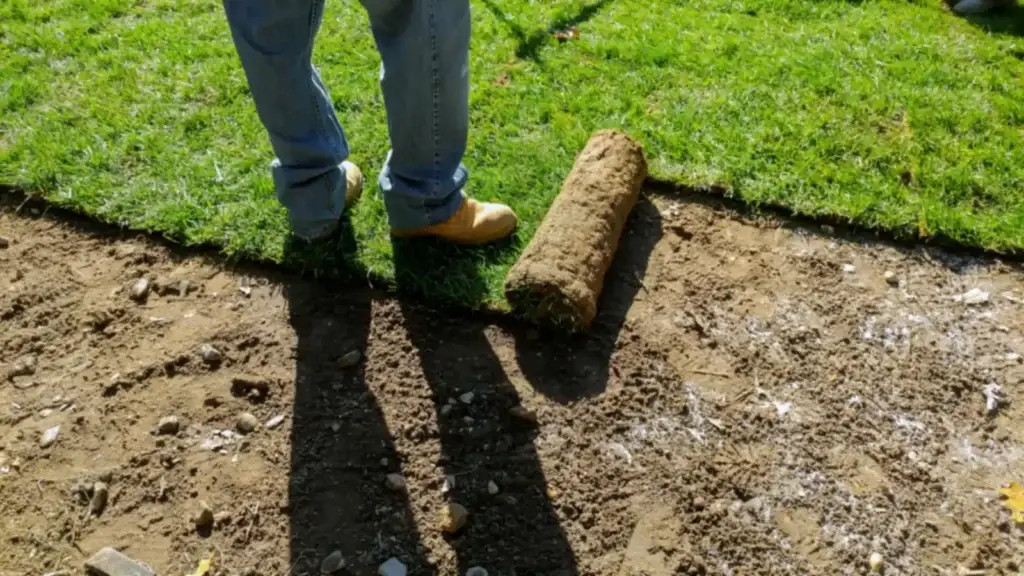
New turf is ready for its first mow when the whole lawn resists a gentle upward pull, and not before. This guide covers preparing the ground, laying the rolls, watering while the roots grow, and testing the lawn before the first cut.
The guide starts with your local water rules, because they can limit how you water a new lawn. Urgent Pro does not lay turf. Once the lawn has rooted, you can find lawn mowing providers on Urgent Pro in Perth, Sydney, Melbourne, Brisbane and the Gold Coast.
Check your water rules before you lay
Water rules differ by city and water authority and change over time, so read your current local rules before you order. Some areas offer an exemption that lets you water a new lawn outside the standard roster. Check whether one exists where you live and when you must apply.
Perth: There is no automatic exemption for a new lawn. Under the Water Agencies (Water Use) By-laws 2010, you must apply for a temporary exemption to water outside your rostered days and times, and during the winter sprinkler switch-off, which runs from 1 June to 31 August in the Perth and Mandurah area. The WA Government exemption page says to apply online on the day the lawn is installed. A proven breach without registering can bring a $100 fine, according to the sprinkler switch-off page.
Other cities: Check with your water authority or council about restrictions and any exemption for new lawns before you lay. Do not assume the Perth process applies elsewhere.
Laying turf and then finding you cannot legally water it enough to establish is an avoidable problem.
Order the right amount and time the delivery
Turf is sold by the square metre, and edges, curves and garden beds create offcuts. Measure the area, then order a little extra, more for an irregular shape than for a simple rectangle. Spare rolls can be used to patch any section that does not take.
Turf is a living product, so arrange delivery for when the ground is ready and you have the time to lay it. Ask your supplier how soon after delivery it needs to be laid.
Choose the right time of year and variety
Warm-season grasses go dormant over winter, as the guide to mowing frequency for warm-season grasses explains. Ask a local turf supplier which months suit your grass in your area.
Variety matters as much as timing. Buffalo varieties such as Sir Walter and Palmetto handle shade better than couch or kikuyu, which suit full sun and heavier wear. The Perth variety comparison in Perth’s lawn variety guide sets this out against sandy soil, shade and water needs. For other states, the local turf farm is the best first source. Buy from a supplier who grows turf suited to your climate zone.
Prepare the site
Clear the ground. Remove existing grass and weeds completely. New turf needs direct contact with bare soil to take root, so old grass should be taken out rather than buried.
Level the surface. Remove bumps and fill low spots, and make sure water will drain away from the house and not toward it. The finished surface should be firm enough to leave a footprint without sinking in.
Improve the soil. Add a layer of suitable soil for turf, and work in organic matter if your soil is sandy. If you have heavy clay, ask a landscape supplier what to add to open it up before you bring in a free-draining topsoil. Follow product labels for any amendment.
Set the final level. Turf rolls have thickness. Measure your supplier’s rolls and set the soil surface that far below any fixed edge, such as a path, border or paved area. Getting this wrong leaves the lawn sitting above the path or sinking below it.
Feed and water. Apply a starter fertiliser made for turf and follow its label. Water the soil thoroughly the day before laying, so the roots meet moist soil from the first day.
Lay the turf
Work quickly once the rolls arrive.
Start with an edge. Lay along a straight boundary first, such as a fence line, then work inward.
Work from boards. Avoid walking directly on freshly laid turf. Spread your weight on timber boards.
Stagger the joins. Lay rolls in a brickwork pattern, so joins do not run in a continuous line across the lawn.
Butt the edges tightly. Push the edge of each roll against the next. Do not stretch the turf to close a gap.
Cut to fit. Trim with a sharp spade or turf cutter and remove small offcuts.
Press down, then water. Firm each section after laying, and water as you go. Do not lay the whole area and leave the watering until last on a hot day.
The first few weeks
Keep the soil moist while the roots grow. How much water this takes depends on your soil, the weather and your local rules. To check, push a thin stake or screwdriver into the soil through the turf. It should go in easily, come out with soil on it and show moisture below the surface. If the soil is dry below the top layer, water more.
In Perth, the Water Corporation says to water once, before 9am or after 6pm, on your rostered days, unless you hold an exemption.
Check the edges of each roll often.
Keep foot traffic to a minimum until the turf has rooted, and keep furniture and planters off it. Once the lawn is established, move any furniture regularly so the grass underneath does not die from lack of light.
Once the turf has rooted, ask your supplier how to move to longer gaps between waterings.
The first mow
Do not mow until the grass is firmly anchored. A mower passing over unrooted turf lifts and displaces the rolls, especially along edges and cut sections.

The pull test. Take a corner of the turf and gently pull upward. If it lifts freely, the roots have not anchored. Test across the whole lawn, especially the outer edges and sections cut to shape, not just the middle.
When the whole lawn resists lifting, the first mow is safe. Set the blades high for the first few cuts and lower them gradually to the height for your variety. The one-third rule applies to every cut: never remove more than one-third of the leaf blade at once. Mow with sharp blades.
What to do if sections fail
Patchy establishment usually traces back to how the ground was prepared or watered, so check those first.
Isolated dry patches suggest the soil dried out faster in that spot. A patch that stays waterlogged points to a drainage problem, which needs fixing before you re-turf it.
For bare sections, the most reliable fix is to cut out the failed area and replace it with matching turf of the same variety.
Next steps
Once the lawn is established, year-round lawn maintenance beyond mowing covers what it needs through the seasons. For ongoing costs, see the lawn mowing cost guide.
To book regular visits, use a local lawn mowing service on Urgent Pro. Other home services are listed on the Urgent Pro website.
FAQs
Can I walk on turf right after it is laid?
Keep foot traffic to a minimum until the turf has rooted. Use boards while you lay, and keep children, pets, equipment and furniture off the lawn until the pull test shows the whole lawn resists lifting.
When can I give my new lawn its first mow?
When the whole lawn resists a gentle upward pull, not just the centre. The time this takes varies with the variety, the season and how well the lawn has been watered, so rely on the pull test and not on a date. Test the edges and perimeter as well as the middle.
How much water does new turf need?
Enough to keep the soil moist while the roots grow down, which varies with soil type, weather and local water rules. Use the screwdriver test to check, and ask your turf supplier for guidance on your variety.
Can I lay turf over old grass?
No. Turf needs direct contact with bare soil to root, so remove the old grass first and prepare the ground properly.
Do I need to apply for a water exemption before laying turf in Perth?
Yes. There is no automatic exemption for a new lawn in Perth. The WA Government says to apply online on the day the lawn is installed, so have your application ready before the turf arrives.
How much turf should I order?
Measure the area and order a little extra, more for an irregular shape with curves and cut edges than for a simple rectangle. The extra covers offcuts and gives you material to patch sections that fail to establish.