
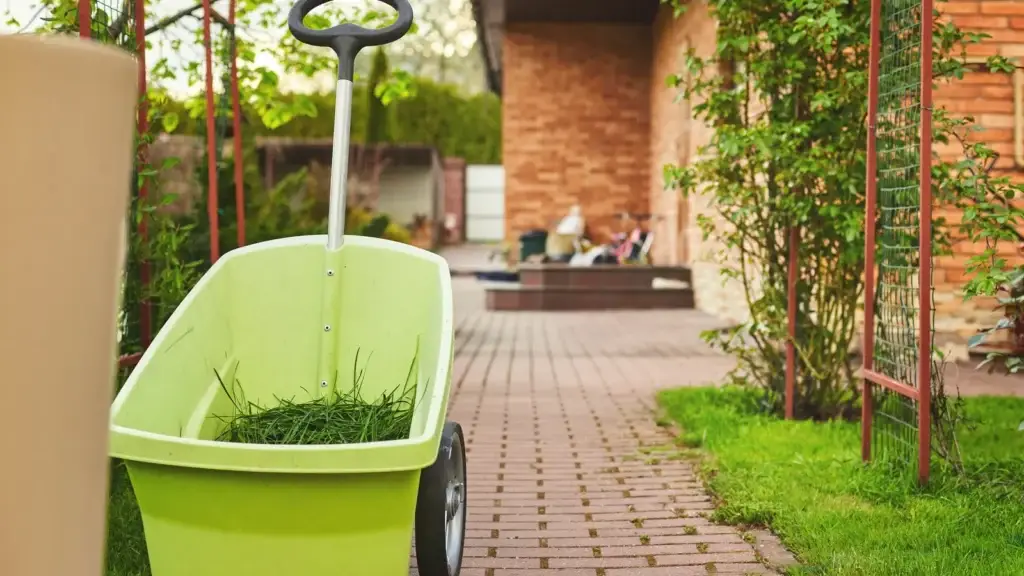
The task most Australian gardeners skip is the autumn weed pull. Bindii germinates in March to May, but the prickles do not appear until spring and summer. By the time the problem is visible underfoot, the plant has already set seed for next year. Timing is the core discipline in garden maintenance, and it varies more between Australian cities than most guides acknowledge. This checklist works by climate zone, not just by calendar month.
Short Answer
Most Australian gardens need mowing and edging every one to two weeks during the growing season, watering two to three times a week in summer, and fertilising three times a year in spring, summer and early autumn. Monthly tasks include weeding and pest checks. Once a year, aerate, dethatch and schedule any major pruning. Green waste goes in the council bin or via a verge collection booking, depending on volume and your local government area.
Weekly and Fortnightly: The Core Routine
The foundation of any garden maintenance routine is the mow. How often you cut depends on your climate zone and grass species. Providers on the Urgent Pro lawn mowing network follow mowing heights of 25 to 40mm for couch, kikuyu and buffalo blends, calibrated to the visible growth pattern and the species at hand.
In subtropical zones (Brisbane and the Gold Coast), warm-season grasses such as buffalo, couch and kikuyu grow actively for most of the year. From October to April, these grasses can put on enough growth to need cutting every seven to ten days. Growth slows through June to August but rarely stops. A fortnightly mow is usually enough over winter.
In temperate zones (Sydney and Perth), the same warm-season grasses grow fastest in spring and summer and slow through the cooler months. Fortnightly mowing covers most weeks of the growing season. Perth’s Mediterranean climate adds a wrinkle: summers are dry and hot, and established lawns can look stressed through December to March even with regular watering. That is a heat and soil-moisture response, not a fertilising problem.
In cool temperate zones (Melbourne), warm-season grasses can enter full or near-full dormancy from June to August. Two to three mows over winter is typical. Tall fescue, a cool-season species that stays active through winter in Melbourne, needs monthly mowing year-round.
For a full breakdown of mowing frequency by grass type and season, how often the lawn needs mowing by grass type and season covers each combination in detail.
Beyond mowing, each routine visit should include:
- Edging along driveways, paths and garden bed borders with a line trimmer
- Blowing grass clippings and debris off hard surfaces after mowing
- Checking that clippings have not matted across garden beds, where they can block airflow and trigger fungal problems in humid conditions
Watering. Restrictions apply in most cities and change with dam levels and seasonal triggers. Check your local water authority before setting an automated schedule. As a general principle, water in the early morning, not in the evening. Grass that stays wet overnight is more susceptible to dollar spot and brown patch, two fungal diseases common in humid subtropical conditions.
Monthly Tasks: What to Add on Top
Once a month during the growing season, these tasks keep the garden manageable and prevent small problems from becoming expensive ones.
Pest and disease check. Walk slowly around the garden beds and lawn. Look for yellowing in circular patches, which often signals a fungal problem; black sooty mould on leaf surfaces, which follows sap-sucking insects such as scale and aphids; webbing or leaf curl; and stippled or bronzed foliage indicating spider mites. Catching dollar spot in the lawn before it spreads across a large area costs far less than treating it after it has taken hold.
Fertilising. Most Australian lawn species need feeding three times a year: early spring (September), early summer (December) and early autumn (March). Do not fertilise warm-season grasses in winter. Feeding a dormant lawn pushes growth the plant cannot sustain. Also avoid fertilising when daytime temperatures are consistently above 30°C, as the application will not be absorbed efficiently and can scorch actively growing grass.
Weeding. Monthly weeding keeps the garden manageable and, more importantly, prevents seed set. Bindii is the most important autumn target in southern Australia. It germinates between March and May. If left until spring when the prickles appear, the plant has already produced the seeds that will populate next year’s lawn. Pull or spot-treat bindii in autumn, before you can feel it underfoot.
Garden bed tidying. Deadheading spent flowers, removing fallen leaves before they mat down, and checking mulch depth belong on a monthly rhythm. Aim for 75 to 100mm of mulch over garden beds to suppress weeds and retain moisture through summer. Mulch that has broken down to below 50mm needs topping up.
Seasonal Tasks by Climate Zone
The table below maps key tasks by season for the three main climate zones covering the cities where garden maintenance is available. For detailed climate classification data across Australia, the Bureau of Meteorology’s climate classification maps are the primary reference.
| Task | Subtropical (Brisbane, Gold Coast) | Temperate (Sydney, Perth) | Cool Temperate (Melbourne) |
|---|---|---|---|
| Mowing frequency | Weekly to fortnightly Oct to Apr; fortnightly Jun to Aug | Fortnightly Sep to Apr; monthly Jun to Aug | Fortnightly Sep to Apr; 2 to 3 mows total Jun to Aug |
| Fertilise | Sep, Dec, Mar (avoid above 30°C) | Sep, Dec, Mar | Sep and Mar only |
| Aerate | Sep to Oct or Mar to Apr | Sep to Oct | Sep to Oct |
| Dethatch | Sep | Sep | Sep |
| Mulch garden beds | Apr (before the dry season) | Nov (before summer heat) | Apr (before winter) |
| Prune flowering shrubs | After main flowering period | After main flowering period | After main flowering period |
| Weed bindii | Mar to May | Mar to May | Mar to May |
| Lawn dormancy | Minimal; reduce mowing Jun to Aug | Partial dormancy for couch and kikuyu | Full or near-full dormancy for warm-season grasses; fescue stays active |
Perth note. Perth’s Mediterranean climate reverses the subtropical pattern. Rain falls in winter, summers are dry. Couch and kikuyu lawns are under heat and moisture stress from December to March even with regular watering. Do not apply extra fertiliser during peak summer heat; it will not be absorbed and may scorch the lawn. Native and Mediterranean plants in Perth gardens often need less summer intervention than the lawn itself.
Melbourne note. Frost is possible across many Melbourne suburbs from June to August. Do not mow frost-covered grass. Frozen leaf blades snap rather than cut cleanly, which opens the plant to disease. Wait until the frost has thawed before mowing on cold mornings.
Yearly Tasks: What Belongs on the Annual Schedule
Some garden work sits outside the weekly and monthly cycle. These tasks are best planned ahead, once a year.
Aeration. Compacted soil in high-traffic areas blocks water and nutrients from reaching the root zone. The right time to aerate is early spring, as the lawn enters active growth and recovers quickly from the disturbance. For heavy clay soils, which are common in parts of Melbourne and outer Brisbane, deeper tine aeration may be needed more frequently than once a year.
Dethatching. Thatch is the layer of dead organic matter between the green leaf and the soil surface. A thin layer is normal and beneficial. Anything over 10 to 15mm starts to block water, air and nutrients from reaching the soil. Dethatch in spring once active growth has started but before peak summer heat. Buffalo lawns build thatch more quickly than couch or kikuyu and typically need dethatching more regularly.
Major pruning. Most hedges and ornamental shrubs need one annual shape. Flowering hedges and shrubs are pruned after their main flowering period to avoid cutting off next season’s buds. Roses are typically cut back hard in late winter, July to August. Fruit trees are pruned in winter dormancy, when sap is low and the cut surfaces are less likely to attract disease. The pruning section below covers what falls within the scope of a standard garden visit and what requires a different trade.
Soil testing. Testing soil pH once a year identifies whether lime or sulphur is needed. Soils in Perth are often highly alkaline, particularly where the substrate is limestone-derived, which locks out iron, manganese and other trace elements that grass needs for healthy colour. Most lawn grasses perform best at a pH between 6.0 and 7.0.
Weeding: When to DIY and When to Book a Provider
Most garden weeding is manual work: a hand trowel, a bucket and pulling weeds before they set seed. If a garden bed is kept on a monthly maintenance rhythm, hand weeding stays manageable for most homeowners.
Two situations where booking a provider makes more sense:
Large or overgrown areas. A garden bed that has not been weeded for a full season may need several hours of clearing. A garden tidy-up visit can include this, with the removed material either going in the council green bin or taken away where that service has been arranged.
Chemical weed treatment. Applying herbicides to control persistent species or widespread infestations involves specific licensing obligations in every state, and the rules are not always what people expect.
In Western Australia, the Health (Pesticides) Regulations 2011 require anyone applying herbicides for a fee to hold a Pest Management Technician Licence issued by the WA Department of Health. This applies even to glyphosate applied via a backpack sprayer. In Queensland, commercial ground spraying of herbicides with powered equipment on land that is not your own requires a Commercial Operator’s Licence from Biosecurity Queensland under the Agricultural Chemicals Distribution Control Act 1966. In New South Wales, anyone providing pesticide services for amenity horticulture, which the Pesticides Regulation 2017 explicitly defines to include “ground or garden maintenance,” must hold a Ground Applicator Licence issued by the NSW EPA under the Pesticides Act 1999. The NSW EPA’s Ground Applicator Licence page confirms the current requirements and the AQF3 competency needed to apply. In Victoria, commercial ground-based agricultural chemical application for fee or reward requires a Commercial Operator Licence (COL) from Agriculture Victoria (DEECA) under the Agricultural and Veterinary Chemicals (Control of Use) Act 1992. Victoria does have one relevant exemption: a business using chemicals only in gardens associated with residential premises, and where the operator has completed an accredited agvet chemical course, is exempt from holding the COL. For Queensland’s requirements, the Biosecurity Queensland commercial operator licence guide sets out the current process.
A commonly misunderstood point: in most states, a provider using registered home-garden products in small packs (such as one-litre containers of ready-to-use glyphosate from nurseries and hardware stores) with handheld equipment may fall below the licensing threshold. Once a provider is using a powered backpack or boom sprayer commercially, the licensing requirement applies. When booking a provider for weeding that involves chemical treatment, ask whether they hold the relevant state licence before the job starts.
Pruning: What a Garden Visit Covers and When You Need a Different Trade
Standard garden maintenance and tidy-up visits include hedge trimming and light shrub shaping as bookable extras. Understanding the scope boundary helps with planning both time and budget.
What a garden maintenance provider typically covers:
- Hedge trimming to a specified shape and height, within the provider’s safe working limits (hedges that require ladder work may be quoted separately or declined)
- Light shaping of garden shrubs and ornamental plants
- Removal of dead wood from accessible, ground-level plants
- Small shrub removal where no specialist equipment is needed
What requires a different trade:
Tree work sits in a separate category. Unlike plumbing or electrical, there is no state-government-issued arborist licence in Australia as a regulated trade category in the way those occupations are licensed. Instead, the industry uses the Australian Qualifications Framework: AQF Level 3 for operational climbing and cutting, and AQF Level 5 for consulting work such as arborist reports for development applications. Pruning is performed to Australian Standard AS 4373-2007. Arborists who are registered with Arboriculture Australia carry a minimum of $5 million in public liability insurance as a membership requirement.
The practical obligation that matters most to homeowners is at the council level. Many councils require a permit to prune or remove trees above specified size thresholds, even on your own land, and rules differ between councils in the same city.
In Victoria, Amendment VC289 (gazetted 15 September 2025) introduced Clause 52.37 into every Victorian planning scheme, requiring a planning permit to remove, destroy or lop a canopy tree in most residential zones. A canopy tree under this clause is defined as a tree that is over 5 metres in height, has a trunk circumference of more than 0.5 metres measured at 1.4 metres above ground, and has a canopy diameter of at least 4 metres. All three thresholds must be met. Routine maintenance pruning of up to one-third of foliage is exempt from the permit requirement, provided the tree remains above all three size thresholds after the work. Applications go through the planning system, not the building system, via a streamlined VicSmart process. If removal is approved, replacement canopy trees are required: 10 per cent canopy cover for lots up to 1,000 square metres, 20 per cent for larger lots.
NSW councils commonly protect trees above a defined trunk diameter or canopy size, with rules varying significantly between local government areas. Before engaging anyone to prune or remove a tree, check your council’s current tree protection policy and whether a permit is required before any cutting starts.
For what a healthy lawn needs through the year beyond the mowing visit itself, what a healthy Australian lawn needs year-round covers soil, thatch, watering and grass type in detail.
Green Waste: What to Do With Clippings and Cuttings
Garden maintenance generates green waste. Where it goes depends on volume and what your council accepts.
Lawn clippings. For a standard mow, clippings are either mulch-mowed back into the lawn or bagged and placed in the green bin. Leaving clippings on the lawn returns nitrogen to the soil and is the better environmental option where the lawn is healthy. If the lawn has an active fungal problem, bag and remove the clippings until the issue is resolved.
Prunings and small branches. Most city councils accept small branches and shrub prunings in the green bin, with size limits that vary by council. Typical bin limits are around 10cm diameter and under two metres in length. Larger branches require a verge or kerbside collection booking, or a private green waste removal service.
City-by-city overview. Check your council for current rules and collection dates.
Brisbane. The 240-litre green bin (green lid) is collected fortnightly, alternating with the yellow recycling bin. Around 75 per cent of Brisbane households now receive the service. Annual kerbside large item collection runs once per suburb per financial year for bulk items that do not fit in the bin.
Gold Coast. The 240-litre green bin (green lid) is collected fortnightly. Every property also receives two free on-call kerbside collections per year, bookable online or by phone, with a maximum of 2 cubic metres per booking. Items must be placed out the night before the scheduled collection only.
Sydney. Green bin collection runs fortnightly in most Sydney councils. The NSW Government has mandated a Food Organics and Garden Organics (FOGO) service across all NSW councils by 2030, with many already operating it. Treated or painted timber is not accepted in any NSW green bin. Priority and declared noxious weeds must be bagged as general waste; they are not accepted in the green bin even if they look like ordinary garden material.
Melbourne. Most Melbourne councils collect the green bin fortnightly. Many also offer bundled branch collections for larger prunings: branches up to two metres long and 15cm in diameter can typically be tied in bundles for a separate scheduled or bookable pickup. Treated timber is not accepted in the green bin or in bundled branch collections. Some processing facilities and transfer stations reject palm fronds, cordylines and similar fibrous species from the green waste composting stream; check your specific council, as the kerbside green bin service often accepts them under a different composting process than the transfer station uses.
Perth. Verge collection rules vary considerably across Perth’s local government areas. Most Perth councils offer one to two verge collections per year, with separate allocations for green waste and bulk or hard waste. Green waste allocations are typically 2 to 3 cubic metres per collection. Palm fronds and branch prunings are accepted in most Perth council verge collections. Loose bags of grass clippings or weeds are generally not accepted on the verge; clippings go in the green bin or stay on the lawn.
If you have more green waste than your bin and verge collection can handle, for council green waste and hard rubbish options across all five cities, and to book a green waste removal service where volume exceeds what the council system covers.
What is not accepted anywhere. Treated or painted timber does not belong in a green bin or on the verge. It must go to a council waste facility or a private removal service. Invasive and declared noxious weeds vary by state and council; check before placing them in the green bin.
What a Regular Mowing and Garden Tidy Visit Actually Covers
A standard mowing visit covers the lawn: mowing, edging along beds and paths, whipper snipping where the mower cannot reach, and blowing down hard surfaces. Clippings are bagged and removed or left on the lawn as directed at booking.
A garden tidy visit can add hedge trimming, garden bed weeding and bed tidying as booked extras. Green waste removal is available where the household bin is full. Pricing starts from $176 per visit. The final cost depends on lawn size, the condition of the garden (an overgrown property takes more time on the first visit), and which extras are booked. A written quote is provided before work starts.
What a standard visit does not include:
- Tree pruning or lopping (requires arborist qualifications and in many cases a council permit)
- Chemical weed treatment (requires the relevant state licence, declared at booking)
- Irrigation installation or repair
- Landscaping construction (retaining walls, paving, decking)
For questions about who is legally responsible for garden maintenance in a rental property, who is responsible for the garden in a rental property covers the tenant and landlord obligations by state.
To book a garden tidy-up or regular mowing visit, the Urgent Pro lawn mowing service is available across Perth, Melbourne, Sydney, Brisbane and the Gold Coast.
FAQs
How often does a garden need maintenance?
Mowing every one to two weeks during the growing season, monthly weeding, and seasonal tasks such as fertilising and pruning is the minimum for a managed garden. Subtropical gardens in Brisbane and the Gold Coast need more frequent attention year-round than cool-temperate Melbourne gardens, where growth slows significantly from June to August.
What does garden maintenance include?
A standard mowing and garden tidy visit covers mowing, edging, whipper snipping, blowing down hard surfaces and managing clippings. Hedge trimming, weeding and garden bed tidying are extras booked in advance. Tree work, chemical weed treatment and irrigation work fall outside the scope of a standard garden maintenance provider.
How much does garden maintenance cost?
Garden maintenance visits start from $176 per visit, with the final price depending on lawn size, garden condition and which extras are booked. An overgrown property attracts a higher first-visit price. Always confirm a written quote before the visit begins.
What is the difference between lawn mowing and garden maintenance?
Lawn mowing covers the cutting, edging and tidying of grass areas specifically. Garden maintenance is broader: it includes the lawn, but also hedging, weeding, shrub shaping, mulching and garden bed care. Many properties benefit from a combined visit covering both.
What do I do with green waste after a garden tidy?
Clippings and small prunings go in the household green bin in most cities. Larger prunings may need a verge or kerbside collection booking with your council, or a separate green waste removal booking if the volume is significant. Treated timber, invasive weeds and palm fronds have rules that vary by council and should be checked before you place them on the verge.
When is the best time to prune?
Flowering shrubs are pruned after their main flowering period to avoid removing next season’s buds. Roses are typically pruned in late winter, July to August. Fruit trees are pruned in winter dormancy. Hedges can be shaped in late spring after spring growth hardens, and again in summer if the species is fast-growing. For any tree meeting the Victorian Clause 52.37 canopy thresholds, or for trees protected under your council’s local tree preservation rules in any state, check whether a planning or council permit is required before any cutting starts.