
The depth of the depression determines the method. Shallow low spots respond well to thin layers of topdressing applied over the growing season. Deeper dips need the turf lifted, fill added underneath, and the turf put back. Treating a deep depression with topdressing either takes many applications to build up or, if you try to shortcut it with one thick application, kills the grass beneath it.
What Causes an Uneven Lawn?
An uneven lawn does not happen overnight, and the shape of the uneven area shows the cause. Identifying the cause can help in not dealing with the same problem again after you have levelled the lawn.
A long, straight, depressed area on the lawn is the result of a backfilled trench. A backfilled trench is where a gas line, irrigation pipe, or drainage run is placed, and the soil is not compacted in layers, and over time the soil settles and creates a depression. Knowing the location of your utilities can help rule out a general soil settlement problem.
A bowl-shaped dip in the lawn is the decomposition of a tree and its root system. A large tree root can take a long time to decompose and fully break down, and the soil can settle around it and create a bowl shape, and the lawn can develop a dip in that same direction.
Thatch or other decomposable material under a recently seeded lawn can cause the lawn to give when walked on. This is usually the result of an old construction site where the soil is still settling.
A tell-tale sign shows up during regular lawn mowing visits: scalp marks in the same spots after every mow, often where the lawn has settled unevenly in the years since it was first laid. The mower blade catches the high points and skims over the low ones. The fix is to level the lawn, not to lower the height of the mower.
Check the Depth Before You Start
After the most recent mowing, walk slowly over the lawn and mark low spots with spray paint or small flags. Next, place a straight, long board across the low area and measure the gap with the board to the ground at the lowest point.
| Gap Measured | What it Means |
|---|---|
| About 1 cm or less | One topdressing application should correct the level |
| A few centimetres | Several applications of no more than 1 cm each, letting the grass grow through each time |
| Deeper than a season of applications can fill | Topdressing is impractical; use the cut-and-fill method |
Prior to any applications, check to see whether the low spot fills with water after it rains. Persistent waterlogging indicates a drainage issue and adding soil to the low area will not help as it will just create a higher, wetter hollow spot.
The Topdressing Method for Shallow Unevenness
The purpose of topdressing is to spread a thin layer of a soil and sand mix over the low spots and allow the grass to grow through it. This method levels the lawn and improves the soil structure.
Prepare the Lawn First
Mow the lawn and apply a general-purpose fertiliser a few weeks before topdressing. The fertiliser provides the quick growth needed to help push the grass through the mix.
How Much Is Too Much?
Do not apply more than 1 cm of topdressing in a single application, and make sure the grass tips are still showing afterwards. That is the limit Lawn Solutions Australia gives for an established lawn.
Burying grass crowns kills the grass. The goal is a topdressing layer thin enough for the grass to grow through before the next application. Deep depressions are built up over the growing season with multiple thin applications.
Timing
Topdress only while the grass is actively growing. Lawn Solutions Australia describes the growing season as the time you need to mow weekly, says earlier in the season is better, and gives late spring to early summer as generally the best time. Do not topdress a dormant lawn or a lawn in drought.
Choosing the Right Mix
Using the wrong material to topdress only makes the problem worse.
For levelling low spots in particular, Lawn Solutions Australia uses washed or screened sand. It does not compact as hard as brickies’ sand, and its lower clay and silt content makes the surface less likely to crust and become water repellent. Where the soil itself also needs improving, they recommend a sand, loam and compost mix, and for sandy soils a higher proportion of organic material.
Landscape suppliers sell ready-made topdressing blends. Ask what is in the blend and match it to your soil, rather than adding more sand to a lawn that is already sandy.
The Process
- Reduce the height of the lawn before applying mix.
- Locate low areas with a board and mark depth with flags.
- Apply mix to low areas to a depth of no more than 1 cm, using a shovel to build larger piles to be distributed evenly with a rake or drag mat.
- Using a rake or stiff broom, work the mix into the grass, moving in different directions to force the material down between the grass blades. The tips of the leaves must remain visible through the material.
- Water to assist settling.
For Deeper Depressions

Cut an H-shape or cross through the turf over the low area using a flat spade, extending the cuts beyond the edges of the depression. Carefully roll back the flaps. Fill the soil with topsoil, adding in layers and firmly pressing down each layer with your foot before adding the next. If fill is not compacted, it will settle and recreate the problem. Slightly overfill to allow for settling. Fold the flaps back over the soil and firmly press the edges. Water the area to avoid the soil cracking.
If the patch of turf is poor quality or is mainly weeds, replace it with new turf rather than putting the old turf back.
High Spots and Bumps
High spots and ridges usually have a cause below the surface, such as buried rubble, a tree root, or fill that was never spread evenly.
Spongy bumps that can be traced underfoot are likely to be caused by thatch. Thatch can be removed without resorting to a shovel. See if the area settles after dethatching.
To flatten bumps from a buried object, compacted soil mound, or an obstructive root system, remove the offending object, compact the soil, and replace the turf. The mower will not help. Scalping the grass on a high spot kills the grass and creates a recurring bare patch that makes each subsequent mowing even worse.
The Lawn Roller Question
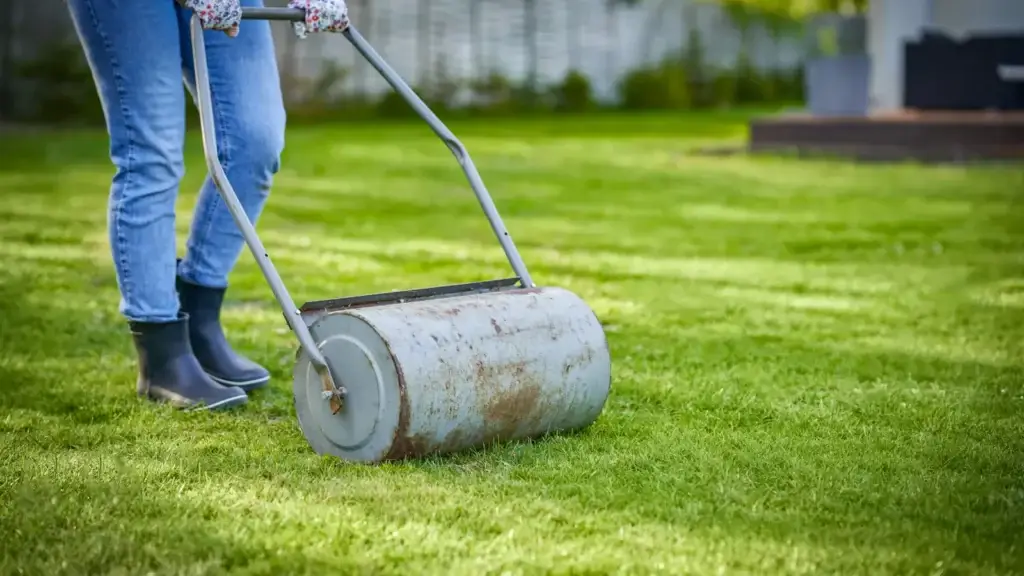
Hiring a lawn roller is a common first attempt, but it rarely fixes an uneven lawn. A heavy roller does not push bumps down. Soil structure does not work that way. Compacting the soil also has negative effects on the lawn. A rolled lawn ends up compacted and still bumpy.
Bumps and dips are a topdressing or cut-and-fill job, and the roller is the wrong tool for it.
Aftercare Once the Lawn Is Level
Water the repaired areas regularly for short periods of time. Keep foot traffic off the repaired areas until the grass has grown through and the surface has firmed up. If the areas get a lot of foot traffic, fencing off the areas may help. Keep pets and equipment off the areas as well. To keep the topdressing mix settled in place, maintain consistent moisture but avoid heavy soaking.
When the grass has grown through the topdressing mix and the area has settled, resume normal mowing for the turf type. Check the level of the lawn before the next growing season and topdress to correct any minor settlement.
For ongoing lawn maintenance, Urgent Pro lawn mowing can connect you with verified independent providers in Perth, Melbourne, Sydney, Brisbane, and the Gold Coast. If soil or rocks need removing, that is priced separately.
For mowing schedules by turf type, see how often to mow your lawn in Australia.
FAQs
How much topdressing can I apply at once?
No more than 1 cm in a single application, with the grass tips still visible, according to Lawn Solutions Australia. More than this may smother the crowns and prevent the grass from growing through.
Can I level a lawn with the mower?
No. Although mowing may remove high spots of grass, scalping a high spot in the lawn kills the grass and creates an unsightly bare spot that will take a while to recover. It’s best to remove the cause of the high spot and re-turf the area to get the grass back in good condition and level with the rest of the lawn.
Does a lawn roller fix bumpy turf?
Not generally. A heavy roller compacts the soil on the surface and doesn’t remove the structural bumps. Fix high spots by removing the cause, and low spots by topdressing or cut-and-fill.
When is the best time to level a lawn?
During the growing season, when the grass is growing fast enough to need weekly mowing. Lawn Solutions Australia says earlier in the season is better and that late spring to early summer is generally best. Avoid levelling a dormant lawn or a lawn in drought.