
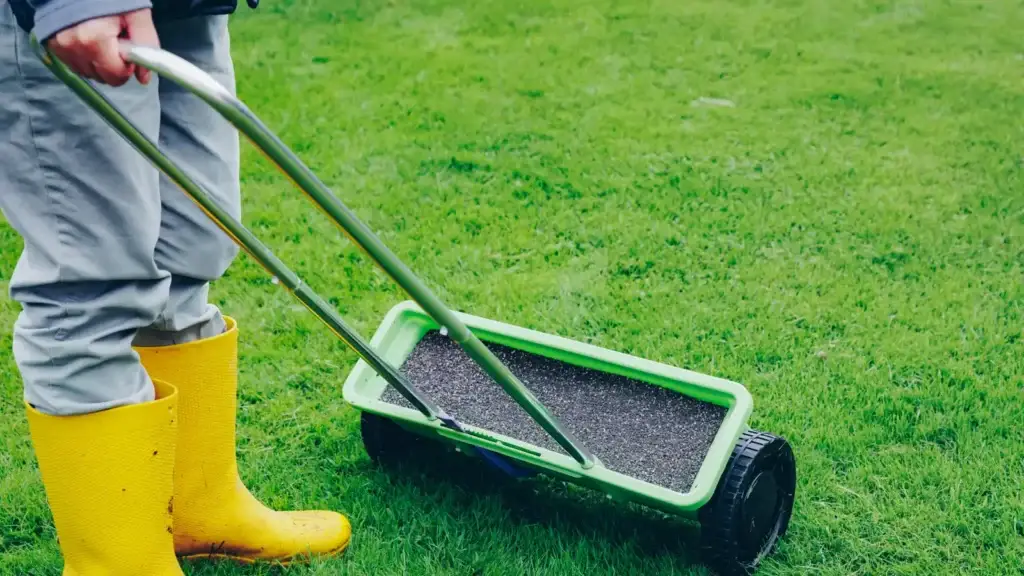
Lawn care in Australia is different. Understanding the differences in seasons and climate zones means you can take the right steps to help your Australian lawn thrive.
The gap between the frequency of mowing requests and the condition of lawns is widest in Perth and Melbourne, according to booking data across Urgent Pro’s five operating cities. Misunderstandings about growing seasons and watering schedules in both cities likely contribute to the observed condition of lawns. Mowing requests come in year-round in Perth, and providers on the network regularly report Melbourne customers mowing warm-season grasses in winter at the same height as summer.
Seasonal Lawn Care: What Your Lawn Needs Through the Year
Spring
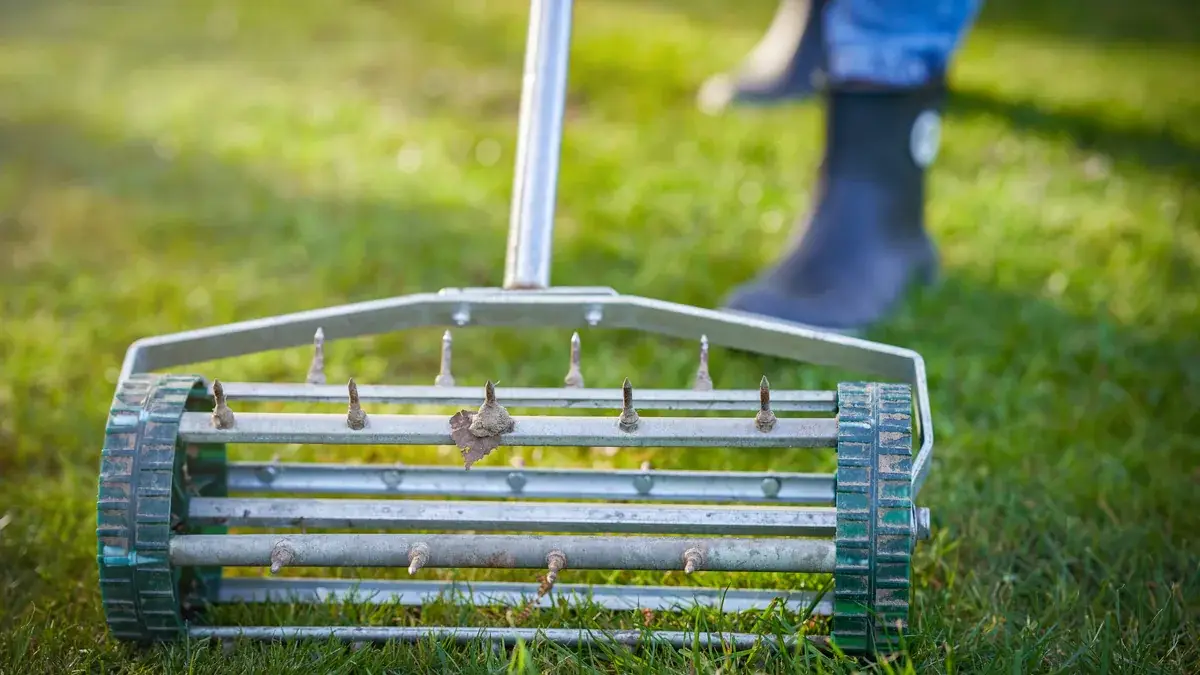
Aeration is the process of removing small cores of soil from the lawn. This improves air flow and water drainage through the soil. It should be done when the soil is moist and in the cooler part of the day, preferably in the morning. The cores break down and decompose within seven to ten days. Lawn aeration improves soil health, nutrient retention and moisture retention, and it loosens compacted soil.
Couch grass is one of Australia’s most common warm-season lawn varieties and requires specific care to stay healthy and competitive against weeds. When renovating couch grass in spring, mow the lawn to 50 to 70 mm, carry out any weed treatments, then raise the mowing height gradually to 25 to 40 mm as the lawn recovers. After any weed treatment, avoid mowing for a couple of weeks to allow the treatment to work. For the best results, time renovation treatments in spring before the peak growing period begins.
Fertilising should occur two to three times through the growing season, with at least four weeks between each application. The final application should be in early to mid-summer, when couch grass is actively growing and can take full advantage of the nutrients.
Summer
During summer heat, the lawn can come under stress. Applying a wetting agent to the soil in the early morning helps reduce moisture stress by improving the soil’s capacity to hold water evenly. For best results, do this when the soil is already moist rather than bone dry.
Autumn
The final mow of the season for warm-season grasses should happen two to four weeks before winter dormancy. In most Australian cities this falls in late autumn, as night temperatures drop consistently below 10 degrees Celsius. After this point, reduce mowing frequency significantly and allow the lawn to slow down naturally.
Couch grass regenerates in late spring and early summer through rhizomes and runners as soil temperatures rise. When the grass begins growing again after winter, allow it to reach about 60 to 80 mm before mowing back to the normal maintenance height of 25 to 40 mm. Once established, the lawn can be maintained at its usual height of 25 to 40 mm.
The maintenance required for an Australian lawn to stay green and healthy year-round includes using the right fertiliser two to four times per year, along with annual aeration and dethatching. Weed control depends on the weed type and the stage of the growing cycle it is in. The correct timing for all of these tasks depends on your climate zone. The growing seasons across Australian cities such as Brisbane, Gold Coast, Sydney and Melbourne are quite different from each other, and most lawn care guides available online are calibrated for the northern hemisphere. Northern hemisphere lawn guides, for example, typically recommend a first spring fertiliser application in March, which falls in early autumn in Australia and is the wrong time for most warm-season lawns here.
There are aspects to effective lawn care that most people do not fully understand. Lawn care and lawn mowing are often used interchangeably, but they are different services that operate on different schedules. Mowing is a frequent, short-term treatment that keeps the lawn trimmed and presentable. Lawn care is long-term and addresses soil structure and nutrient levels. Care also addresses thatch build-up and weed pressure, which, if left unchecked, create compounding problems for future mowing visits.
Lawn mowing services through Urgent Pro cover Perth, Brisbane, Gold Coast, Sydney and Melbourne. Specialist tasks such as aeration and chemical weed treatment are handled by separate providers with the necessary equipment and, where required, the appropriate licences.
Understanding the costs involved is useful when planning a maintenance schedule. What lawn mowing costs and the variables breaks down what determines a mowing quote, including lawn size, site access and frequency discounts, so you can factor the full cost of lawn maintenance into your budget from the start.
Scope of Service
After a service visit, the most common source of dissatisfaction is expecting something that was not part of the service. Understanding what is and is not included helps avoid that.
A typical mowing visit covers:
- Cutting the grass to the agreed height
- Trimming edges along paths, driveways and garden beds
- Cutting around trees, posts and fence lines
- Blowing or sweeping grass clippings off hard surfaces
The following tasks are not included in a standard mowing visit:
- Fertilising and soil treatment
- Aeration and scarification
- Weed spraying (a separate booking in most states; a licensed booking in WA)
- Pest and fungal treatment
- Pruning or trimming hedges
- Removing large volumes of green waste
Mowing height matters during every standard visit and depends on the grass variety. Couch and Queensland blue couch are typically mowed to 10 to 30 mm. Buffalo and kikuyu are mowed to 30 to 50 mm. Zoysia sits in the 20 to 40 mm range. During the cooler months and in shaded areas, all heights should increase by 10 to 15 mm. Reducing leaf area when the lawn is already under stress from cold or shade makes recovery harder. For more detail on how often each grass type needs cutting, how often each lawn type needs mowing covers frequency and height by variety.
Seasonal Lawn Calendar by Australian Climate Zone
Lawn advice tailored to the southern hemisphere is genuinely hard to come by. Most of what is available online has been adapted from northern hemisphere sources, where spring begins in March. Every city in the table below peaks in growth between November and March. Following a northern hemisphere calendar and fertilising your lawn in what Australia calls autumn, rather than fertilising in the lead-up to the actual growth peak, means feeding a dormant lawn while the growing season goes unsupported.
The table below uses climate averages for each city published by the Bureau of Meteorology. Growth timing is based on average monthly temperature and rainfall data, not on generalised seasonal labels.
| City | Climate pattern | Peak growth months | Slow or dormant period | Priority seasonal tasks |
|---|---|---|---|---|
| Perth | Hot Mediterranean. Wet winters (Jul avg 154 mm), near-dry summers (Jan avg 10 mm). | October to March, irrigation-dependent Dec to Feb | June to August | Sep: aerate, first fertilise, apply wetting agent. Oct to Nov: establish irrigation schedule. Mar to May: second fertilise before slowdown. Jun to Aug: minimal intervention. |
| Brisbane | Humid subtropical. Summer rain and heat coincide (Feb avg 145 mm, Jan avg max 29 °C). | December to March | July to September | Aug to Sep: fertilise ahead of growth push. Dec to Feb: mow frequently, check for lawn grubs. Apr: dethatch if summer build-up has caused thatch. |
| Gold Coast | Similar to Brisbane, wetter and warmer in winter (Jul avg max 21.2 °C, min 12 °C). Annual avg 1,330 mm. | December to March | July to August | Same as Brisbane. Milder winters mean weed pressure rarely stops, so monitoring is year-round. |
| Sydney | Temperate. Rainfall distributed through the year. Peak warmth January to February (avg max 27 °C). | November to March | June to August | Oct to Nov: fertilise at the start of season. Jan to Feb: check for lawn grubs and fungal activity. Apr: dethatch if summer growth has built thatch. |
| Melbourne | Cool temperate. Coldest of the five cities (Jul avg max 13 °C, min 5.5 °C). Warm-season grasses slow sharply or brown off in winter. | November to March | May to September | Sep: aerate before green-up. Oct: first fertilise of season. Feb to Mar: second fertilise before slowdown. Cool-season grasses such as tall fescue need a different schedule. |
Source: Bureau of Meteorology climate averages for Australian cities.
The table has real implications for domestic lawn care. A fertiliser application in Perth in July washes through sandy soil before the lawn resumes active growth in September. The same application in Brisbane in July is well timed: it builds nutrient availability in the soil ahead of the August to September growth push. Getting the season right matters as much as getting the product right.
The standard practice for warm-season lawns is two to three fertiliser applications per year. These are timed with the start of the growing season when night temperatures consistently stay above 10 to 12 degrees Celsius, a mid-season application, and an optional early autumn application as growth begins to slow. In Perth, lighter and more frequent applications are preferred over one heavy dose, due to the quick release of nutrients from sandy soils. Applying a wetting agent in early spring helps the soil retain both water and nutrients, particularly as the hot and dry summer months approach.
Of the five cities, Melbourne is the only one where cool-season grasses can be grown successfully on home lawns. Tall fescue, the most popular cool-season option, experiences stress in summer rather than winter, and requires fertilising in autumn and late winter rather than in the warmest months. Tall fescue is most common in Melbourne’s outer and higher-altitude suburbs.
Fertilising does not require a licence in any Australian state.
Aeration, Scarifying and Dethatching
These are three types of lawn maintenance performed below the visible surface of the lawn. They address issues that accumulate over seasons rather than weeks, and they are among the more commonly neglected maintenance tasks.
Aeration removes small plugs of soil to relieve compaction and allow air, water and nutrients to reach the root zone. Compacted soil is common in high-traffic areas. In Perth, it also develops in sandy soils that form a hard, water-repellent crust over time. Aerating once a year in spring, before the main growing season, is appropriate for most residential lawns. High-traffic areas may benefit from two treatments a year.
Dethatching and scarification remove the mat of dead grass stems and organic matter that accumulates between the soil surface and the green growth. Too much thatch becomes a barrier preventing water, air and nutrients from reaching the grass roots. Buffalo and kikuyu grasses build thatch quickly and are common in the warmer, more humid conditions of Brisbane and the Gold Coast. Scarification uses a machine with vertically rotating blades to cut through the mat and pull it to the surface. For most home lawns, scarifying once every one to three years is appropriate, and the work is generally done in late winter ahead of spring growth.
Machinery for both aeration and scarification is not part of a standard mowing service. These tasks are carried out by a lawn care specialist, often combined as a single spring preparation treatment before the first fertiliser application of the season.
Weed and Pest Control: What Is in Scope and What Is Not
Weed control is the service that causes the most customer confusion and the one most strictly regulated by state law, in ways most people are unaware of.
Most mowing providers include manual weeding and spot-pulling as part of general garden tidying. No licence is required for hand removal in any Australian state.
Regulations governing paid herbicide spraying vary by state, and those differences matter.
In Western Australia, the Health (Pesticides) Regulations 2011, administered by the WA Department of Health, require anyone charging a fee for weed spraying to hold a pest management technician licence with a weed-control endorsement. This applies regardless of the product used, including glyphosate products available at any hardware store, and regardless of where the product was purchased. A sole trader must hold a licence before taking any paid spraying job.
In Victoria, the Agricultural and Veterinary Chemicals (Control of Use) Act 1992 requires a Commercial Operator Licence from Agriculture Victoria for any paid chemical application. A residential-garden exemption applies for contractors who have completed an approved chemical training course covering units AHCCHM307 and AHCCHM304. Completing this training also satisfies the Queensland ACDC licence requirements for contractors who work across both states.
In Queensland, the Commercial Operator’s Licence applies to contractors using powered spray equipment on land they do not own. The Queensland Department of Agriculture and Fisheries confirms that hand-powered equipment, such as a hand-pump backpack sprayer, is not classified as ground equipment requiring a licence in non-hazardous areas. Brisbane and the Gold Coast are not declared hazardous areas under the Act, so a mowing contractor using a hand-pump backpack sprayer to apply herbicide in those cities does not require an ACDC licence. Using a powered spray unit changes that position.
In New South Wales, general garden and lawn maintenance businesses are currently exempt from the ground applicator licence under the amenity horticulture provision in the Pesticides Regulation 2017. Training, record-keeping and notification requirements still apply to those using pesticides, even where a licence is not required.
For rental properties, determining who is responsible for a rental garden is a separate question covered in detail for each state.
Green Waste: What to Do with Clippings and Prunings
Every council in the five cities operates some form of kerbside garden organics collection, but there are differences in frequency, accepted materials and volume limits that most people are not aware of until a collection is refused.
Brisbane City Council’s green-lid bin is collected fortnightly. Accepted items include grass clippings, weeds, leaves and prunings, with branches limited to 75 cm in length and 10 cm in diameter. The lid must close for collection.
The City of Gold Coast limits branch length to 40 cm for their fortnightly lime-green organics collection, considerably shorter than Brisbane’s limit. Free drop-off points for larger garden waste are available at five locations across the city.
Perth metro councils vary. The City of Perth rolled out weekly FOGO (Food Organics and Garden Organics) collection to houses in East Perth, West Perth, Northbridge, Nedlands and Crawley from April 2026, accepting grass clippings, leaves, weeds and small branches. The City of Stirling and City of Joondalup operate fortnightly garden-organics bins and also offer scheduled bulk verge collection of larger garden waste. The City of Fremantle offers weekly FOGO collection and bulk verge collection twice a year, accepting branches up to 1.5 m in length and 30 cm in diameter. Bags of loose grass clippings are not accepted in Fremantle’s bulk verge collection.
The City of Sydney offers fortnightly garden organics bin collection for houses. City of Parramatta moved to weekly FOGO collection from November 2024. Northern Beaches Council accepts branches under 75 mm in diameter in its fortnightly bin.
Melbourne varies by municipality. The City of Melbourne provides weekly FOGO collection and a monthly bookable garden-waste pickup capped at 2 cubic metres. Merri-bek provides weekly FOGO collection alongside a fortnightly general waste service.
For volumes larger than what the kerbside collection can handle, a rubbish removal service is the practical option. How each council handles green waste covers the accepted materials, branch-size limits and booking processes for each council area across all five cities.
FAQs
What is the difference between lawn mowing and lawn care?
Lawn care includes any service that contributes to the long-term health of the lawn, whereas mowing alone does not. Mowing covers cutting, trimming edges and clearing clippings. It does not include lawn care tasks such as fertilising or weed spraying. Assuming a mowing visit includes those additional services is the most common source of unmet expectations after a provider visits.
How often should I fertilise my lawn in Australia?
For warm-season grasses such as couch, buffalo and kikuyu, fertilise at the start of the growing season when night temperatures consistently stay above 10 to 12 degrees Celsius, again mid-season, and optionally in early autumn. The timing shifts by city. In Brisbane and the Gold Coast the growing season runs from November to March. In Perth, avoid fertilising through the dry summer months without also irrigating, as the fertiliser will leach through sandy soil before the lawn can absorb it.
Can any mowing provider spray my weeds?
Not automatically. In Western Australia, a pest management technician licence with a weed-control endorsement is required for any paid herbicide spraying, including glyphosate. In Victoria, a Commercial Operator Licence or completion of the approved chemical course is required. In Queensland, using powered spray equipment commercially requires an ACDC licence, but hand-pump backpack sprayers in non-hazardous areas such as Brisbane and the Gold Coast do not. In New South Wales, general lawn and garden maintenance is exempt from the ground applicator licence, but training and record-keeping obligations still apply. Ask your provider to confirm what they are licenced to apply before assuming weed spraying is included.
What is lawn aeration and does my lawn need it?
Aeration removes small cylindrical plugs of soil from the lawn to relieve compaction and improve the movement of air, water and nutrients to the root zone. Most residential lawns benefit from it once a year in spring. It is particularly valuable for Perth’s sandy soils, which can form a hard water-repellent crust layer, and for any lawn that carries heavy foot traffic over summer.
What do I do with green waste that does not fit in my kerbside bin?
Book a council bulk garden waste pickup where your council offers one. Brisbane accepts branches up to 75 cm, Gold Coast up to 40 cm, and Fremantle accepts up to 1.5 m during its twice-yearly bulk verge collection. For urgent or larger volumes, a rubbish removal service handles garden waste in a single visit. The city-by-city council green waste guide covers accepted materials, volume caps and booking processes for each council area.