
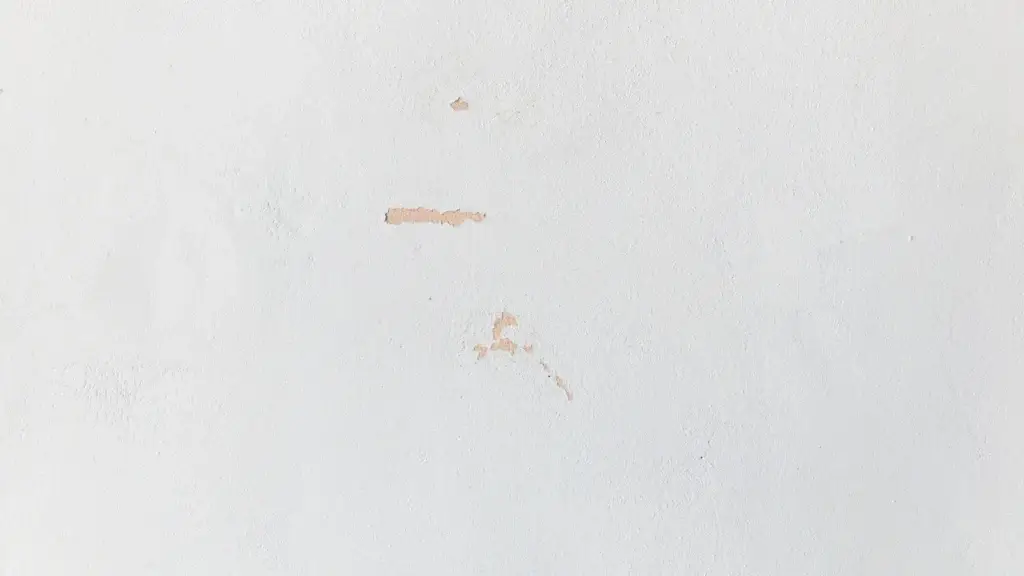
Paint that lifts when tape is removed is generally treated as damage rather than fair wear and tear, because state tenancy authorities, such as Queensland’s RTA, say damage is the tenant’s responsibility. That distinction matters at vacate: adhesive left on a wall is a cleaning issue, but adhesive removed with the wrong product can leave a bare paint patch that triggers a repair bill rather than a simple cleaning deduction.
This guide covers the three surfaces renters most commonly face, explains why different tapes require different removal approaches, and tells you exactly what to do if the paint comes up with the residue.
TL;DR: Use low heat from a hair dryer to warm the adhesive and peel with a plastic card. For leftover residue, spot-test 70% isopropyl alcohol or eucalyptus oil and blot, never rub. Acetone is safe on bare glass but will strip acrylic wall paint. Always test in a hidden corner first.
Why Tape Residue Is a Bond Risk
Because lifted paint counts as damage, the risk sits with your bond, not the landlord. Fair wear and tear means the landlord absorbs the cost. Actual damage is what a landlord can claim against the bond.
It happens in two ways. The first is leaving behind residue: a sticky patch or faint discolouration that shows up at the final inspection. The second is paint lift, where the tape removes the paint along with itself. Paint lift costs more than residue because it requires patching and repainting, not just cleaning.
From what Urgent Pro sees across final inspections in Perth, Brisbane, Gold Coast, Sydney and Melbourne, tape marks and adhesive residue are among the most consistent minor deduction triggers, particularly in bedrooms where decorations have been hung and in living areas where cable-management tape has been used along skirting boards. Understanding what counts as fair wear and tear on walls versus actual damage before you start removing will help you prioritise what actually needs fixing.
Why Different Tapes Leave Different Residues
The adhesive type determines what product you need. Using the wrong solvent on the wrong adhesive either does nothing or causes damage.
Masking and painter’s tape uses either a rubber-based or acrylic pressure-sensitive adhesive. Most painter’s tape designed for interior walls uses a water-based acrylic adhesive with a thin coating, calibrated for moderate tack and residue-free removal within its rated dwell time. Left beyond that window, or applied over loose or poorly bonded paint, it can still leave residue or cause lift.
Double-sided tape and poster tape most commonly use an acrylic pressure-sensitive adhesive on both faces, which means higher total adhesive contact with the wall and typically a stronger bond than single-sided tape. This is the most common cause of paint lift in rental properties.
Electrical tape, gaffer tape and duct tape use rubber-based adhesives. Gaffer tape left on a wall for three months is a completely different removal problem from the same tape peeled off within a week. Once a rubber-based adhesive has cross-linked and hardened, heat must be applied before any solvent will have meaningful effect.
Packing tape and clear sticky tape use an acrylic pressure-sensitive adhesive on a plastic film. The backing typically strips cleanly, but leaves an acrylic residue on painted surfaces, particularly where wall texture gives the adhesive something to grip.
Walls Painted with Water-Based Acrylic: What Lifts the Paint, and What Is Safe
Most rental properties are painted with water-based acrylic paint in a low-sheen or matt finish. This matters because paint manufacturers advise against strong solvents on matt and low-sheen paint, and recommend warm water with mild detergent for routine cleaning; check your paint’s care guide. Strong solvents dissolve the same acrylic resin binders found in both the adhesive and the paint.
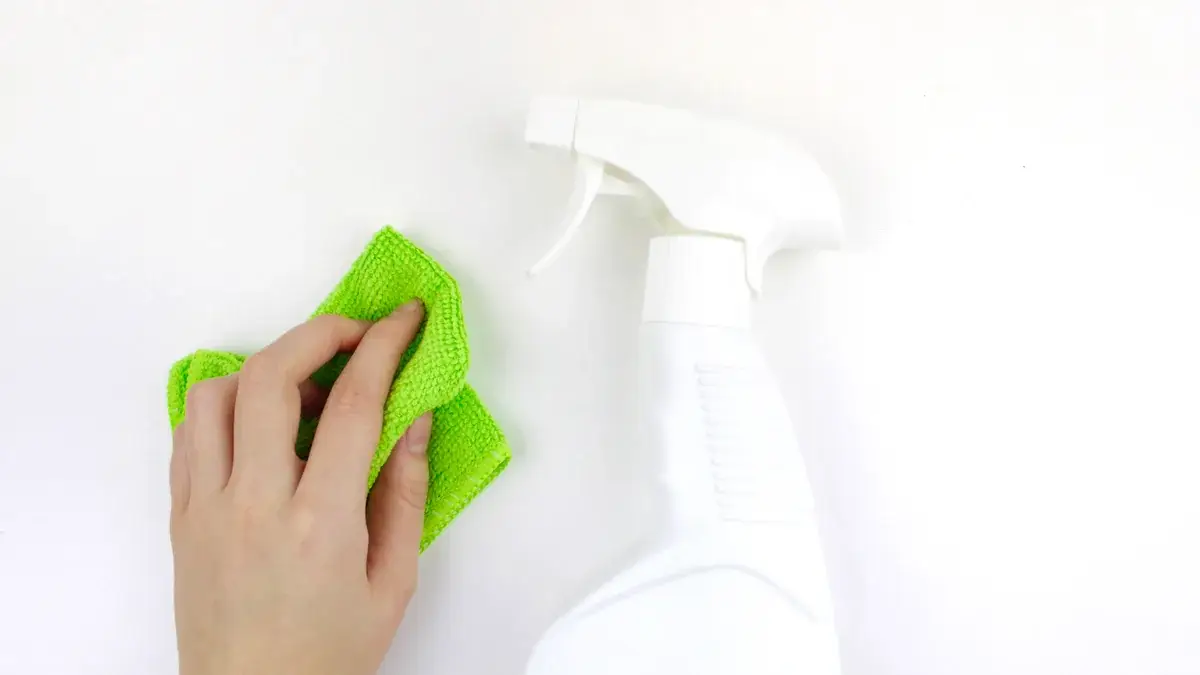
The safest removal sequence for tape residue on painted walls is:
- Apply low heat from a hair dryer to the residue for 20 to 30 seconds to soften the adhesive. Do not overheat, as excessive heat can damage the wall surface.
- Gently slide a plastic card at a low angle under the residue to lift it away. Do not use metal scrapers or blades.
- For stubborn residue, dab eucalyptus oil onto a cloth and let it dwell for 10 to 15 minutes. Eucalyptus oil softens the adhesive without attacking the paint film. Bosisto’s Eucalyptus Oil is available at Coles and Bunnings nationwide.
- If residue remains, dab 70% isopropyl alcohol onto a microfibre cloth and press it against the area for 10 to 15 minutes before lifting.
- Wipe the treated area with a barely damp cloth and diluted dish soap to remove any remaining oil or alcohol residue.
The concentration of isopropyl alcohol matters. Use 70%, not 99%. Higher concentrations increase the risk of dulling or softening the paint film, particularly on flat or low-sheen finishes. As a general rule, the flatter the paint finish, the greater the risk of damage from any solvent.
What to avoid on painted walls:
Acetone will dissolve acrylic paint. It breaks down the same resin binders found in both the adhesive and the wall paint, which is why using it to remove residue frequently removes paint along with it. Avoid acetone, nail polish remover, paint thinner and mineral spirits on painted walls.
Vinegar is sometimes suggested as a natural option, but acetic acid can damage paint adhesion on some surfaces and is not recommended for painted walls.
WD-40 will break some adhesive bonds, but leaves an oily film on the wall that is difficult to clean without scrubbing. Scrubbing acrylic paint, particularly flat or low-sheen finishes, dulls the surface permanently and can attract attention at a final inspection.
Dabbing is correct. Rubbing spreads dissolved adhesive over a wider area and risks burnishing the paint. Always test any product in an inconspicuous area before applying it to a visible surface.
The house cleaning services available through Urgent Pro include surface assessment to help identify issues that could lead to a deduction before they become a problem at final inspection.
Glass Surfaces: Windows, Mirrors and Shower Screens
Uncoated glass, as found in standard windows and mirrors, is chemically stable against the solvents used in adhesive removal. This gives you considerably more flexibility with glass than with painted walls.
Isopropyl alcohol does not attack glass, leaves no residue when it evaporates, and is the best first choice for cleaning window glass and uncoated mirrors. For most acrylic tape residues on glass, a cloth dampened with 70% isopropyl alcohol will do the job cleanly.
Acetone is stronger and effective on glass, but it can damage tinted film adhesives, rubber edge seals on double-glazed units, and any painted surfaces the solvent contacts if it runs. On single-pane, untinted and uncoated windows, acetone is a reasonable option for stubborn rubber-based residue. On double-glazed, tinted or frosted glass, avoid it.
Shower screens may have a factory-applied hydrophobic coating. Aggressive solvents can strip these coatings. Start with warm soapy water and progress to isopropyl alcohol only if necessary.
The removal sequence for glass:
- Warm the residue with a hair dryer on low for 20 to 30 seconds.
- Work under the residue with a plastic card.
- Treat remaining residue with a cloth dampened with isopropyl alcohol. Wipe clean with a glass cloth.
- For stubborn rubber-based residue on plain, uncoated glass only, acetone applied directly to the residue on a cotton pad and wiped away promptly is an option.
Mineral spirits are not recommended on glass. They evaporate slowly and leave an oily film that smears rather than cleans. Isopropyl alcohol is the standard professional approach for adhesive residue on glass and is considerably safer than acetone for most household applications.
Timber, Laminate and Vinyl Surfaces
Sealed timber and laminate surfaces handle solvents reasonably well. A 50/50 mix of isopropyl alcohol and water applied to the residue with a dwell time of 10 to 15 minutes works well on most sealed surfaces. Eucalyptus oil is a gentler alternative for sealed timber. Always test in a hidden area first, as some laminate clear coats can be dulled by repeated solvent exposure.
Unsealed or unfinished timber is porous. Any oil-based remover can leave a dark stain that may be permanent. On raw timber, use a hair dryer and plastic card only.
Vinyl flooring and vinyl-wrapped surfaces are generally solvent-resistant. Follow any adhesive remover treatment with a wipe-down using warm soapy water, then a clean rinse. Solvents left on vinyl can leave a sticky residue if not fully removed.
Old and Hardened Residue: What Changes
Time fundamentally changes the removal problem. This is where most DIY attempts go wrong, and where the wrong method causes more damage than the original residue.
Rubber-based residue tends to go through three stages: fresh residue that lifts relatively easily, then a sticky, oily stage, and finally a hardened film. Rubber-based adhesives can harden and bond more strongly over weeks to months, so remove tape residue early. Tape residue that has been on a wall for six months is not the same problem as tape removed within a fortnight.
For hardened rubber-based residue, heat is mandatory before any solvent. Apply a hair dryer on medium heat for 30 to 60 seconds to soften the oxidised adhesive, then work with eucalyptus oil at a longer dwell time of 15 to 20 minutes. Multiple applications are typically required. Do not attempt to scrape hardened rubber-based residue without heat first: it will drag and is likely to pull paint with it.
For hardened acrylic PSA residue, 70% isopropyl alcohol with an extended dwell time is more effective than oil. Apply on a cloth, press and hold against the residue for 10 to 15 minutes before working it rather than wiping immediately.
What to Do If Paint Lifts When Removing Tape
Paint lift happens when the adhesive bond is stronger than the adhesion between paint layers. It is most common on walls where paint was applied without adequate surface preparation, where the paint is old or applied over a mismatched primer, or where tape was pressed down firmly and left in place for a long time.
If paint comes away when you remove the tape, stop. Do not remove more tape until you understand the full extent of the problem.
For a small lift, the repair sequence is:
- Allow the area to dry completely before attempting any repair.
- Feather the edges of the lifted area by sanding lightly with fine-grit sandpaper, working in circular motions from the centre outward to create a gradual transition that will be less visible under touch-up paint.
- Fill any exposed substrate with acrylic wall filler, allow to dry fully, and sand back level.
- Touch up with matching paint. The difficult part is sheen: rental properties are typically painted in a standard white, but the specific product and sheen level matters. A flat white on a low-sheen surface, or fresh bright paint on a yellowed original, will be visible even if the colour appears to match.
A useful rule of thumb is the palm test: if the lift is larger than your palm, the result of a professional repair is likely to be better than a DIY touch-up. Visible patching at a final inspection may lead to a deduction for wall repainting regardless of the quality of the repair.
For pre-vacate repairs alongside your end of lease clean, the Urgent Pro network can patch walls before you move out. For a full picture of what property managers look for at a final inspection beyond wall surfaces, see our final inspection cleaning standards guide.
FAQs
Is tape damage on walls covered by fair wear and tear?
Usually not. Lifted paint counts as damage, and state tenancy authorities treat damage as the tenant’s responsibility. The same applies to posters and Blu-Tack. Fair wear and tear covers gradual deterioration from normal everyday use: faded paint, minor scuffs, small nail holes from picture hanging. Tape damage, where adhesive residue remains or paint has lifted, falls outside that definition and can be claimed against your bond.
How long can I leave tape on a rental wall before it becomes a problem?
Most likely, it is already an issue. Most painter’s tapes designed for interior use carry a dwell time of 7 to 14 days, usually printed on the packaging. General-purpose masking tape and packing tape have no rated dwell time and can begin bonding more aggressively within weeks on a warm painted wall. Gaffer tape and electrical tape use rubber-based adhesives that set harder the longer they stay on, making the residue substantially harder to remove and increasing the risk of paint lift considerably.
Can I use WD-40 to remove tape residue from walls?
WD-40 will break the bond, but it leaves an oily film on the wall that is very hard to clean without scrubbing. Scrubbing acrylic wall paint, particularly flat or low-sheen finishes, dulls the surface and can attract attention at a final inspection. Eucalyptus oil or 70% isopropyl alcohol are better options because they break the adhesive bond and are far easier to clean away.
Is Blu-Tack safer for rental walls than tape?
No. Blu-Tack leaves an oil stain on painted walls over time and can pull paint when removed. Paint damage from Blu-Tack is generally treated the same way as tape damage. Neither is inherently safe on rental walls, and both should be tested in a hidden area first.
My property manager says I need to repaint a full wall because of a small touch-up patch. Is that reasonable?
Outcomes vary by tenancy length, the age of the paint and how visible the repair is. Ask for a quote, and check your state tenancy authority’s guidance on disputing a repaint.