

Wall holes, particularly those left by picture hooks, are among the first things an agent looks for at a final walk-through. Not because they are expensive to fix. Rather, because a poorly executed patch against an aged painted wall stands out to anyone with experience, and it usually signals that something was noticed and covered over. Patches are not always required, and a reasonable case can often be made for fair wear and tear on walls.
Before You Patch: Check Your State’s Rules
Each state’s tenancy law sets the condition a rental property must be returned in, allowing for fair wear and tear, and your state’s tenancy authority is the place to check the current position. Whether small picture hook holes count depends on the state, how many holes there are and how large they are, and what your lease and entry condition report say, and the fair wear and tear guide linked above covers that question in full. If the holes look more like damage than normal use, or you want a professional assessment before the final inspection, you can book a local handyman for wall repairs through the Urgent Pro platform, where the provider assigned to your job is a verified independent professional carrying public liability insurance.
The Distinction That Matters: Wear and Tear Versus Damage
Just as a single small hook hole might not raise any questions, the same wall covered in holes of varying sizes is more likely to be interpreted as damage, particularly where those holes are from large anchors or a gallery-style arrangement.
A standard picture hook leaves a hole roughly two to three millimetres in diameter. An anchor bolt pulled out badly, a large masonry anchor, or a bracket screw driven into plasterboard leaves something substantially bigger and more ragged at the edges. A bedroom wall with two small hooks is consistent with normal use. The same wall with twelve holes at varying heights is more likely to be treated as damage.
Location makes a significant difference. Holes in standard wall positions raise no questions. Holes drilled into tiling, into heritage plaster features, or in positions that suggest a heavy structural bracket invite more scrutiny. Agents read what is in front of them, and unusual holes attract attention.
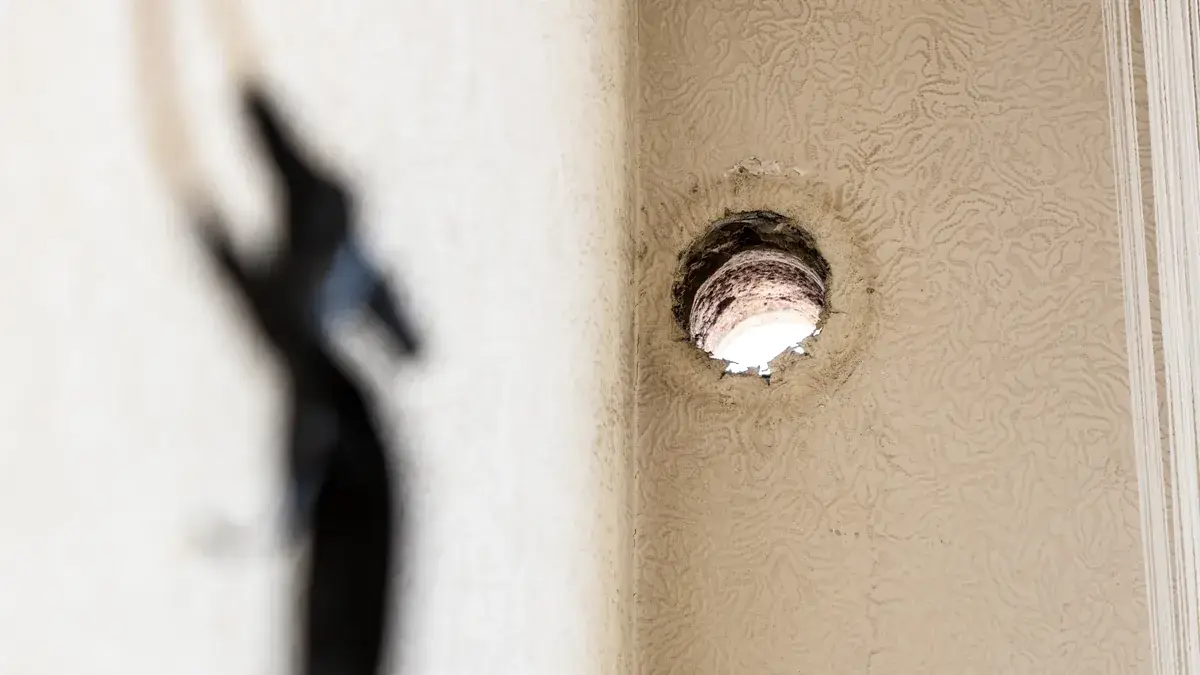
DIY Patching: When It Works and When It Doesn’t
Fixing small holes is fairly easy. The real problem comes when trying to match the paint. For a standard picture hook hole in plasterboard, the repair process is straightforward: lightweight filler pressed firmly into the hole, scraped flush with the surface, sanded smooth once dry, spot-primed, then painted to match. Done properly, the repair is invisible.
Most DIY patches fail at the final step. Not the filling, not the sanding. The paint match.
The Colour-Matching Problem
Paint can change significantly over time. Humidity, weather and the effects of UV exposure all alter how a painted surface looks after a few years. Cleaning can also affect the surface and change the way it reflects light. When a small area is retouched to cover a hole, that freshly painted spot often looks noticeably different from the aged wall around it, and the difference catches the eye.
This is the same standard that governs what agents check at a final inspection: the property needs to look as it did when you moved in. A patch that draws the agent’s eye has failed that test, even if the underlying hole is properly filled and flat.
Agents look at walls in raking light. That angle reveals every surface irregularity. A patch that sits slightly raised, shows a different sheen, or reads as a subtly different colour will draw more scrutiny than the unfilled hole would have.
Ask yourself one question before beginning any repair: can you make this repair truly invisible? If the honest answer is no, do not patch it. A small hole consistent with normal use is defensible. A visibly failed patch is not.
When to Book a Handyman for Wall Repairs
Four situations justify booking a professional rather than attempting the repair yourself.
The hole is larger than a standard picture hook. Holes from large anchor bolts, heavy brackets, or accidental impact require a mesh backing and several thin layers of filler to prevent sinking. The patch then needs to be feathered far enough across the wall that the transition becomes invisible. That takes skill and practice, not just the right materials.
You have multiple holes across several walls. This is where a single handyman booking earns its cost. A handyman booking through Urgent Pro starts from $220 for a small single-task job of up to 60 minutes on site. Multi-task or higher-skill jobs typically quote in the $300 to $800+ range, depending on the number of holes, their size, the wall finish and any materials. Bundling repairs across several rooms into one visit is usually better value than separate bookings. A single small hole on a single wall rarely justifies the minimum on its own.
The paint condition around the holes is already compromised. Peeling paint, old poor patches, or cracking around the hole suggest the surface needs more than a spot fill. A professional can assess whether a targeted repair will hold, or whether a broader area of wall needs preparation before any filler goes on.
There is no reliable way to colour match old paint yourself. A paint store can match a chip to a close colour, but applying that match invisibly against a worn and aged surface is a practical skill. A professional who does touch-ups regularly will get far closer than most tenants attempting it for the first time.
For a full breakdown of handyman call-out fees for small repairs, including the variables that push the cost above the minimum, the pricing guide on this site covers the detail.
Photograph Before and After
Before patching anything, photograph each hole clearly, with a coin or ruler in frame for scale. A date-stamped photo documents the original size of the hole and can be used as evidence if the agent later disputes whether it falls within normal wear and tear.
For tenants in Western Australia, Consumer Protection WA now handles the first stage of the bond dispute process, and a dated photo record of the wall’s condition carries real weight in that process. The same documentation habit applies in every other state, even where the dispute pathway differs.
Photograph any repairs you make as well. A before-and-after record protects you if the agent later suggests the patched wall looks worse than the original hole and attempts to charge for a broader repaint. This costs nothing and resolves many disputes before they reach a formal stage.
FAQs
Do I have to fill picture hook holes when I move out in Australia?
Not necessarily. Whether small picture hook holes count as fair wear and tear depends on your state, how many holes there are and how large they are, and what your lease and entry condition report say. Check with your state’s tenancy authority before patching anything.
What makes a wall hole chargeable damage rather than wear and tear?
Size, number, anchor type, and location. A single small hook hole per room is generally consistent with normal use. Large anchor holes, holes drilled into tiling or heritage features, or a high number of holes across a single wall are more likely to be treated as damage beyond fair wear.
Why do some DIY wall patches look worse than the original holes?
Paint fades and changes over time, so a fresh patch rarely matches the aged surrounding surface exactly. A spot that reads as slightly brighter, a different sheen, or raised at the edges will catch an agent’s eye in raking light more readily than an unfilled hole that fits within normal use.
How much does it cost to get a handyman to patch wall holes before moving out?
A handyman booking through Urgent Pro starts from $220 for a small single-task job of up to 60 minutes on site. Multi-task or higher-skill jobs, such as holes across several rooms or larger holes needing mesh backing and broader paint feathering, typically quote in the $300 to $800+ range, depending on the number and size of the repairs, the wall finish and materials.
Can I patch the holes myself if I cannot match the paint?
If you cannot make the repair genuinely invisible, the practical advice is to leave the hole alone. Document it with a dated photograph to establish its original size, and book a professional who can match and feather the finish correctly. A visible patch is assessed more critically than an unfilled hole that fits within normal use.