
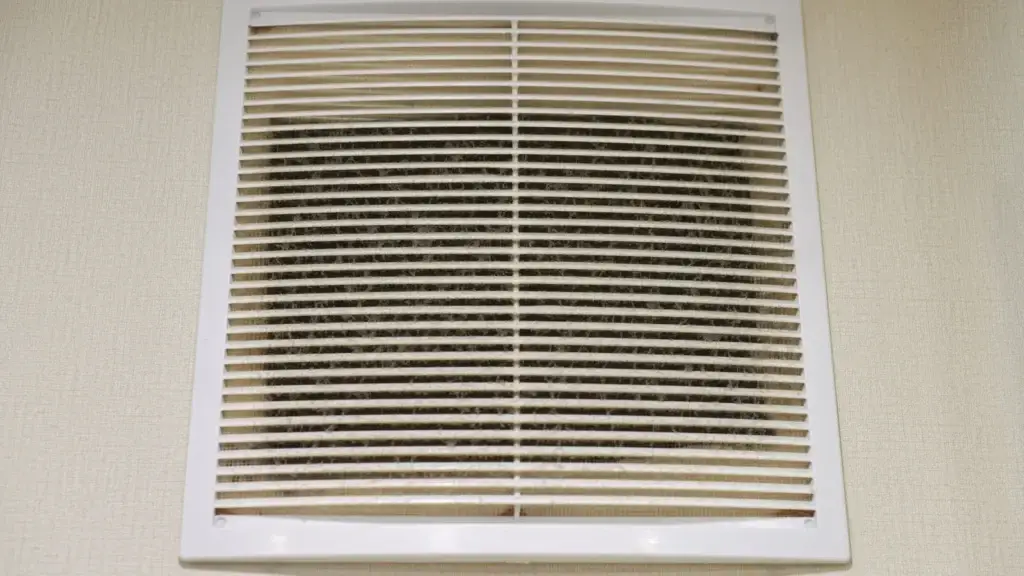
Making sure your exhaust fan covers are clean is crucial for your final inspection of a rental. Dust and lint can block the airflow and can potentially create a fire hazard. The blockage can also go undetected by tenants because the fan still operates. The best way to unclog your exhaust fan is to clean it, and the process should take about 15 minutes. This is what the process looks like, what you should not do, and what the official condition report forms say.
Short Answer
Remove the plastic cover and wash it. Vacuum the blades and motor housing and wipe the motor housing. That is all you should do for cleaning. Do not attempt to remove wiring. Do not attempt to remove the unit from the ceiling. That is an electrician’s job.
How to Tell If Your Fan Needs Cleaning
There are two ways to tell if your fan needs a deep clean.
The first is the obvious visual check. If you see the grille is furry with dust, or the cover has dust clogged in the slots, then you should clean the fan.
The second check is to listen. If you hear your fan make a humming or rattling sound, that means your unit may need attention.
For the function check, turn on the fan and press a single sheet of toilet paper against the grille. A fan drawing air can stick the paper to the grille. If the paper does not stick, or only barely sticks, the fan is obstructed and should not be used to move air through the room. Clean the fan.
A fan that passes the suction test but sounds different may be a candidate for replacement. Review that section before continuing.
A Clogged Fan Is Not Just Unattractive
Over the life of a fan, tiny particles from the air of a bathroom (hair, skin, lint and toilet paper dust) will build up on the blades and the housing of the motor. If the fan is not cleaned periodically, the dust will coat the housing of the motor and act as insulation. As the insulation builds up, the motor will run hotter than designed and can enter a fault condition. The hot motor can ignite the lint and other flammable materials and cause a fire.
A clogged exhaust fan is a fire risk, not just an untidy grille.
One job a fan is meant to do is remove humidity, and a blocked fan cannot do that. That moisture builds up, gets trapped, and creates mould. Mould takes longer than 15 minutes to remedy.
What You Can Safely Clean Yourself
There is a clear demarcation line in Australian electrical safety law, and it is important here.
Washing the cover, vacuuming the blades and the motor housing, and wiping the motor housing are all maintenance tasks that do not involve the fixed electrical installation. Work on the fixed wiring or the motor is electrical work, and in Queensland and Western Australia it can only be done by a licensed electrician. AS/NZS 3000:2018 is the Wiring Rules standard that licensed electricians must follow.
Electrical work is regulated by NSW Fair Trading, the Electrical Safety Office in Queensland, Energy Safe Victoria and Building and Energy in Western Australia. In Queensland, the Electrical Safety Act 2002 requires an electrical work licence, and hard-wired appliances must be connected by a licensed electrician. In WA, licensing is set by the Electricity (Licensing) Regulations 1991. For the other states and territories, check your state regulator.
The verified house cleaning providers on the Urgent Pro network stick to the same demarcation. Cleaning the exhaust fan cover is within the standard bathroom scope of a bond or end of lease clean. Replacing or repairing the fan unit is outside any cleaning or handyman scope.
Turn Off the Power at the Right Place
Switch off the bathroom circuit at the main switchboard before removing the cover. The light switch on the bathroom wall does not fully isolate the fan. The fan remains live when the light switch is off.
Turn the light on before going to the switchboard, so you can confirm the circuit is dead when the light goes out. Restore power in the same way once the cover is dry and back in place.
What You Will Need
- Step stool or ladder
- Vacuum cleaner with brush attachment
- Old toothbrush or soft-bristled scrub brush
- Mild dish soap
- Damp microfibre cloth
- Dry towel (one for the floor beneath the fan, one for drying the cover)
- Eye protection
Place a towel on the floor under the fan. A built-up cover will release a lot of dust as it falls.
The Cleaning Sequence
Remove the cover. Most covers in Australia are made of plastic and are held in place with two spring clips. Pull the cover down about five centimetres and reach in to pinch the clips together. The cover will then drop free. Covers on older models may be held in place by screws.
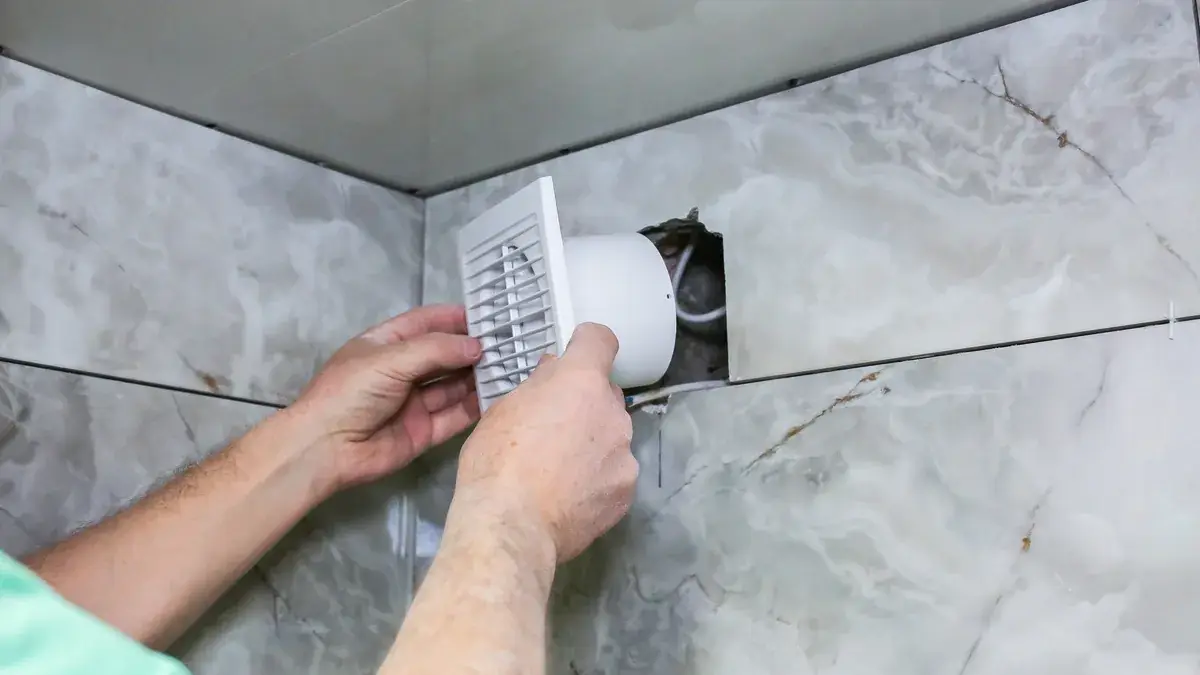
Wash the cover. Soak the cover in warm, soapy water. Use an old toothbrush or soft scrub brush to clean the grille. Rinse and dry completely before replacing. A damp cover back on a live fan is a problem you can prevent by waiting.
Vacuum the blades and housing. Loose dust will brush off with the brush attachment. For hard-to-reach dust, carefully clean the housing and blades.
Scrub the blades. The build-up of dirt and grime on blades obstruct airflow and can only be removed with an old toothbrush. Work along each blade and scrub the build-up free. Vacuum the debris as you go. This is what actually restores airflow.
Wipe the motor housing exterior. Dust and dirt can also collect on the exterior housing and impede heat dissipation. Use a microfibre cloth to remove the dust and dirt. Do not get the cloth too wet and do not let it touch the motor or wiring.
Reinstall and test. Restore power at the switchboard and run the fan. The airflow should be improved and the toilet paper test should show the paper holding firmly against the grille.
What You Should Not Touch
If you open the cover and find any of the following, stop and call a licensed electrician.
- Wiring connections behind or around the fan unit
- The motor, beyond a quick wipe of the exterior housing
- Ductwork running into the ceiling cavity
- Any component that requires wiring to be disconnected or moved
Replacing a hard-wired fan unit is electrical work. In Queensland and WA it needs a licensed electrician, and other states have similar rules, so a handyman should not do it. Knowing repairs tenants can handle themselves helps avoid an expensive problem down the line.
When to Replace the Fan
A failing motor cannot be fixed by cleaning the cover. If after cleaning the fan:
- makes grinding, rattling or scraping noises when running
- starts slowly or struggles to reach speed
- has a burning smell at any point
- does not turn on at all
…the unit needs a licensed electrician, not a deeper clean. A burning smell means the motor is overheating and is at risk of causing a fire. It should be treated as urgent.
Replacement is recommended if the unit is ten to fifteen years old or older. Older units often lack thermal cut-out protection and carry a higher risk of overheating. Replacing a standard bathroom fan in Australia costs between $250 and $550, including supply and installation.
Are Exhaust Fans Assessed at Final Inspections?
Yes. In Queensland, the exhaust fan is a named line item on the official condition report form, so it is not something an agent adds at their discretion. In other states, agents still check that the fan is clean and working.
In Queensland, the RTA Exit Condition Report (Form 14a), issued under the Residential Tenancies and Rooming Accommodation Act
2008, has an “Exhaust fan” line in its wet area sections, such as the bathroom and ensuite, and an “Exhaust fan/rangehood” line in the kitchen. Each is marked as clean, working and undamaged, against the same criteria as every other item.
The Property Condition Report (Form 1), issued under the Residential Tenancies Act 1987 WA, records the condition of the property.
In Queensland, the entry report (Form 1a) is compared with the exit report (Form 14a) at the end of the tenancy. In WA, Form 1 is used at the start and again at the end, and the exit report is due within 14 days of the tenancy ending.
For the purposes of final inspections, agents are checking whether the fan is working and whether it is clean. A lint-packed cover would not pass the cleanliness check. A fan that does not operate would not pass the working check. Either condition may result in a claim against your bond.
Knowing what agents check at a final inspection allows you to focus on the right tasks in the last days of your tenancy.
If you are arranging a final clean, exhaust fan cover cleaning is a standard inclusion in bond cleans and end of lease cleans through the Urgent Pro cleaning network.
Exhaust fan covers are not always part of the standard scope for a regular house clean. You can check what a standard house clean includes before booking, or request that exhaust fan covers are added to the scope specifically.
FAQs
How often should I clean a bathroom exhaust fan?
Six months is the standard recommendation. More often if the bathroom is heavily used or shared. Do the toilet paper test between cleans: press a sheet against the running fan and see if the suction holds it in place.
Do I need to turn off the power before cleaning?
Yes, and at the right place. The light switch on the bathroom wall does not fully cut the fan’s power. Switch off the circuit at the main switchboard before removing the cover, and restore it once the cover is fully dry.
Is it safe to clean the exhaust fan myself?
Removing and washing the cover, vacuuming the blades, and wiping the motor housing is safe routine maintenance. The moment you are dealing with wiring, the motor itself, or removing the unit from the ceiling, that is a licensed electrician’s job.
Is the exhaust fan checked at a final rental inspection?
Yes. The Queensland RTA Exit Condition Report (Form 14a) names the exhaust fan as a line item, marked as clean, working and undamaged, and agents in other states check the same things. Failing to remove lint from the exhaust cover is an avoidable fail: the cleaning takes about 15 minutes.
Can a handyman clean or replace an exhaust fan?
A handyman can clean the cover and accessible blades as part of a routine maintenance or cleaning task. Replacing a hard-wired fan unit is electrical work. In Queensland and WA it needs a licensed electrician, and other states have similar rules, so a handyman should not do it.