
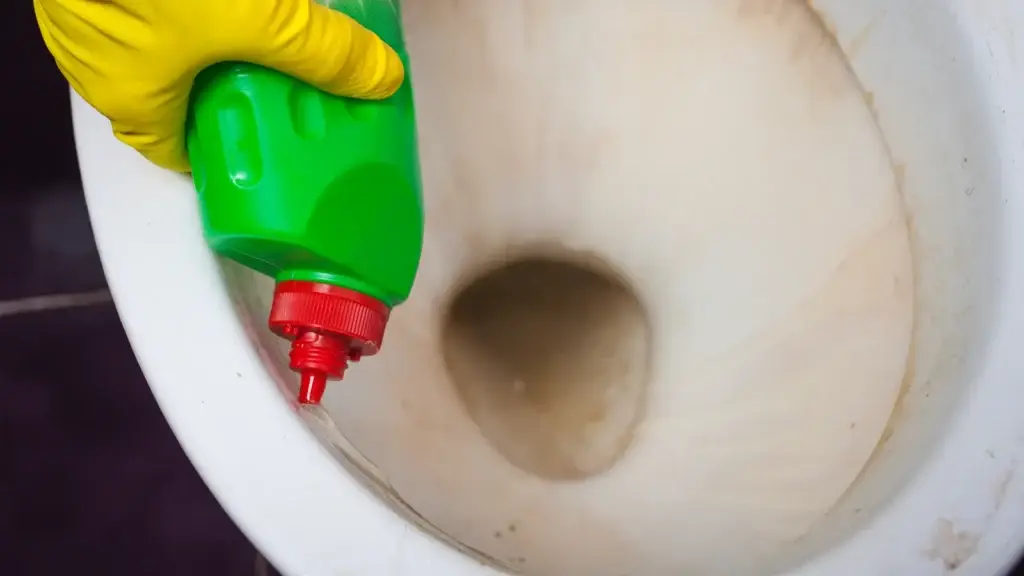
Calcium carbonate, also known as limescale, is one of the most common mineral deposits found in homes. It deposits itself readily on the inside of a toilet bowl, where water sits and evaporates constantly.
When using a standard toilet cleaner on limescale, you will notice it has no effect. This is because standard toilet cleaners do not react with limescale. The only thing that reacts with limescale is an acid, and even then the acid needs sufficient contact time to work.
Citric acid is the most practical choice for this job. Once the acid contacts the limescale, it begins dissolving the calcium carbonate. The time needed depends on the severity of the buildup and the type of acid used.
Short answer: Drain the bowl, apply a citric acid solution or commercial descaler under the rim and across all stained surfaces, allow 30 to 60 minutes for citric acid or three to four hours for white vinegar, scrub with a toilet brush, and use a wet pumice stone on any deposits that do not soften with acid alone. How quickly limescale returns after you have cleaned it off depends on where in Australia you are.
What Limescale Actually Is
Every time your toilet refills, incoming water carries dissolved calcium and magnesium minerals. Those minerals do not flush away. Over time they crystallise and bond to the bowl’s vitreous china surface as calcium carbonate deposits.
The deposit is alkaline. Standard toilet cleaners do not break down calcium carbonate. Limescale is not a failure of hygiene; it is a mineral deposit problem driven by your local water supply.
Toilet cleaning is a standard inclusion in a professional house clean. Descaling a limescale-encrusted bowl, however, requires a specific acid-based product and much more contact time than a standard clean allows. Knowing the difference helps you decide what to tackle yourself and when to call in a provider.
How Water Hardness in Your City Affects The Rate of Buildup
Water hardness is measured as the amount of calcium carbonate in the water. The higher the number, the more mineral is deposited with each flush cycle. The National Health and Medical Research Council’s Australian Drinking Water Guidelines set an aesthetic guideline of 200 mg/L. Above that level, scale can build rapidly in hot water pipes and fittings.
Water hardness varies by city. Perth water is hard, and some supplies exceed that guideline. Brisbane sits in the middle. Sydney and Melbourne are generally soft. Hard water leaves more mineral deposit with every flush. Check your water utility’s published water quality information for your suburb.
Limescale builds faster in hard water areas such as Perth. Brisbane rentals see it less often, and in Sydney and Melbourne, where the water is generally soft, hard water staining in a toilet is less common. If you are seeing it there, mineral deposits from the hot water system may also be contributing.
Standard Toilet Cleaners Don’t Touch Limescale
Calcium carbonate is alkaline, which is why standard toilet cleaners have no effect on it. Some people assume that bleach removes a brown toilet ring for good, but that is not the case. The calcium carbonate is completely untouched, and the staining comes back within days.
Acid Chemistry
Calcium carbonate dissolves in acid. The acid donates hydrogen ions that react with the carbonate, producing calcium salts, water, and carbon dioxide. The carbon dioxide bubbles out of the solution as the fizzing you see during the reaction. The calcium salts then rinse away.
There are three practical acids for this job: citric acid, white vinegar, and commercial hydrochloric acid descalers. Of these, citric acid is the best choice. It is available in most supermarkets as a white powder, does not evaporate, and produces no unpleasant fumes. Fifty to 100 grams dissolved in a litre of water will dissolve moderate deposits in 30 to 60 minutes. For years of accumulated buildup, extend the contact time to two to three hours.
White vinegar contains approximately 5% acetic acid and works on light to moderate deposits. Allow three to four hours of contact time for moderate staining, or leave it overnight for heavy deposits.
Hydrochloric acid at approximately 9 to 10% is the main ingredient in commercial toilet descalers. Of the three options, these work the fastest, usually within 15 to 30 minutes. Follow the directions on the label and use them in a well-ventilated bathroom.
One common suggestion to avoid: mixing baking soda with vinegar. Baking soda is alkaline and partially neutralises the vinegar before it reaches the limescale. The fizzing is the two ingredients reacting with each other, not the limescale dissolving. Use vinegar on its own, or switch to citric acid for better results.
Vitreous china, used in Australian toilet bowls, is resistant to these acids. The surfaces at risk from acid splashes are chrome tap fittings; if the cleaning solution contacts them, wipe it off immediately.
One danger that must not be ignored: never mix any acid-based descaler with bleach. The reaction produces chlorine gas.
The Right Way to Deal with Tough Limescale
- Turn off the isolation valve behind the toilet and flush to drain the bowl. Acid and limescale work better in direct contact without standing water diluting the solution.
- Apply the descaling solution or citric acid to all stained areas and under the rim. The rim jets help flush the bowl effectively, and over time limescale gradually builds up and blocks them. Getting the product up under the rim is as important as treating the visible bowl surface.
- Allow contact time. Commercial HCl descalers: 15 to 30 minutes. Citric acid solution: 30 to 60 minutes for moderate deposits and two to three hours for heavy deposits. White vinegar: three to four hours for moderate deposits and overnight for heavy deposits.
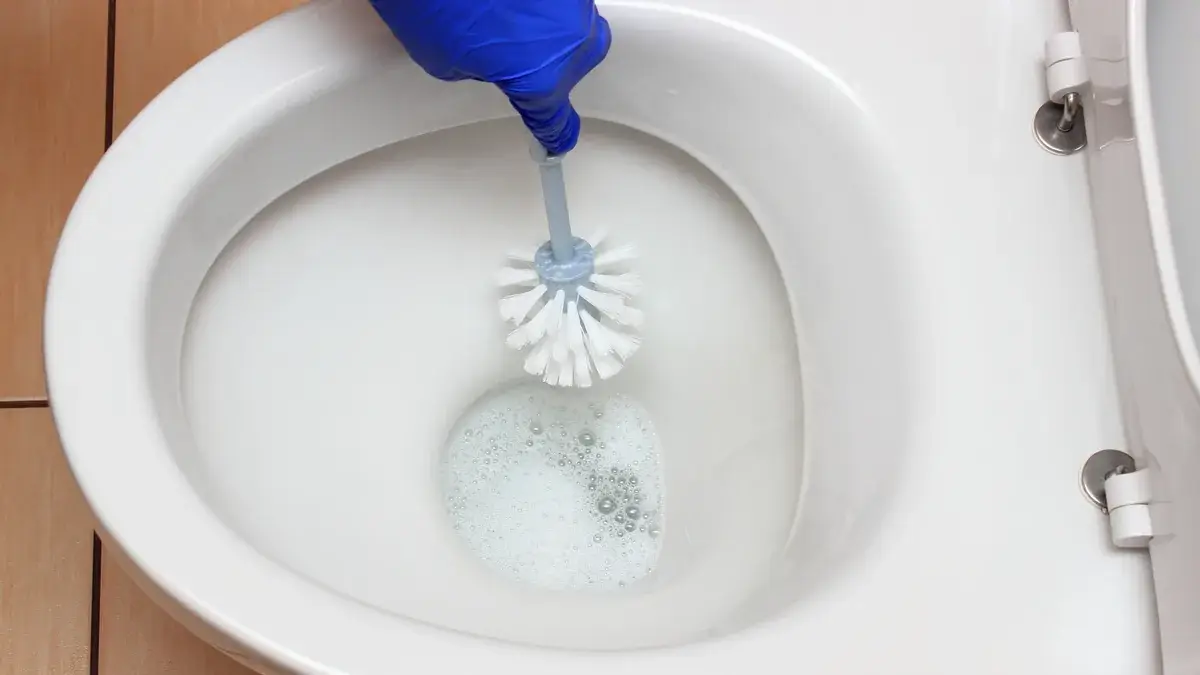
- Scrub the deposits with a toilet brush and flush the bowl.
- For deposits that do not clear with acid alone, use a wet pumice stone. Wet both the stone and the bowl surface and apply light, circular strokes. A wet pumice stone will not scratch vitreous china; a dry one will. This is particularly effective on heavy waterline rings where the calcium carbonate has hardened into a crust over months or years.
- Repeat if needed. Severe, long-standing deposits may require multiple treatment sessions before the bowl is fully clear.
The Waterline Ring
There is a specific reason for the ring that forms at the water level inside the bowl. Between flushes, the water sits at a constant height. At the water-air interface, partial evaporation concentrates dissolved minerals. Calcium carbonate crystallises at that precise boundary and forms a hard ring at a fixed height around the bowl.
Standard under-rim gel products do not reach this ring. After draining the bowl, press strips of damp paper towel against the ring and saturate them with citric acid solution, leaving them in place for 30 to 60 minutes. The direct, sustained contact shifts deposits that a quick spray application cannot.
Preventive Care
Weekly cleaning with a citric acid solution prevents thin new deposits from hardening into the layered scale that takes hours to dissolve. In Perth especially, this is not an unusually high standard; it is the minimum needed to stay ahead of the water supply.
Cistern tablets are a poor substitute for regular cleaning, and they do nothing to prevent calcium carbonate from forming. In-tank cleaning tablets can degrade flush valve parts over time, so check your cistern manual before using them.
What Agents See at a Final Inspection
According to the Queensland Residential Tenancies Authority’s cleaning guidelines, tenants must leave the property in the same condition as at the start of the tenancy, and the RTA says dirt, grime, grease and damage are not fair wear and tear. In WA, check Consumer Protection’s guidance on leaving a property reasonably clean.
The RTA’s guidance does not list limescale specifically, but visible staining is treated as a cleaning issue. In principle, limescale caused entirely by local water hardness could be argued as environmental deterioration, similar to paint fading from sunlight. In practice, however, brown and grey staining inside the toilet bowl is consistently treated as a cleaning issue at exit inspection across all five cities Urgent Pro operates in. An argument that the limescale is the local water supply’s fault is unlikely to succeed in a dispute unless you can demonstrate the toilet was already stained when you moved in and have documentation to back that up.
Your entry condition report is what protects you. If the toilet was visibly stained at the start of your tenancy and you recorded it with photographs on the inbound report, that pre-existing buildup is not your liability. Buildup that occurred during your tenancy is yours to address before you return the keys.
For a full breakdown of what agents check at a final inspection, our guide to final inspection cleaning standards covers the bathroom in detail.
If the bowl has not been descaled in a long time, when a deep clean is the right call before an exit inspection covers what to ask for and what a standard clean will not reach.
For a clear picture of what a standard house clean covers in the bathroom before you book a regular or end of lease clean, that is worth reading first.
Frequently Asked Questions
What causes limescale in a toilet bowl?
Hard water contains dissolved calcium and magnesium. Between flushes those minerals crystallise on the vitreous china surface as calcium carbonate. The harder your local water supply, the faster the buildup. Perth water is hard, which is why limescale is more common there than in Melbourne or Sydney, where the water is generally soft.
Is white vinegar safe to use on a toilet bowl?
Yes. Vitreous china is resistant to household acids and white vinegar is safe to use inside the bowl. Apply it undiluted and allow three to four hours of contact time for moderate deposits, or leave it overnight for heavy buildup. For faster results, a citric acid solution at 50 to 100 grams per litre is more effective than vinegar and needs only 30 to 60 minutes.
Does mixing baking soda and vinegar remove toilet limescale?
Not as effectively as using vinegar on its own. Baking soda is alkaline and partially neutralises the vinegar before it contacts the limescale. The fizzing is the two ingredients reacting with each other, not the limescale dissolving. Vinegar alone is more effective, and citric acid gives better results still.
Can you mix bleach and a descaler to clean a toilet?
No. Any acid-based descaler combined with bleach produces chlorine gas. If you have previously used bleach in the bowl, flush it out completely and wait at least 15 minutes before using any acid-based product.
Will limescale staining affect the bond at a final inspection?
In practice, yes. The Queensland RTA says dirt, grime, grease and damage are not fair wear and tear, and in WA, check Consumer Protection’s guidance on leaving a property reasonably clean. The RTA’s guidance does not list limescale specifically, but visible staining is treated as a cleaning issue at exit inspection across all five cities Urgent Pro operates in. Your protection if the toilet was already stained when you moved in is a clear entry condition report with photographs from day one.