
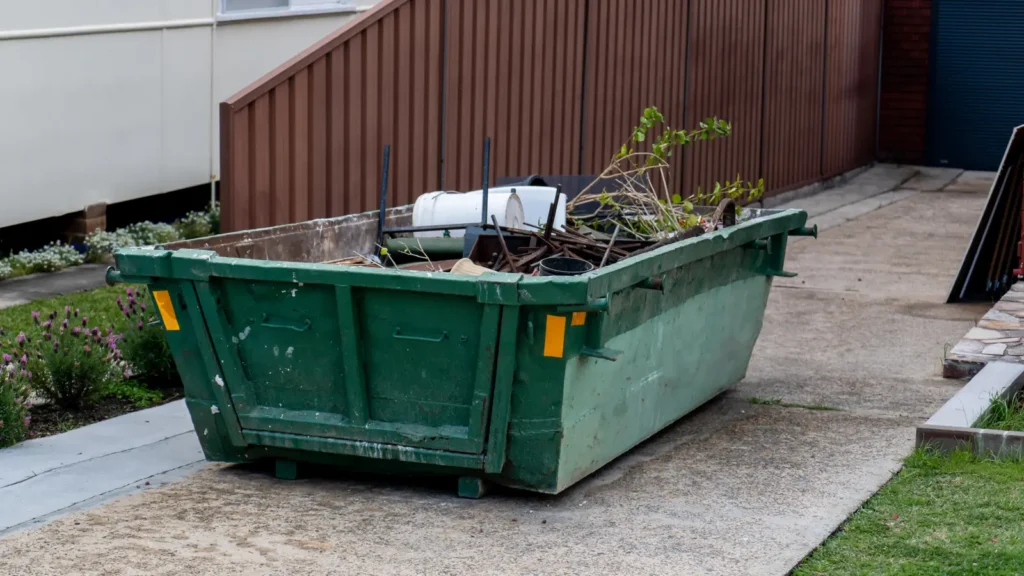
Most household, garden and renovation waste can go in a general skip bin. What cannot go in is a short list of hazardous items, including asbestos, liquid paint, chemicals, gas bottles, fuel and oil, batteries and sharps, plus a few items that depend on the operator, such as tyres, soil, treated timber and fridges. Check anything you are unsure about with your skip operator before loading.
What a general skip bin usually takes
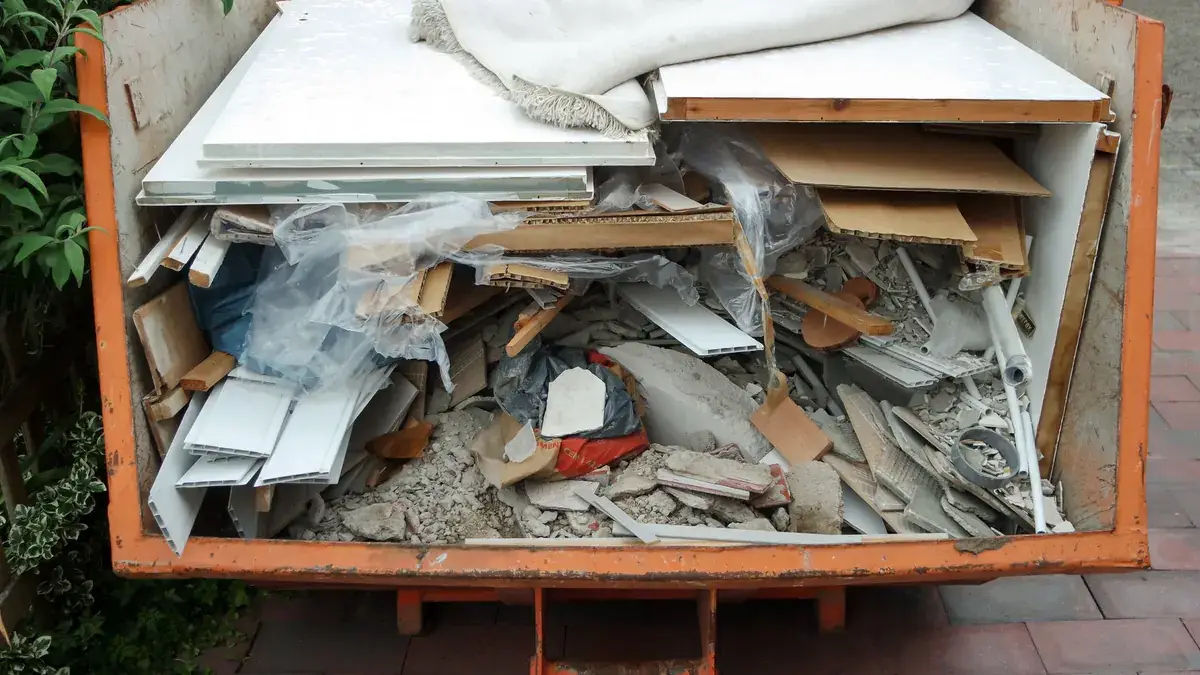
A general waste skip usually takes general household waste, clothing and soft furnishings, cardboard and paper, furniture, most metals, and non-hazardous renovation waste such as plasterboard, tiles and untreated timber. Many operators also take garden waste in a general skip, and some offer a cheaper green waste skip if your load is mostly garden waste.
Operators commonly offer three types of skip. A general waste skip takes mixed household and renovation waste. A green waste skip takes garden waste only. A heavy waste skip takes soil, bricks and concrete, which are heavy per cubic metre and can push a general skip over its weight limit. Rules vary between operators, so confirm the skip type against your load before you book.
Before the skip arrives, sort your waste into piles and set aside anything you are unsure about until you have checked it with the operator. If you would rather not hire a skip, a rubbish removal from verified providers loads and takes the waste away, but the same hazardous items are refused there too.
Items that cannot go in a skip bin
These items need their own disposal path. Rubbish removal providers on the Urgent Pro network must refuse them as well, so plan for them separately.
Asbestos. Do not put asbestos, or anything you suspect contains asbestos, in a skip. Asbestos needs licensed asbestos removal and specialist disposal. Fibro in homes built before 1990 is a common place to find it. If you think your waste may contain asbestos, stop work and contact the relevant authority in your state or territory.
Paint, solvents and oils. Liquid paint, solvents, paint thinners, motor oil and fuel go to your council’s hazardous waste drop-off, not a skip.
Gas bottles. Return gas bottles to your council or to a gas supplier.
Pesticides and pool chemicals. Take these to your council’s hazardous waste drop-off.
Batteries. B-cycle says used batteries should never go in household rubbish or recycling bins, and they do not belong in a skip either. Household batteries go to a B-cycle drop-off point. Lead acid car batteries are not accepted by B-cycle; ask your council or transfer station, or find a used lead acid battery recycler through ABRI.
Fluorescent tubes. These go to council recycling.
Medical waste and sharps. Return these to your council or a pharmacy.
Large amounts of food waste. Small amounts mixed through household waste are normally fine. A large amount can attract pests and smell, and an operator may refuse it.
Items that depend on the operator
These items are not banned everywhere, but enough operators refuse them or charge extra that it is worth checking before you load.
Tyres. Tyres are a restricted waste type. Many operators will not take them in a general skip, and those that do may charge per tyre. Your council or a tyre retailer can take old tyres.
Treated timber. Untreated timber, such as framing, shelving and furniture, is usually fine in a general skip. Treated timber, including CCA-treated decking, posts and sleepers, is handled differently. The NSW EPA’s treated timber guidance says treated timber should never be burnt or buried, that treated timber from larger building or demolition jobs should go to a licensed landfill, and that your council can tell you which licensed landfills accept it. Ask your skip operator whether it accepts treated timber before you load it.
Soil. Soil is heavy per cubic metre and is often excluded from general skips. Some operators offer a soil or heavy waste skip; ask about the weight limit when you book.
E-waste. Televisions, computers, monitors and printers have their own national recycling scheme, and many general skip operators will not take them. Where e-waste goes in Australia explains the options.
Mattresses. Many operators take mattresses but charge per item. Ask whether a surcharge applies.
Fridges, freezers and air conditioners. These contain refrigerant that has to be removed (degassed) before disposal, so many operators will not take them in a skip. Ask first.
Contamination charges
If prohibited items are found when a skip is tipped, the operator may charge a contamination fee on top of the hire price, or refuse to collect the skip. Fees vary by operator, by the item and by the size of the load, so read your hire terms before loading and ask who is liable if someone else puts an item in your skip.
A skip on a driveway can be used by passers-by. If yours is easy to reach from the street, check it before the collection truck arrives.
For rubbish removal booked through Urgent Pro, indicative rates by job type are a starting point before your written quote. Any issue with a rubbish removal collection booked through Urgent Pro can be raised under the warranty on rubbish removal jobs within 24 hours of the removal vehicle leaving your property.
Where to take what a skip will not accept
Asbestos: through a licensed asbestos removalist. To find the work health and safety regulator for your state or territory, see Safe Work Australia’s list of WHS regulators.
Liquid paint, solvents, oils and chemicals: your council’s hazardous waste drop-off. Check your council’s waste services page for opening times and accepted materials.
Gas bottles: your council or a gas supplier.
Batteries: household batteries to a B-cycle drop-off point; car batteries to a lead acid battery recycler, or ask your council.
Tyres: your council or a tyre retailer.
Treated timber: a licensed landfill that accepts it; your council can tell you which ones do.
If you are weighing up the options for a bigger job, whether a skip or a removal suits compares the two.
For free council options, hard rubbish schedules for Australian councils set out what councils collect from the kerb.
FAQs
What cannot go in a skip bin?
Asbestos, liquid paint, solvents, oils and fuel, gas bottles, pesticides and pool chemicals, batteries, fluorescent tubes, and medical waste or sharps. Many operators also refuse tyres, soil, treated timber, e-waste and fridges that have not been degassed, so check with your operator before loading.
Can I put plasterboard in a skip?
Plasterboard is non-hazardous renovation waste, and general waste skips usually take it. Some operators charge more for building waste or ask for it in a particular skip type, so mention it when you book.
What happens if I put the wrong thing in?
The operator may charge a contamination fee when the skip is tipped, or refuse to collect it. Fees vary by operator and by what is found, so read your hire terms and ask who is liable if someone else adds an item.
Can I put paint tins in a skip?
Liquid paint, solvents and paint thinners go to your council’s hazardous waste drop-off, not a skip. Ask your operator whether it accepts empty, fully dried paint tins.
Can I put treated timber in a skip bin?
Untreated timber usually can. Treated timber, including CCA-treated decking, posts and sleepers, is handled differently. The NSW EPA says larger amounts of treated timber should go to a licensed landfill, and your council can tell you which ones accept it. Ask your operator before loading it.
Is a skip or a removal service better?
It depends on the size of the job, access and how long you need to load. A skip suits a job you fill over several days. A rubbish removal suits a one-off load where you want the loading done for you. Neither will take hazardous waste.