

If there is a lingering vomit smell after cleaning, the odour was not completely removed. The smell is not in the pile of the carpet. The odours have moved to the backing and often the underlay. Cleaning only removes what is seen. What is in the backing and underlay cannot be removed by surface cleaning.
Short answer
For any solid remains, remove immediately by working from the outside of the stain toward the centre to avoid pressing it deeper into the pile. Extract as much of the remaining liquid as possible. An enzymatic cleaner should then be applied and allowed to dwell. The smell returning after the carpet has completely dried means the underlay is also contaminated and surface treatment will not remedy the issue. Contamination at the underlay would require professional carpet cleaning.
Why the smell comes back after surface cleaning
The main volatile components of vomit are short-chain fatty acids, primarily butyric acid and isovaleric acid. Vomit odour is stubborn because the liquid soaks through to the backing, and even a small amount left there can be noticed by anyone in the room.
Liquid vomit soaks through to the backing within seconds, so what you see on the surface is rarely the whole stain.
The compounds in the backing of the carpet, when combined with heat and moisture, will off-gas through the pile and create a smell. A room that appeared to have no problem the morning after a cleaning can develop a noticeable unpleasant odour on a warm day.
The first ten minutes: do’s and don’ts
Of all the factors related to a spill, time is probably the most critical. The longer the vomit is in contact with the carpet, the deeper it penetrates and the more the fibres are damaged by the stomach acid.
For the removal of the solid matter, work from the outside of the stain toward the centre, using a firm flat tool. Raising rather than scraping and keeping the motion vertical is critical. Rubbing the carpet fibres can push the contents of the vomit deeper into the carpet and make the contaminated area larger.
Once solids are removed, blot liquid using an absorbent cloth and continue until the cloth shows minimal transfer. A wet/dry vacuum is more effective and should be used before applying any cleaner. When treating and rinsing, extend the area a few centimetres beyond the visible edge of the stain.
Hot water is to be avoided as it can set the stain, and fragranced products only mask the odour without eliminating it.
Solid matter removal: the technique that does not grind it in
The most common mistake is scrubbing or pushing the stain deeper, which also spreads the contamination. The only rule is to work from the outside of the stain toward the centre, lifting vertically.
If vomit has dried, use cold water to soften it before lifting. Do not flood the area.
Enzymatic treatment: why it works and how to apply it
Most household cleaners are surfactants, which only work to dissolve what is on the surface, not break down the compounds that are responsible for odour.
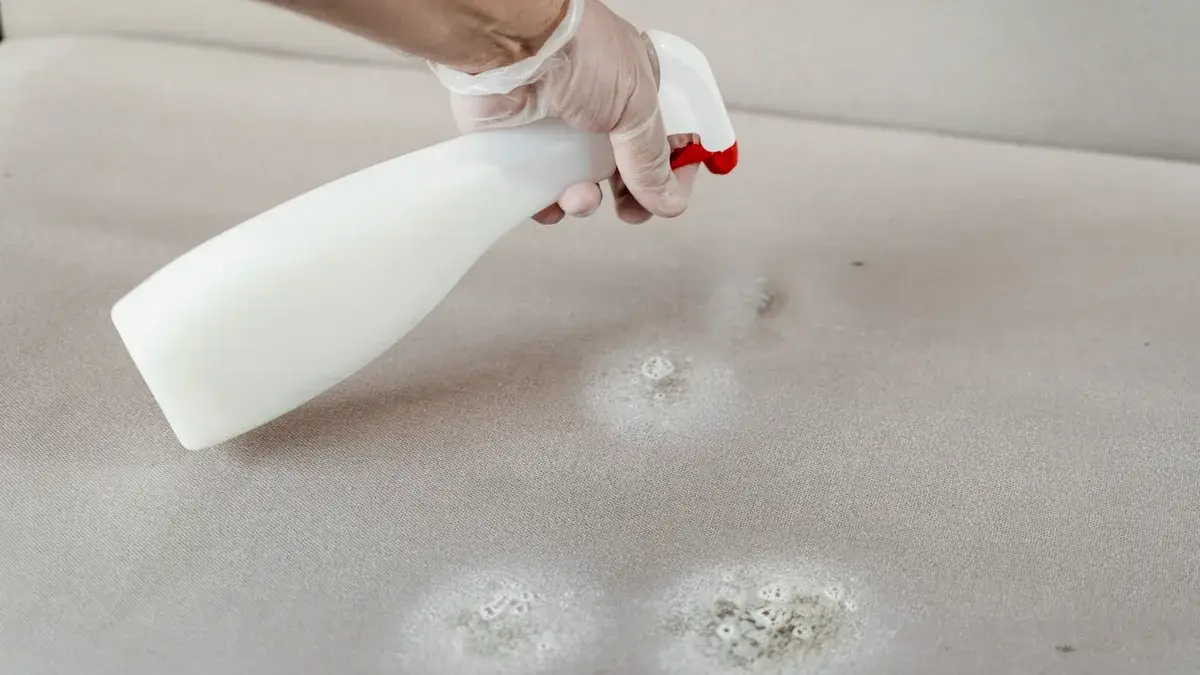
Enzymatic cleaners break proteins and fats found in stains at a molecular level. Proteases break the protein molecules found in vomit into smaller water-soluble fragments, and lipases break the fat and oils found in vomit into glycerol and fatty acids. Since vomit contains both protein and fat, a cleaner that contains both proteases and lipases is ideal. For more information on the chemistry, read our article on enzymatic treatment for pet urine and stain odour removal in carpets.
Cleaning-grade enzymes are denatured at temperatures around 60 degrees Celsius and are most effective in the 20 to 35 degree range. To allow the cleaner to do its job, do not introduce heat to the surface before the dwell time is complete.
Work the cleaner into the fibres of the carpet using a soft brush or cloth, and follow the product’s directions, and do not dilute it more than the label says.
The dwell time question: why rushing defeats the purpose
The main reason DIY enzymatic cleaner treatments fail is because the product is rinsed or blotted up before the required contact time is achieved. The area must remain wet for the treatment to work, which may take 10 minutes or more. Many people consider the area treated and start cleaning up the rest of the room. If not careful, the treatment is undone.
Cover the treatment with a moist cloth to maintain the right conditions for the full dwell time. Do not let it dry. The enzymes lose their effectiveness without moisture. Once the dwell time has elapsed, blot the area. Allow the carpet to dry thoroughly before assessing the result. Getting back on a wet carpet disperses odour-causing compounds through the pile and gives the impression that odour is still present. What Affects Carpet Drying Time covers many of the variables affecting drying time after treatment.
Underlay contamination: the sign the problem has gone too deep
With consistent return of odour after proper surface treatment and complete drying, the contamination is in the underlay.
This is signalled by the smell intensifying as the room warms and reducing in cool, dry conditions. Volatile fatty acids become more mobile as temperature rises and diffuse upward more readily. Treating the surface of the carpet will have no effect on this. The source of the odour is below the surface being treated.
Because vomit is a liquid, the pad may need treating or replacing. Heavy contamination is a biohazard, so a professional treats it differently from an ordinary spill.
When professional assistance is required
Three situations require calling in the professionals rather than continued self-treatment.
If the smell has returned after a thorough DIY treatment and is temperature-dependent. If the return of the odour is confirmed to be due to underlay contamination, the provider can lift the carpet to assess the underlay. The provider may advise that remediation is required or that the underlay along with the subfloor needs to be sealed and the carpet replaced.
If the volume of biohazard material was significant or if the incident was not remediated in a timely manner. On Urgent Pro, biohazard remediation is treated as a variation to a standard booking, and the provider may decline it.
If a final inspection is required upon vacating, such as for a bond or lease clean. At a final inspection the carpet is judged against the entry condition report, allowing for fair wear and tear (see the RTA’s guidance). The practical expectation is that a professional clean addresses any odour issues. Note that carpet steam cleaning is a separate booking from a vacate or bond clean. Booking a professional carpet clean through Urgent Pro is the better option than continued self-treatment when inspection time is limited.
FAQs
Why does the smell of vomit come back after it’s been cleaned?
The bad smell of vomit is made up of volatile fatty acids (VFAs), primarily butyric acid. Surface cleaning does not reach the carpet backing, so the compounds are still there. As the carpet dries and warms, the fatty acids will off-gas and the smell will come back.
Will baking soda get the vomit smell out of the carpet?
Baking soda is not a long-term solution because it will only absorb the moisture and some of the odour compounds on the surface. Use an enzyme-based cleaner to break down the VFAs in the backing of the carpet. Use baking soda to absorb the odour while you look for an enzymatic cleaner.
Will a steam cleaner get the vomit smell out of the carpet?
Hot water extraction can help after the stain has been treated with an enzyme cleaner, but hot water used too early can set the stain and drive it into the backing.
Does the underlay need to be replaced?
When the odour comes back after a deep clean of the carpet and it intensifies with moisture and heat, the underlay probably needs to be replaced. A professional should be called to lift the carpet, assess the contamination and determine the best course of action, which may include replacement of the carpet pad.