
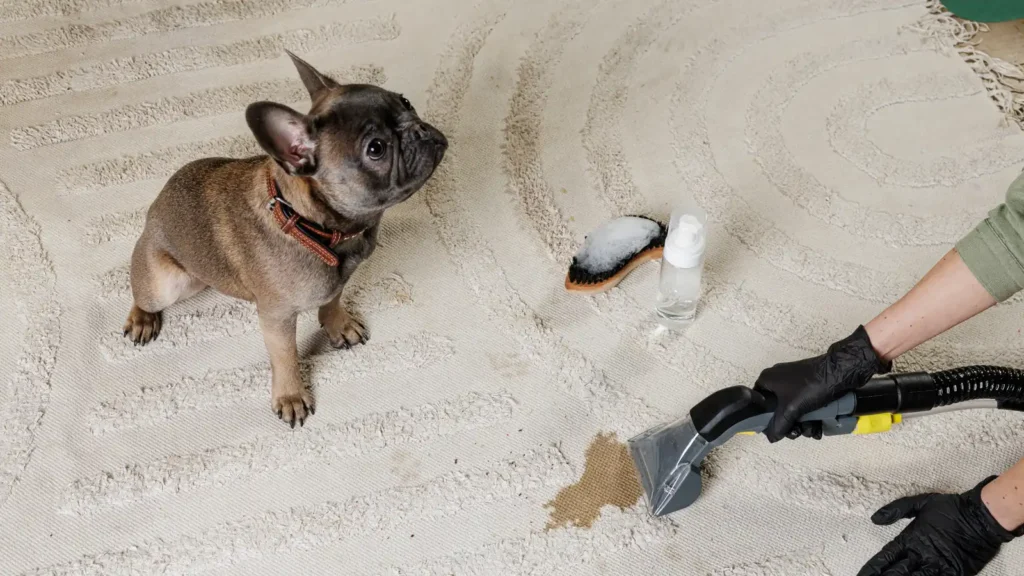
Staining is only one part of the problem. The real issue is what is left behind in the underlay after the surface has been treated. That is why stains and odours come back even after they appear to have been cleaned. In Australia, this issue costs renters their bond every year.
This problem is not limited to the carpet fibres. The backing and the underlay also retain odour. Because of this, even the best products sold at a supermarket cannot fully solve the issue once urine has set.
Here is what works, when it works, and when you need to call in a professional.
Types of Pet Stains and How They Behave
Understanding what kind of stain you are dealing with helps you choose the right approach and set realistic expectations about the result.
Fresh urine can be treated at home if you act immediately. Old or set urine crystallises in the underlay and requires professional treatment with enzyme solutions. Pet urine odour is the most common reason carpets fail a final inspection in Australian rental properties.
Mud and dirt contain fine particles that embed themselves into carpet fibres. The best approach with mud is to let it dry completely before doing anything. Vacuuming up dried mud first, then treating the remaining mark, gives a far better result than trying to clean wet mud, which spreads and embeds it further.
Food and vomit contain coloured particles and proteins that set quickly. Remove any solid matter first, then pre-treat the stain with an enzymatic cleaner before a thorough rinse.
Pet odour without a visible stain usually means the source is in the underlay or backing rather than the pile. These stains are often invisible in normal light and only show under UV. This is the most difficult category for DIY treatment because you cannot clean what you cannot locate.
How to Treat a Fresh Pet Stain
Acting within the first few minutes makes a significant difference. Fresh urine has not yet penetrated the backing. At this stage, thorough blotting and the right product can contain the problem.
Step 1: Blot immediately. Never scrub. Press firmly onto the stain with a clean white cloth or paper towels. Repeat with fresh material until no more moisture transfers. Scrubbing spreads the stain and drives it deeper. Blotting is the only correct technique. Keep the cloth flat and press down; do not rub in any direction.
Step 2: Remove solid matter first. For vomit or faeces, carefully scoop or brush off as much solid material as possible from the outer edge of the stain inward. Do not press down. Once solids are cleared, proceed with blotting.
Step 3: Apply an enzymatic cleaner. Uric acid, which gives pet urine its distinctive odour, is broken down by enzymatic action. If you do not break it down, the odour returns. General spot removers and oxygenated cleaners only mask the odour temporarily. Common household remedies such as white vinegar and bicarb soda neutralise surface odour for a period but do not break down uric acid once it has set.
If the product label does not state that it breaks down uric acid, it will not completely remove the odour. Apply the enzyme cleaner generously, following the label instructions for dwell time. This is typically five to fifteen minutes. Once the dwell time has passed, blot the area thoroughly.
One important note: avoid any cleaner containing ammonia. Ammonia has a similar chemical signature to urine and can draw your pet back to the same spot, repeating the problem in exactly the location you just treated.
Step 4: Rinse with cold water. Flush the fibres with cold water to remove the cleaner and any loosened residue. Do not use hot water. Proteins, which make up a significant portion of urine compounds, set permanently when exposed to heat. Use cold or lukewarm water only for rinsing, then blot again with clean material to remove the rinse water.
Step 5: Allow to dry completely. This is the step most often skipped, and it is the one that matters most. A carpet that is only partially dry carries a real risk of mould or mildew developing in the damp fibres. Moisture also causes odour compounds to re-emerge. Use fans to circulate air, open windows where possible, and keep the area off limits until completely dry. For a detailed breakdown of what influences drying time and how to shorten it, see the article on estimated drying times after professional cleaning.
What You Can Do at Home and What You Cannot
What home treatment can do: Fresh stains can be treated at home to remove the visible mark and reduce surface odour. Acting immediately with the right enzyme product genuinely contains the problem at the fibre level.
What home treatment cannot do: Home treatment cannot reach and break down uric acid that has set in the underlay. Retail enzyme products are not concentrated enough to penetrate to the depth that professional-grade solutions reach. Home treatment also cannot locate stains that are invisible to the naked eye, and it cannot guarantee that odours will be absent at a final inspection.
If odour remains after the drying process is complete, the source is almost certainly in the underlay rather than the fibres. Bicarb soda and white vinegar are appropriate for very recent, contained surface stains. Hydrogen peroxide at three percent concentration can help lift stubborn surface marks but should always be tested on a hidden area first, particularly for wool or natural-fibre carpets.
Why Urine Is Different from Every Other Stain
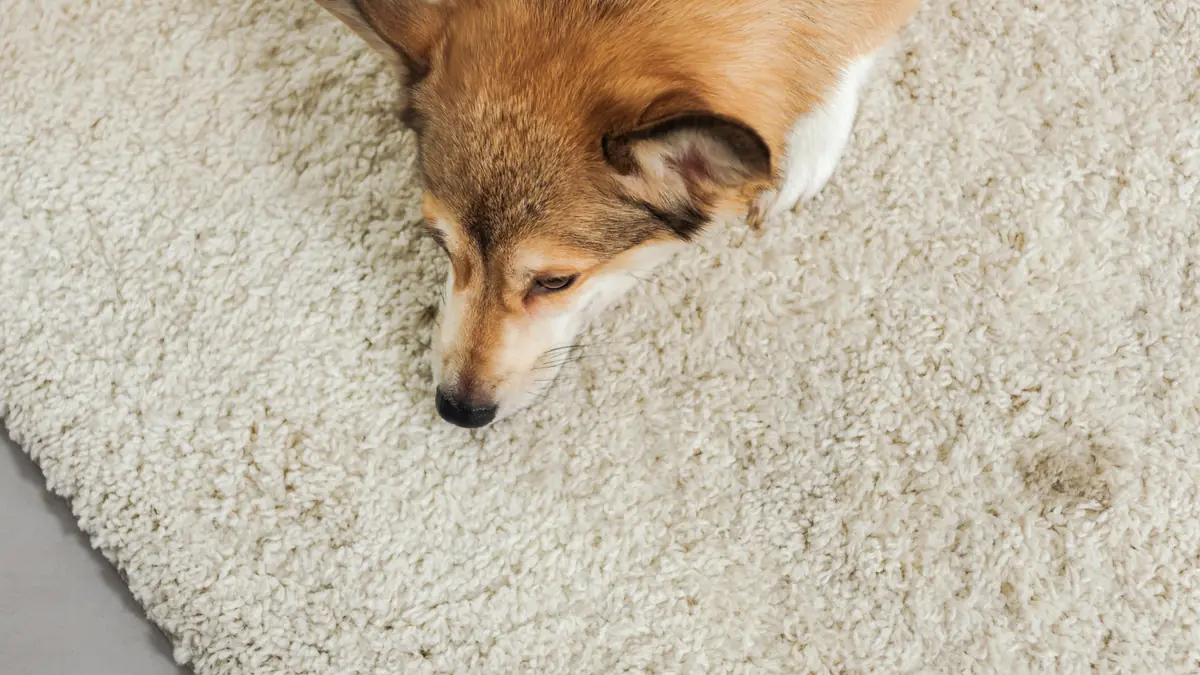
Fresh urine is approximately 95% water, with the remainder made up of uric acid, proteins, salts, and ammonia compounds. As the water evaporates, these compounds concentrate and crystallise in the carpet fibres, backing, and underlay.
These crystals do not produce strong odour when dry and cold. They reactivate powerfully in warm, humid conditions. This is exactly the state of a carpeted room in an Australian summer, or a room that has been steam cleaned without adequate enzyme pre-treatment beforehand.
This is why rental properties cleaned at the end of winter are often odour-free at handover, only for the new tenants to raise a complaint by spring once the property warms up.
It is worth understanding that rehydrating the crystals does not remove the odour. It intensifies it temporarily until the moisture evaporates again. This is why a carpet treated with hot water and no enzyme product often smells considerably worse immediately after treatment. The only way to remove the odour is by breaking down the uric acid crystals with enzymes at adequate concentration and dwell time.
When You Should Call a Professional
There are three situations where professional pet stain treatment through Urgent Pro is the practical answer, not simply the premium option.
The stain is more than a day or two old. If you cannot tell when the accident occurred, assume the urine has soaked into the underlay, possibly across a larger area than the visible stain suggests. Uric acid that has crystallised over time cannot be lifted by household cleaners. Professional-grade enzyme solutions applied at higher concentrations with longer dwell times are the only reliable option.
You can smell it but cannot find the source. If the odour is present but the stain is not visible in normal light, professional UV detection identifies every affected area before treatment begins. Treating some areas and not others is not a solution, because the untreated stains continue to produce odour even after treated areas are clean.
The property is a rental at end of tenancy. At a final inspection, property managers in Australia routinely use UV torches to identify urine staining. Stains that appear clean to the naked eye fluoresce clearly under UV. The argument that the carpet looks clean is not a reliable position to take into an inspection. For guidance on how often pet households should schedule professional cleaning to avoid this becoming a bond dispute, see the article on how often pet households need professional carpet cleaning.
How Much Does Pet Stain Treatment Cost?
Standard carpet cleaning removes general soiling from the fibres and does not include treatment for pet urine. Pet stain and odour treatment is offered as a variation to the standard scope, assessed and priced based on the number of affected areas and their severity.
The minimum rate for carpet cleaning through Urgent Pro starts from $156 for a small synthetic-carpet job in average condition. Pet stain treatment increases the cost based on the area affected and the depth of penetration. For a detailed breakdown of what changes the final price, see the full cost breakdown of a carpet cleaning service.
Disclosing pet history at the time of booking allows the technician to arrive with the right pre-treatment products and price the job accurately upfront. A technician who finds extensive undisclosed urine damage during a routine clean is entitled to reassess scope and price before continuing.
The End-of-Lease Reality
Under Australian tenancy law, pet damage to carpet is not fair wear and tear. It is damage attributable to the animal and the responsibility of the outgoing tenant.
Most bond disputes involving carpet arise because a final inspection identifies pet odour or staining. Bond authorities and property managers have no hesitation using UV torches to identify urine stains, and staining that passes a visual inspection rarely survives a UV check in a property where pets were present.
If odour or staining is found during a final inspection, the landlord is within their rights to claim the cost of professional remediation from the bond. If urine has saturated the underlay across a significant area, underlay replacement may be required in addition to carpet treatment, which increases the cost substantially.
Urgent Pro providers document every carpet cleaning job with before-and-after photographs of each treated area. The Urgent Pro carpet cleaning warranty provides for re-treatment within seven days if odour returns from a treated area where the service was correctly performed. This documentation is the evidence that matters in a bond dispute, and it is the reason that having professional treatment done well before the inspection is a stronger position than an undocumented clean done on the day.
ASCIA’s guidance on managing pet allergens in the home includes reducing embedded allergens in carpet as a practical step for allergy households. This is relevant context if the incoming or outgoing occupants have allergy conditions.
For choosing between extraction methods for a pet-affected carpet, the comparison of the right extraction method for your carpet type explains which approach delivers the better result for pet odour treatment.
Preventing Pet Stains from Becoming a Bigger Problem
A few practical habits significantly reduce the long-term risk of pet damage to carpet.
Keep an enzyme-based pet urine cleaner in the house before you need it. Having the right product on hand at the moment an accident happens is the difference between a contained surface stain and an underlay problem. Enzyme-based cleaners are available from most pet stores and large supermarkets.
Act within minutes, not hours. The first few minutes after an accident are when home treatment is most effective. The longer urine sits, the further it travels and the more it crystallises. A dried stain that has been sitting for hours is significantly harder to treat at home.
Use cold water only for rinsing. Heat sets protein-based stains permanently. Cold or lukewarm water is always the correct choice for pet stain rinsing.
Schedule professional cleaning regularly. For a household with one pet, every six months is the recommended frequency. Regular professional maintenance means each clean addresses normal soiling rather than accumulated damage, which keeps the job within standard scope and cost.
Frequently Asked Questions
Will routine professional carpet cleaning remove pet urine odour?
Standard carpet cleaning removes the soiling in the fibres and will reduce surface odour. Odour from urine that has saturated the underlay requires enzyme pre-treatment as a separate variation to the standard scope. A professional technician will assess on inspection whether the odour source is in the fibre or the underlay, and will advise you on the realistic outcome before starting. A reputable operator tells you if complete odour removal is not likely given the extent of saturation.
Will pet stain treatment cost more than a regular carpet clean?
Yes. Enzyme pre-treatment is a variation to the standard scope and is priced separately based on the number and severity of affected areas. Disclosing pet history at the time of booking allows accurate pricing before the technician arrives. If undisclosed pet damage is found during what was booked as a standard clean, the technician is entitled to reassess the scope and price before continuing work.
Is hydrogen peroxide safe to use on carpet for pet stains?
Hydrogen peroxide at 3% concentration can help remove stubborn surface staining and has a mild deodorising effect. Concentrations stronger than 3% risk bleaching carpet fibres, particularly in wool or natural-fibre carpets. Always spot-test in an inconspicuous area first and allow it to dry before assessing for any colour change. For wool or silk carpets, contact a professional before applying any hydrogen peroxide product.
How do property managers detect pet staining at final inspection?
UV torches cause dried urine to fluoresce visibly in a darkened room. Property managers and agents in Australia routinely use UV detection at exit inspections in properties where pets were present. Staining that is invisible in normal daylight becomes clearly visible under UV, which is why the carpet appearing clean to the naked eye is not a reliable position in a bond dispute.
Why does pet odour come back after cleaning?
If the odour returns after a professional clean, the most likely cause is that the source was in the underlay rather than the fibre. Standard extraction cleans the pile thoroughly but cannot reach crystallised uric acid sitting below the carpet backing. If enzyme pre-treatment was applied at insufficient concentration or without adequate dwell time, the crystals remain and reactivate with warmth and humidity. A re-clean with proper enzyme pre-treatment is the correct response, not a repeat of the standard clean.