
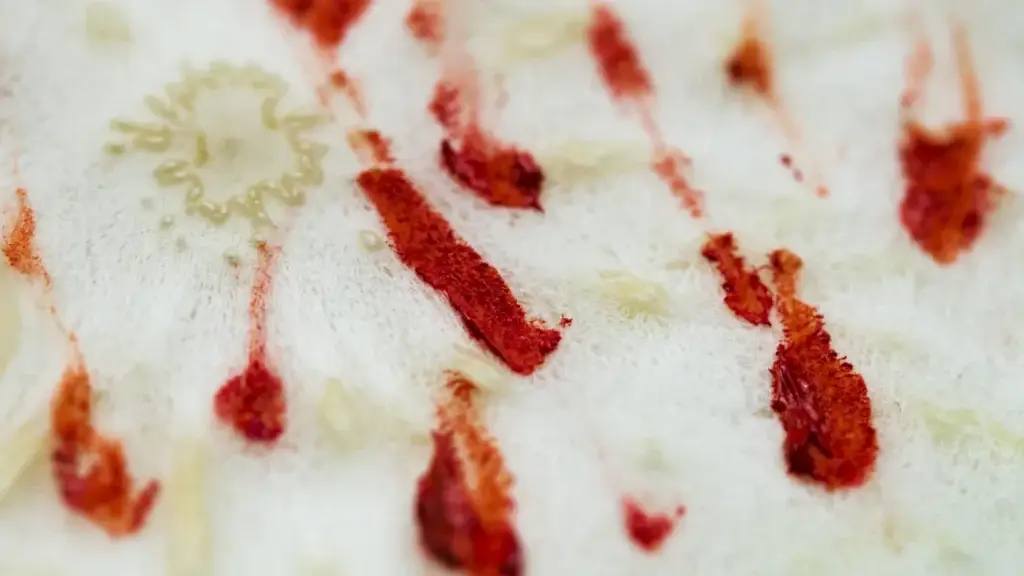
Use cold water, not hot: blot the blood with a clean white cloth, then work in a few drops of dish soap mixed into a cup of cold water, blotting between steps. Hot water, steam or a hairdryer sets the stain, and a large or unexplained spill needs a professional rather than a DIY clean. The steps below are for household accidents like a nosebleed or a small cut.
A note before you start
The IICRC states that blood and bodily fluids are considered pathogenic under OSHA and CDC guidelines. Most household spots are from known sources, and the steps below apply in those situations. If you have a large amount of blood, an unknown source of blood, sharps, broken glass, or any situation involving trauma, biohazard contamination, or potential infection risk, this is not a do-it-yourself job. Contact a biohazard removal service instead.
For all ordinary household stains: wear disposable gloves when handling the stained area or used cloths, and wash your hands thoroughly when you are finished.
Why hot water is the worst thing you can use on a blood stain
The protein structure of blood is denatured by heat, just like cooking an egg. Like an egg, blood becomes permanently set when heat is applied. Blood on carpet behaves the same way. Using hot water or steam sets the blood proteins and bonds them permanently to the carpet fibres, a process known as stain fixation. No other cleaning method can completely reverse this.
Blood is a protein stain, and heat causes protein to coagulate in the fibre, so cold water is used at every step. The IICRC’s consumer guidance on blood stains describes the same basic approach for small spots: clear water first, then a few drops of dish soap in a cup of water, blotting between steps. For larger spills it says a technician certified in hazardous waste removal should be called rather than attempting an ordinary carpet clean.
For professional carpet cleaning through Urgent Pro, providers classify the stain before any treatment. A blood stain where the customer has already used hot water is assessed as potentially permanent before treatment begins, because the fibre may have already been irreversibly altered. Urgent Pro’s warranty terms exclude stains where the carpet fibre has been permanently altered by prior treatment.
What not to use on a blood stain
| Product or method | Why it makes things worse |
|---|---|
| Hot water or steam | Permanently bonds blood proteins to the carpet fibres. Stain fixation is irreversible. |
| Chlorine bleach | Strips carpet colour, and the damage can only be fixed by dyeing or patching the carpet. |
| Strong alkaline cleaners | Damage wool and natural-fibre carpets and can destabilise dye bonds on synthetic carpet. |
| Ammonia | Harmful to natural-fibre carpets. Creates toxic fumes if combined with any bleach residue. |
| Rubbing or scrubbing | Drives the stain deeper into the pile and spreads it laterally. Damages fibre texture permanently. |
| Mixed chemical products | Reactions are unpredictable. If one product has already been applied, tell a professional before they add another. |
Fresh blood: the sequence and the reason for each step
Fresh blood can be removed relatively easily. Each step is designed to lift as much of the blood as possible. The more time that passes between when the blood is spilled and when cleaning begins, the harder removal becomes.
1. Remove any solid material first, lifting it away from the surface rather than pressing it into the fibres.
2. Blot with a dry white cloth. Press firmly and lift cleanly without rubbing. Use a clean section of cloth for each blot. A coloured cloth can transfer dye onto damp carpet, so white is the right choice throughout.
3. Apply cold water sparingly. Cold water keeps haemoglobin in its soluble state, diluting it without triggering denaturation. Use a cloth dampened with cold water or a light mist spray. Do not pour water directly onto the stain.
4. Blot again, working from the outer edge inward. Working inward prevents the stain from spreading as liquid moves through the pile.
5. Repeat steps 3 and 4 until no more colour transfers to the cloth.
6. If the stain persists, mix a few drops of neutral dish soap into a cup of cold water. Apply the solution with a cloth and blot. Rinse the area thoroughly with plain cold water and blot dry. This matches the approach in the IICRC’s consumer guidance for small household spots.
7. Allow the area to air-dry fully with good ventilation. Apply no heat at any stage, including from a hairdryer.
Dried blood: why it is harder and what changes
Blood when it dries forms a stronger bond with the fibre through cross-linking of its proteins. Cold water alone will not dissolve a set stain.
For dried blood, start by softening the area. Press a cloth dampened with cold water gently onto the dried stain for two to three minutes. This will partially re-hydrate the stain. Blot away what lifts and continue to soften as needed. Work from the outer edge inward. Remove any loosened particles without pressing them deeper into the pile.
Once the stain has been softened, apply the dish soap and cold water solution described above. This handles most stains that are a few hours old. For stains that have not responded after two or three attempts, or for stains that have been set for longer, an enzyme-based stain cleaner is the appropriate next step on synthetic carpet only. These cleaners contain proteases: biological enzymes that cleave the peptide bonds holding the haemoglobin to the fibre, breaking it into smaller, water-soluble fragments that can then be extracted. Apply the enzyme cleaner following its product instructions, allow adequate dwell time, then blot and rinse thoroughly with cold water.
For stains that have been set for more than a few hours, repeated treatment attempts will give diminishing returns. At that point, professional assessment is more useful than more DIY chemistry. For the first-response approach across other common carpet stains, see the full stain-by-stain carpet guide.
Wool and natural fibre: different rules
Synthetic carpets (nylon, polyester, polypropylene) are more forgiving and can tolerate a wider range of cleaning products and temperatures. Wool, jute, sisal, and silk are not as forgiving, and different rules apply from the very first step.
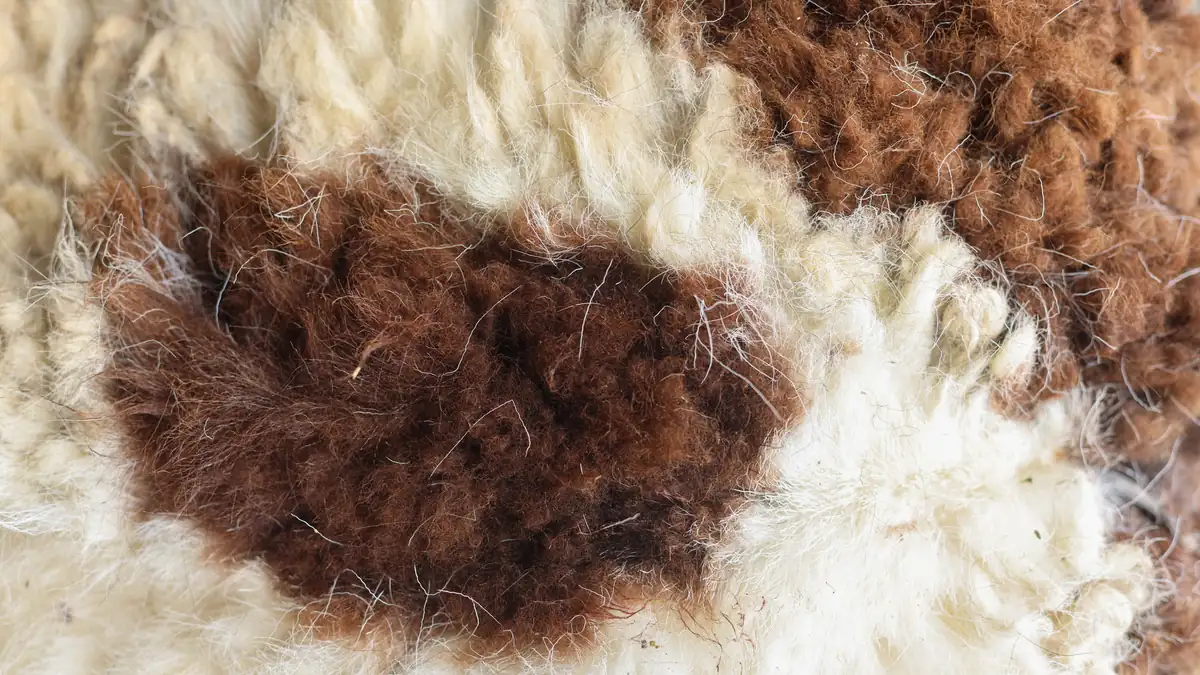
Wool is a protein fibre with a surface of overlapping scales, and it reacts badly to heat, friction and the wrong product. For wool and natural-fibre carpet, change the approach at every step:
- Use cool water only, including rinse water. Never use hot water.
- Blot only. Rubbing damages the fibre.
- Do not use enzyme-based cleaners on wool.
- Use a pH-neutral product only. Avoid alkaline products and bleach.
- If cool-water blotting with a pH-neutral product does not remove the stain, stop and call a professional with experience in natural-fibre carpet.
If you are not sure whether your carpet is wool or synthetic, check the label at the carpet edge near the doorway. Treat it as wool until you know otherwise.
When booking a professional clean, disclose the fibre type before the provider arrives. Urgent Pro’s warranty terms exclude damage to natural-fibre carpets where the fibre type was not disclosed at booking. This affects which professional method suits the stain as much as it affects DIY treatment: standard hot-water extraction runs at temperatures that can felt a wool carpet if the provider does not know what they are cleaning.
What a stain looks like after drying, and whether it is still treatable
Knowing what a stain looks like after it has dried helps determine whether it is still treatable. Blood dries to a rust-brown colour and eventually near-black as it oxidises. The pile becomes progressively stiffer as the protein bonds into the fibres.
Stains that are rust-brown and still confined to the surface pile are often salvageable, especially if they are less than a few hours old. In that case, the cold-water and dish soap sequence should be attempted first. For set stains that have not saturated the backing, an enzyme-based cleaner is the next step on synthetic carpet. For stains that have saturated the backing, appear black, and are rigid throughout the pile, they are likely to be permanent. At that point, professional assessment is the right call rather than further DIY attempts.
Permanent stains can also result from a product altering the fibres before professional help is called. Chlorine bleach, for example, strips carpet colour, and the damage can only be fixed by dyeing or patching. Hot water, applied in the first moments of panic, bonds the blood into the fibre permanently. Urgent Pro’s warranty reflects what providers see consistently: carpet that has been chemically altered by prior DIY treatment is excluded from the seven-day re-clean warranty, because no professional method can restore a fibre that has already been permanently changed.
When to call a professional
Stop DIY treatment and book a professional when:
- The stain is larger than approximately 15 centimetres across.
- Blood has soaked through the pile into the backing or underlay.
- The carpet is wool, jute, sisal, silk, or any natural-fibre construction.
- Two or three cold-water treatment cycles have not lifted the stain.
- Hot water, bleach, or ammonia was applied before treatment began.
- The property is a rental approaching the end of the lease.
That last point is the one that catches tenants out most often. In WA, NSW and QLD, tenancy guidance treats carpet stains as damage, not fair wear and tear. The Queensland RTA’s fair wear and tear guidance contrasts worn carpet from day-to-day use with carpet stains from approved pets. NSW Fair Trading’s wear and damage guidance confirms the same principle: traffic marks and furniture indentations are examples of fair wear, while staining is damage the tenant is responsible for addressing.
A blood stain not present in the entry condition report, and visible at the exit inspection, gives the property manager grounds to claim from the bond: either the cost of professional carpet cleaning, or a contribution toward replacement calculated against the carpet’s depreciated value. The best outcome is to have the stain professionally treated before the exit inspection, before it becomes a formal claim. For a full breakdown of how carpet stains interact with lease-end obligations, see stains and end of lease carpet obligations.
If you are also preparing the property for handover, note that carpet cleaning and a house clean are separate bookings: a house clean covers surfaces, kitchens, bathrooms, and hard floors; the carpet clean is its own scope with its own quote. For what a professional visit costs, see what changes a carpet cleaning quote.
FAQs
Will hot water set a blood stain permanently?
Yes, it can. Heat can set a blood stain, similar to how an egg hardens when heated. Once the blood proteins have set, the stain cannot be fully removed, even with professional cleaning. Always treat blood stains with cold water to prevent this from happening.
Can dried blood be removed from carpet?
Yes, in many cases, as long as the stain has not fully set. For stains that are a few hours old, a cold-water and dish soap solution can be effective. For older blood stains on synthetic carpet, an enzyme-based cleaner is more appropriate, as the enzymes break down the protein bonds holding the haemoglobin to the fibre. Stains that have been treated with hot water, have been on the carpet for more than a day, or have reached the carpet backing are significantly harder to remove and will likely need professional assessment.
What should I use on wool carpet to remove a blood stain?
Only cool water with a pH-neutral cleaner is safe to use on wool. Do not use hot water, alkaline products, bleach, ammonia, or enzyme-based cleaners: enzyme cleaners can damage wool. If cool water and a pH-neutral product do not work, stop and call a professional with experience in natural-fibre carpet. Disclose the carpet fibre type when you book.
Will a blood stain affect my bond?
It can. In WA, NSW and QLD, tenancy guidance treats carpet stains as damage, not fair wear and tear. A blood stain not documented in the entry condition report gives the property manager grounds to claim the cost of professional cleaning or a contribution toward carpet replacement from the bond. Treating the stain promptly is always the better outcome.
When should I call a professional carpet cleaner?
If the blood stain is larger than about 15 centimetres, is on a natural-fibre carpet, has not responded after two or three cold-water treatments, or has reached the carpet backing, book a professional. Also call immediately if hot water, bleach, or ammonia has already been applied: a professional can assess whether the fibre has been permanently damaged or whether treatment is still possible.