
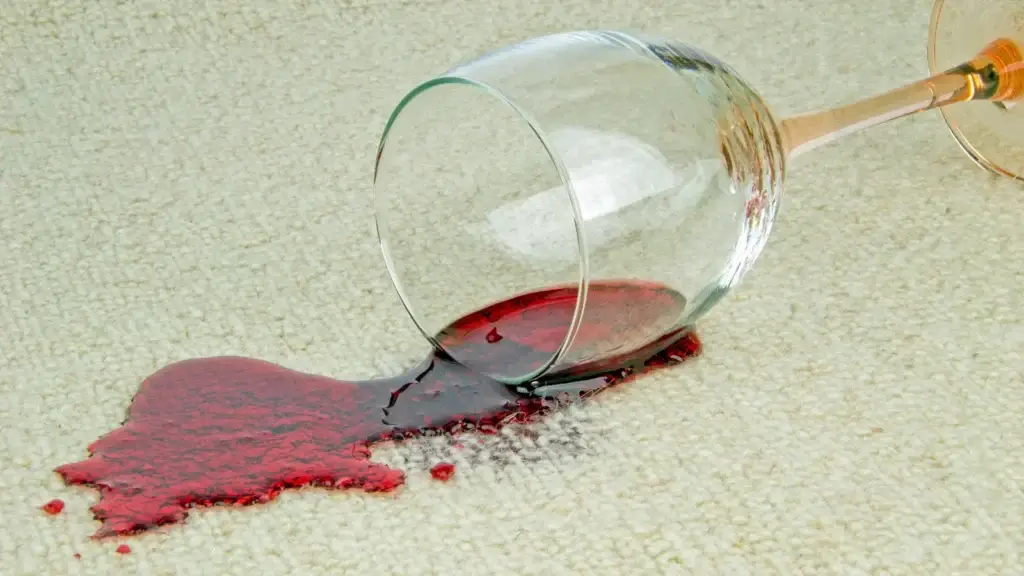
The most common reason a carpet stain becomes permanent has nothing to do with the stain itself. It is what the person reaching for hot water does in the first 60 seconds.
Protein-based stains, which include blood, egg, vomit, and dairy, can be set by heat. The proteins hold on to the carpet fibres in much the same way that heat cooks egg white in a pan. What was a treatable spill becomes a stain that is far harder to lift. Hot water, steam, or even a warm cloth pressed onto the area can do it.
The professional carpet stain treatment available through the Urgent Pro network addresses stains that were considered permanent when they occurred. What often made the difference was something that costs nothing: cold water and a clean cloth, used correctly, within the first two minutes.
This guide covers nine common stain types, what to do in the first minutes, what to avoid and why each instruction matters, and the point at which calling a professional is the better outcome. Pet stains (urine and faeces) are a separate category with different treatment requirements; see removing pet urine and odour from carpet.
The Short Answer
Blot immediately with a clean white cloth. Cold water is the safe default for most stains. Always work from the outside edge of the stain inward. Never, ever, rub. For protein-based stains (vomit, blood, egg, dairy), never apply heat. For stains on natural-fibre carpets (jute, sisal, wool, silk), call a professional before treating.
Five Rules That Apply Before You Do Anything Else
These matter more than the specific cleaning product you reach for.
1. Blot, never rub. Blotting is preferred over rubbing. Rubbing pushes a stain further into the carpet and into adjacent clean fibres. It can also cause permanent distortion and damage to the carpet, leaving behind a fuzzy patch that will not fully return to normal, even after the stain is gone. When blotting, apply downward pressure to lift the spill upward into the cloth rather than pushing it deeper.
2. Use cold water. Blood, egg, and dairy products all contain proteins, and so do many other animal-based foods. Heat can set protein stains in the same way it cooks an egg, and a set stain is very hard to reverse. Using cold water helps keep the proteins soluble and therefore removable. Because cold water poses no equivalent risk to tannin or oil stains, it is the safer default whenever the stain type is uncertain.
3. Work from the outside edge inward. Always start on the outer edge of the stain and work toward the centre. Working from the centre outward spreads the stain.
4. Test any product in a hidden area first. Always test a product in an inconspicuous area before applying it to a visible stain. This could be inside a wardrobe, under a piece of furniture, or anywhere not readily visible. Apply the product, blot, and check for dye transfer or fibre damage. What is safe on one type of carpet can permanently alter another. This step takes two minutes and can save an irreversible situation.
5. Rinse out any cleaning product with plain cold water. Almost all household cleaning products are alkaline. Alkaline residue left in the pile acts as a magnet for new soil, and the cleaned spot reappears dirty within weeks, often looking worse than the original stain. After using any cleaning product, blot with a clean cloth to remove the product, then rinse with plain cold water. Never apply multiple products to the same stain: chemical reactions between products can set the stain permanently or damage the carpet fibres.
Know Your Stain Class Before You Treat It
Learning your stain class is essential before any treatment is applied. Applying the wrong logic to each class is the quickest way to make a stain permanent. The three classes are:
Protein and animal stains. These include blood and other food stains that contain animal products. The defining characteristic of these stains is that heat can set them. Always treat these with cold water only. Enzyme-based products can damage wool and silk carpets, because wool and silk are protein fibres: test first in a hidden area, or call a professional.
Tannin and dye stains. These are caused by liquids containing colouring, and include red wine, coffee, tea, and most fruit juices. These stains will polymerise and bind more deeply to fibres over time, which is why they become harder to treat the longer they are left.
Oil and grease stains. These include cooking oils, butter, makeup, and candle wax. These substances are non-polar and do not mix with water. The first step is to absorb as much of the oil as possible before introducing any liquid, because adding water first emulsifies the stain and spreads the contamination to a wider area.
Note: coffee or tea made with milk has both a tannin component and a protein component from the dairy. Cold water is the correct default for this reason.
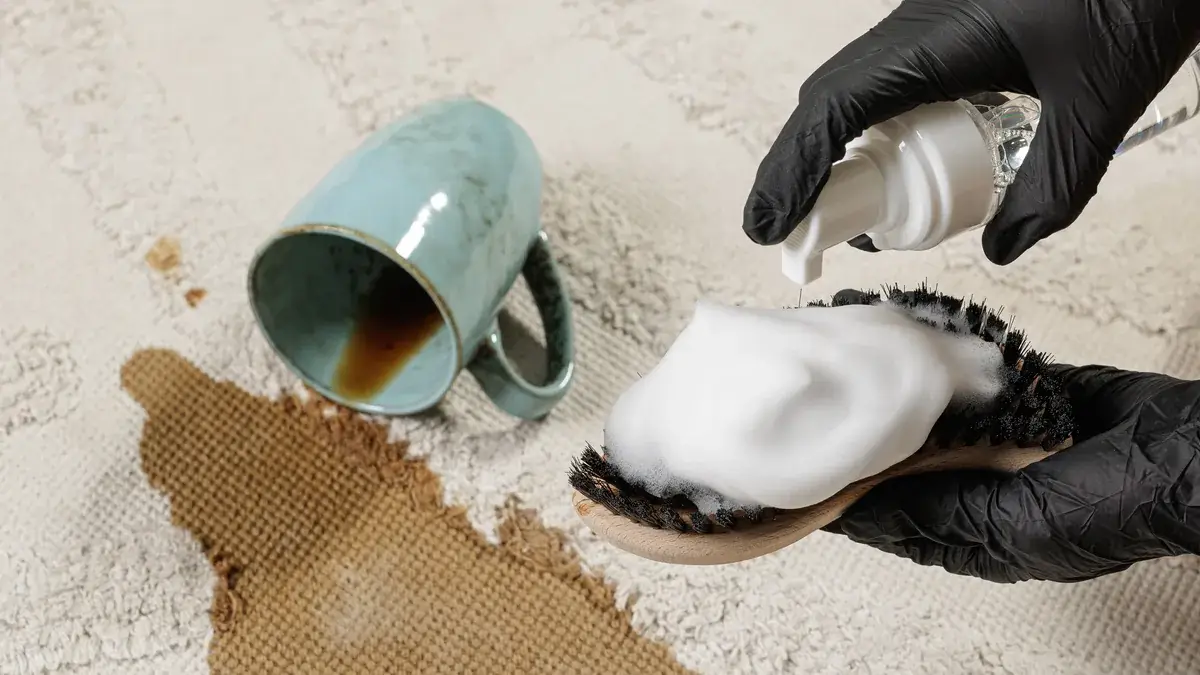
Stain-by-Stain Guide
The table below covers nine common household stains. The “what not to do” column explains the reason behind each instruction, which is the part most cleaning guides leave out.
| Stain | First action | What not to do (and why) | Call a professional when |
|---|---|---|---|
| Red wine | Blot immediately with a clean white cloth to absorb as much liquid as possible. Work from the outer edge to the centre. | Do not use hot water: heat can make the stain harder to lift. Do not rub: this spreads the stain and distorts the pile. Do not pour anything over the stain before blotting. | The stain has dried. The carpet is wool or another natural fibre. Cold water and blotting have not reduced the stain after two or three attempts. |
| Coffee or tea | Blot immediately to remove as much liquid as possible. Dilute the rest with cold water and blot again. | Do not use hot water: heat can make the stain harder to lift. Do not rub. If milk was added, there is a protein component as well as tannins: cold water is essential for this reason. | Natural-fibre carpet. The stain has returned after treatment (wicking from the underlay). Cold water and blotting have not reduced the stain. |
| Grease or cooking oil | Blot to absorb as much of the oil as possible before adding any liquid. Work from the outer edge inward. | Do not add water to a fresh grease stain before absorbing the bulk of the oil. Oils repel water; if water is introduced before the oil has been absorbed, it will emulsify the oil and spread the contamination to a wider area of pile. Do not rub. | The stain is reappearing as a dark patch after apparent removal, indicating underlay contamination. Any natural-fibre carpet. |
| Ink (ballpoint or felt-tip) | Blot to prevent further spreading. Do not add water. | Water spreads ballpoint ink because most ballpoint inks are oil-based. Felt-tip inks vary by formulation and require different treatment. Treating ink incorrectly can set it across a wider area of pile. | Almost always. Ink removal typically requires professional solvent pre-treatment to avoid spreading the pigment further into the pile. |
| Blood | Cold water only. Blot from the outside edge toward the centre. Act quickly. | Never use warm or hot water: heat can set a blood stain. Enzyme-based products can damage wool and silk, which are themselves protein fibres: test first or call a professional. | Heat has already been applied. The carpet is a natural fibre. The stain did not reduce after cold water and blotting. |
| Mud | Allow the mud to dry completely first. Do not treat a fresh or wet mud stain. | Do not add water or attempt to treat fresh mud. Wet mud is a suspension of soil particles in liquid; the particles move with the liquid. Adding moisture or rubbing works the dirt further into the fibres and spreads it sideways. Once the mud is completely dry, vacuum the solid matter away. Only then should a liquid treatment be applied to what remains. | The dried stain leaves a yellow or rust-coloured mark (mineral pigmentation from clay soils), which requires oxidative treatment. |
| Food (general) | Remove solid matter first, working inward from the edge. Blot any liquid with a cold damp cloth. | Do not rub. Do not use hot water if the food contains animal products (egg, meat, dairy, chocolate). Different foods fall into different stain classes. Cold water is the correct default when the composition is uncertain or mixed. | Any residual stain that has not reduced after solid removal and cold-water blotting. |
| Candle wax | Allow the wax to harden completely before touching it. Do not attempt to remove liquid wax. | Do not attempt to remove liquid wax: it spreads and penetrates the pile. Do not use sharp tools once the wax has hardened: they cut the fibres. Once fully solid, break the hardened wax with a blunt object and lift the pieces from the pile. Some professionals re-melt residual wax using a warm iron over absorbent paper; this carries a real risk of fibre damage on natural carpets and should never be attempted on wool, silk, jute, or sisal. | Coloured candle wax that has left a dye stain after the wax body is removed. Wax that has penetrated through to the backing. |
| Chewing gum | Apply cold (ice cubes in a sealed bag or a cold pack placed directly on the gum) for 3 to 5 minutes, until the gum is completely brittle. Break and lift. | Do not pull fresh gum: it stretches, and as it stretches it forces the adhesive deep into the pile and across clean fibres, converting a small problem into a large one. Do not apply heat at any point. | The gum was pulled before it hardened, leaving stretched adhesive residue across a wide area of pile. |
What Makes a Stain Permanent
A stain crosses from treatable to permanent at one of four points.
The backing and underlay become saturated. A spill that is not treated promptly, or that is over-wetted during treatment, migrates through the pile into the carpet backing and underlay. The underlay holds the stain and releases it back to the surface as the carpet dries. This is known as wicking. Under Urgent Pro’s carpet cleaning warranty, wicking from a saturated underlay is excluded from the 7-day warranty period, because no surface cleaning method can remove what is held below the carpet.
The stain ages past the point of treatment. Tannin stains (wine, tea, and coffee) continue to polymerise and get more deeply embedded in the carpet fibre structure as they age. What might have been a treatable stain at one hour might be virtually impossible to remove at 24 hours, and may even be permanent at 48 hours, especially on wool and silk.
DIY chemical damage. Sometimes someone has tried to clean a stain with a household product before the professional arrives, and the product has made the stain permanent. If that has happened, tell the provider what product was used and what type of product it is, as this may change the treatment and may also affect any damage claim.
Multiple products applied to the same stain. Chemical reactions between cleaning products can bond a stain irreversibly or damage the fibre in ways that make professional treatment harder. If a first product has not worked, blot it out with cold water and call a professional before applying anything further.
Natural-Fibre Carpets: Different Rules
Wool, silk, jute, sisal, and seagrass carpets require a different approach at every stage. These are not interchangeable with synthetic nylon or polyester, and treating them as such causes permanent damage.
Wool and silk are protein fibres. Enzyme-based cleaning products break down protein, and they can damage wool and silk as well as the stain. Test in a hidden area first, or call a professional.
Wool is sensitive to the wrong product. Use cool water and pH-neutral, wool-safe products. Never use hot water, never use bleach, and avoid high-pH products. Damage to wool can be permanent, and it often does not show until the carpet has dried.
Hot water causes wool to shrink. Never apply hot water to wool. Use cool water only, and as little as possible.
Jute, sisal, and seagrass are highly susceptible to water damage. Excessive moisture causes browning, shrinkage, and backing deterioration. Any liquid spill on these materials should prompt a professional call immediately. Dry extraction methods are typically required.
Pile construction also affects how quickly a spill penetrates. Loop-pile carpets hold spills nearer the surface, giving you slightly more response time, but snag when rubbed. Dense cut-pile and plush carpets let liquid travel further into the pile more quickly, which is why acting fast matters most on these constructions.
Customers are asked to disclose natural-fibre carpets at booking. Providers spot-test in a concealed area before applying any product. Where the fibre type was not disclosed and damage results, this is treated as a customer disclosure failure under Urgent Pro’s carpet cleaning terms.
A routine house cleaning visit uses standard household cleaners, which are formulated for hard surfaces and are not appropriate for carpet fibres.
Stains and Your Bond
Whether a carpet stain affects your bond comes down to two questions: was the stain there when you moved in, and is it beyond fair wear and tear?
Every Australian state and territory protects tenants from bond claims for fair wear and tear, which covers gradual deterioration from ordinary use. Carpet thinning in high-traffic areas, minor discolouration from foot traffic, and furniture indentations are all fair wear and tear and cannot be claimed against a bond. Stains from spills, burns, and similar incidents are treated as damage across all jurisdictions.
Victoria. Under section 211B of the Residential Tenancies Act 1997, VCAT must have regard to Guideline 3 (damage and fair wear and tear) from Consumer Affairs Victoria when it decides a bond dispute. Read the guideline for how it treats carpet damage and wear.
Queensland. Under the Residential Tenancies and Rooming Accommodation Act 2008 (Qld), pile flattening in high-traffic areas is classified as fair wear and tear, while stains are claimable damage. The Queensland Residential Tenancies Authority advises both lessors and tenants on bond and inspection obligations at the end of tenancy.
NSW. NSW tribunals have applied a 10-year lifespan to carpet, depreciating it by 10 per cent a year. In McCarthy v Isagai [2009] NSWCTTT 643, the Consumer, Trader and Tenancy Tribunal (the tribunal that preceded NCAT) held that a red wine stain left after the tenant had paid for professional carpet cleaning was fair wear and tear, and that the landlord had suffered no loss because a new tenant moved in at the same rent. Tribunal decisions are a guide, not binding. Bond disputes now go to NCAT.
WA. Consumer Protection WA (part of LGIRS) has decided bond disputes from 28 March 2026 without court attendance, with a 7-day appeal to the Magistrates Court. The standard is the same: damage is claimable, fair wear and tear is not.
The practical points for any tenant:
The entry condition report is your baseline. A stain not documented at entry cannot be claimed at exit. Photograph the condition of all carpets at the start of every tenancy.
Taking reasonable steps matters. Having the carpet professionally cleaned before exit and keeping the receipt significantly strengthens your position if a stain is disputed.
See the article on stains and end of lease carpet clauses for the full state-by-state detail on what landlords can and cannot require.
When to Stop and Call a Professional
Stop DIY treatment immediately in any of these situations.
The carpet is wool, silk, jute, sisal, or seagrass. These fibres require controlled chemistry that falls outside the safe range of any household product.
You have already applied a cleaning product and the stain has spread, changed colour, or the carpet pile feels stiff or damaged. Further treatment compounds the chemical damage.
A second cleaning product has been applied on top of the first.
The stain has dried and has not reduced after cold water and blotting. Dried and set stains typically require professional solvent pre-treatment and hot-water extraction. For a comparison of hot water extraction versus dry carpet cleaning and which suits which stain type, see the related article.
The stain is reappearing after treatment. This indicates underlay contamination. Surface cleaning cannot address what is held below the carpet.
You are preparing for a bond or vacate inspection. At this point, a professional record of treatment is worth more than the cost of the clean. Professional carpet cleaning through Urgent Pro starts from $156 per job, with the final cost depending on the number of rooms, fibre type, and stain severity. For a full breakdown of what stain treatment adds to the quote, see the carpet cleaning cost guide.
Frequently Asked Questions
How do I get red wine out of carpet?
Blot as much liquid as possible immediately with a clean white cloth, working from the outside edge inward. Use cold water to dilute what remains and blot again. Do not rub, and do not use hot water. If the carpet is a natural fibre or the stain has dried, call a professional rather than continuing DIY treatment.
Does hot water set a stain?
For protein-based stains, it can. Heat can set blood, egg, vomit, and dairy stains in the carpet fibres, the same way heat cooks an egg white. Cold water is the correct default for any stain of uncertain type, because it poses no equivalent risk to tannin or oil stains while keeping protein stains soluble.
Can I use vinegar or baking soda on carpet?
Use neither without knowing your carpet’s fibre type first. Both can affect wool and silk, so test in a hidden area or call a professional. On synthetic carpet these products carry less risk, but neither addresses oil-based stains and both leave residue that attracts new soil if not fully rinsed out with plain cold water.
Why does a cleaned carpet stain come back?
Two different mechanisms cause this. The first is alkaline residue: most household cleaning products are alkaline, and residue left in the pile attracts new soil. The spot reappears dirty within weeks. Rinse with plain cold water after any product treatment. The second mechanism is wicking from the underlay: where a spill saturated through the pile into the underlay, the stain reservoir in the underlay releases back to the surface after the pile dries. Wicking requires professional treatment of the underlay, not more surface cleaning.
How do I remove old, set-in stains from carpet?
Most dried and set stains require professional treatment. Cold water blotting may still reduce some tannin stains if they have not fully polymerised, but protein stains that have dried are best left to a provider with solvent pre-treatment and extraction equipment. Applying a household cleaner to a set stain risks adding chemical damage to the original problem, which makes the combined result harder to treat than either alone.
Will a carpet stain affect my bond?
It depends on whether the stain was documented at the start of the tenancy and whether it falls beyond fair wear and tear. A stain that appears on the entry condition report cannot be claimed against you at exit. In NSW, the Consumer, Trader and Tenancy Tribunal held in McCarthy v Isagai [2009] NSWCTTT 643 that a red wine stain left after professional cleaning was fair wear and tear, and that the landlord had suffered no loss. Tribunal decisions are a guide, not binding. In Victoria, VCAT must have regard to Consumer Affairs Victoria’s Guideline 3 on damage and fair wear and tear. The age of the carpet also affects how much can be claimed, and NSW tribunals have applied a 10-year lifespan. Photograph carpet condition at entry and exit, and keep all cleaning receipts.
Are natural-fibre carpets treated differently?
Yes, significantly. Wool, silk, jute, sisal, and seagrass cannot be treated with the same products or methods used on synthetic nylon or polyester. Wool is a protein fibre that enzyme products and high-pH cleaning solutions can damage. Hot water causes wool to shrink and felt. Jute and sisal are susceptible to browning and shrinkage from moisture. For any liquid spill on a natural-fibre carpet, cold water blotting is the only safe immediate action, and professional treatment should follow.