
Damage Claims. Cleaning Annex
1. Service-specific Preamble
Cleaning is the highest-frequency service on the URGENT Pro platform and produces the highest absolute number of damage claims, though almost always for low individual values. The risk profile is dominated by contact with pre-existing brittle, end-of-life or compromised items, not by reckless handling.
Most cleaning damage claims fall into five categories:
- Glass breakage (oven doors, shower screens, splashbacks);
- Blind and window furnishing failure (slats, cords, mechanisms);
- Sliding door derailment;
- Scratches to floors and surfaces; and
- Damage to wall-mounted items.
Customers must disclose: brittle items; antique or high-value items above A$500; fragile blinds and shutters; sliding doors and shower screens with known issues; ovens older than 10 years; sensitive surfaces (polished concrete, natural stone, antique timber); pets; and any biohazards.
2. Common Damage Scenarios
The following 22 scenarios capture the most common damage incidents arising from cleaning services. Each scenario records why damage typically occurs, the liability outcome under this policy, the customer disclosure required to support a claim, the contractor procedure expected to avoid damage, and the evidence required.
2.1 Oven door glass cracks during clean
Why damage occurs: Thermal shock (cold chemical on hot glass); pre-existing micro-fractures; slamming; caustic chemical reaction; end-of-life hinges.
Liability outcome: Conditionally covered if oven is less than 10 years old, hinges are working, there is no visible pre-existing damage, and the contractor used inappropriate force or chemical. Excluded if oven is more than 10 years old, hinges show visible wear, dirt has accumulated at hinge points, or there are undisclosed pre-existing cracks.
Customer disclosure: Disclose oven age, any prior crack, any loose hinge.
Contractor procedure: Visually inspect glass at angle for stress lines; allow oven to cool fully (45+ minutes); use non-caustic oven cleaner; never spray cold chemical on hot glass.
Evidence required: Arrival photo of oven door; product used; age record where available.
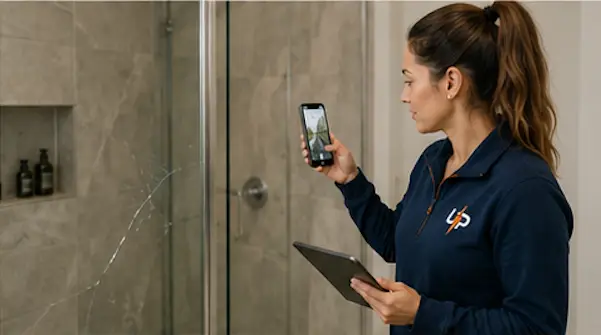
2.2 Shower screen cracks during clean
Why damage occurs: Chemical etching; impact; pre-existing edge chip propagating.
Liability outcome: Excluded where the screen is single-glazed older glass with visible edge wear. Covered where the contractor used unreasonable force or the wrong chemical on intact functional glass.
Customer disclosure: Disclose any chip or scratch on the screen.
Contractor procedure: Inspect edges; use neutral-pH glass cleaner; no scraping at edges.
Evidence required: Arrival photo of the screen.
2.3 Sliding door comes off track
Why damage occurs: Worn rollers; track distortion; debris; alignment off; insufficient lift force.
Liability outcome: Excluded where rollers or track were damaged before the clean, sliding door tracks require periodic maintenance and rollers have a finite life. Covered if the door was functional and the contractor used unreasonable force.
Customer disclosure: Disclose any door that already "catches" or jumps.
Contractor procedure: Test door operation before cleaning the track; do not force; clean with a brush attachment and silicone (not WD-40).
Evidence required: Arrival photograph; brief operation test note.
2.4 Blinds, slats break, cords snap
Why damage occurs: UV-degradation, plastic vertical blinds typically 5–7 years; venetian blinds 8–10 years; quality roller blinds 10–15 years. End-of-life cords and tilt mechanisms.
Liability outcome: Excluded where blinds are visibly yellowed, brittle, with fraying cords or a mechanism that does not operate smoothly (pre-existing weakness). Covered where the contractor used excessive force on functional blinds.
Customer disclosure: Disclose any blind with a brittle slat, frayed cord, or sticky mechanism.
Contractor procedure: Operate the blind once before cleaning; if anything is loose, photograph and decline to handle aggressively.
Evidence required: Arrival photograph; brief functional note.
2.5 Plantation shutter louvres snap
Why damage occurs: Hinge or louvre pin fatigue; warped timber.
Liability outcome: Conditionally covered depending on age and visible condition.
Customer disclosure: Disclose any louvre that already swings loose.
Contractor procedure: Inspect louvres; clean with damp cloth; do not pivot louvres beyond stop.
Evidence required: Arrival photograph.
2.6 Mirror silvering damage
Why damage occurs: Backing aged; corner moisture seeping behind silvering.
Liability outcome: Excluded, silvering damage is an end-of-life process; chemical contact accelerates but rarely causes it on intact mirrors.
Customer disclosure: None required.
Contractor procedure: Use neutral cleaner; avoid spraying directly onto edges; wipe from face only.
Evidence required: -
2.7 Glass coffee/dining table cracks
Why damage occurs: Pre-existing internal stress fracture; impact; thermal shock.
Liability outcome: Excluded where pre-existing micro-fracture is visible at angle. Covered if the contractor dropped an item on the table.
Customer disclosure: Disclose any chip or hairline crack.
Contractor procedure: Inspect at angle in light; no heavy items placed on glass surfaces.
Evidence required: Arrival photograph of the table surface.
2.8 Floor scratching (timber/vinyl)
Why damage occurs: Grit under vacuum head; abrasive cloth; furniture moved over surface.
Liability outcome: Covered where the contractor failed to inspect the vacuum head or used an abrasive product. Excluded where the customer concealed grit under a rug or the floor was already worn.
Customer disclosure: Disclose sensitive floors (polished concrete, oiled timber, soft vinyl).
Contractor procedure: Inspect vacuum head; use a soft cloth on timber; use furniture sliders for moved items.
Evidence required: Arrival photograph of the floor; product used.
2.9 Carpet chemical damage
Why damage occurs: Wrong product on wool, silk, or other natural fibres.
Liability outcome: Covered where the contractor used an inappropriate product.
Customer disclosure: Disclose carpet fibre type for any natural or specialist carpet.
Contractor procedure: Spot-test in an inconspicuous area; use pH-neutral products on natural fibres.
Evidence required: Arrival photograph; product used.
2.10 Bookshelf collapses when moved
Why damage occurs: Pre-existing structural compromise; flat-pack screws loose; overloaded shelves; hidden weakness.
Liability outcome: Excluded under the Movement and Access Principle (loose components, hidden weakness).
Customer disclosure: Disclose if the shelf is flat-pack, overloaded, or known to be wobbly.
Contractor procedure: Lighten by removing top-shelf items first; do not move loaded shelves.
Evidence required: Arrival photograph of the shelf.
2.11 Toilet seat hinge snaps
Why damage occurs: Plastic fatigue; end-of-life.
Liability outcome: Excluded, plastic toilet seat hinges typically fail at 5–8 years.
Customer disclosure: None required.
Contractor procedure: Lift seat gently; do not lean weight on the raised seat.
Evidence required: -
2.12 Wall-mounted item falls during dusting
Why damage occurs: Pre-existing wrong anchor in plaster.
Liability outcome: Excluded under the Pre-Existing Condition Principle.
Customer disclosure: Disclose any picture or shelf you know is loose.
Contractor procedure: Light contact only when dusting wall-mounted items.
Evidence required: -
2.13 TV screen cracked
Why damage occurs: Impact during cleaning.
Liability outcome: Covered where the contractor caused the impact. Excluded where the customer asked the contractor to clean an undisclosed-condition screen and a pre-existing crack propagated.
Customer disclosure: Disclose any micro-crack.
Contractor procedure: Microfibre dry or barely damp; never wet spray.
Evidence required: Arrival photograph.
2.14 Splashback tile/grout damage
Why damage occurs: Wrong abrasive; chip propagation.
Liability outcome: Conditionally covered depending on chemical use.
Customer disclosure: Disclose any loose tile.
Contractor procedure: Neutral cleaner only on natural stone; soft pad.
Evidence required: Product used.
2.15 Microwave/toaster cord damaged in moving
Why damage occurs: Yanking cord rather than unplugging at plug.
Liability outcome: Covered, basic appliance handling.
Customer disclosure: -
Contractor procedure: Always unplug at the plug, never the cord.
Evidence required: -
2.16 Dishwasher seal damaged
Why damage occurs: Pre-existing rubber perish.
Liability outcome: Excluded under end-of-life.
Customer disclosure: -
Contractor procedure: Wipe only the visible face of the seal.
Evidence required: -
2.17 Range hood filter mishandled
Why damage occurs: Filter dropped; edge bent.
Liability outcome: Covered.
Customer disclosure: -
Contractor procedure: Two-handed handling; place on padded surface.
Evidence required: -
2.18 Cleaner moves coffee table; leg collapses
Why damage occurs: Loose joint; flat-pack.
Liability outcome: Excluded under the Movement and Access Principle (hidden weakness).
Customer disclosure: Disclose flat-pack origin.
Contractor procedure: Tilt-test before lifting; if anything wobbles, decline to move.
Evidence required: -
2.19 Cleaner moves washing machine; water connection damaged
Why damage occurs: Hose at end-of-life; over-bend.
Liability outcome: Excluded for hose end-of-life. Covered if the contractor stressed the connection unreasonably.
Customer disclosure: Disclose age of hose connections.
Contractor procedure: Do not move without isolating water.
Evidence required: -
2.20 Cleaner moves dining chair; leg breaks
Why damage occurs: Loose stretcher.
Liability outcome: Excluded for pre-existing looseness.
Customer disclosure: Disclose.
Contractor procedure: Light test before lift.
Evidence required: -
2.21 Cleaner repositions bookshelf; shelf collapses
Why damage occurs: Flat-pack reassembly stress.
Liability outcome: Excluded for hidden weakness.
Customer disclosure: Disclose.
Contractor procedure: Light items off first.
Evidence required: -
2.22 Quick-reference summary table
The following table summarises the 22 scenarios above for at-a-glance use:
| # | Scenario | Default outcome |
|---|---|---|
| 2.1 | Oven door glass cracks | Conditional (oven age + visible condition) |
| 2.2 | Shower screen cracks | Conditional (glass age + contractor conduct) |
| 2.3 | Sliding door off track | Conditional (track/roller condition) |
| 2.4 | Blinds, slats/cords | Conditional (UV-degradation age bands) |
| 2.5 | Plantation shutter louvre | Conditional (age + visible condition) |
| 2.6 | Mirror silvering | Excluded (end-of-life) |
| 2.7 | Glass coffee/dining table | Conditional (pre-existing fracture vs impact) |
| 2.8 | Floor scratching | Conditional (cause-of-scratch attribution) |
| 2.9 | Carpet chemical damage | Covered (with inappropriate product) |
| 2.10 | Bookshelf collapses on move | Excluded (Movement and Access Principle) |
| 2.11 | Toilet seat hinge | Excluded (end-of-life) |
| 2.12 | Wall-mounted item falls | Excluded (Pre-Existing Condition Principle) |
| 2.13 | TV screen cracked | Conditional (contractor impact vs disclosure) |
| 2.14 | Splashback tile/grout | Conditional (chemical use) |
| 2.15 | Microwave/toaster cord | Covered (basic appliance handling) |
| 2.16 | Dishwasher seal | Excluded (end-of-life) |
| 2.17 | Range hood filter | Covered |
| 2.18 | Coffee-table leg on move | Excluded (Movement and Access Principle) |
| 2.19 | Washing machine connection | Conditional (hose age vs handling stress) |
| 2.20 | Dining chair leg | Excluded (pre-existing looseness) |
| 2.21 | Bookshelf reposition | Excluded (hidden weakness) |
3. Service-specific Exclusions
In addition to the universal exclusions in the Damage Claims Master Part 5, the following are also excluded under this Annex:
- Damage to items above A$500 individual value that were not disclosed prior to the clean.
- Damage to items the customer asked the cleaner to handle which the cleaner had visibly declined to handle.
- Damage to items concealed behind or under furniture that the cleaner was not asked to move.
- "Damage" amounting only to a clean-off, for example, the contractor removed a stain and revealed pre-existing discolouration underneath.
- Cosmetic loss of patina on antique items that the customer did not identify as antique.
4. High-Risk Items Requiring Customer Disclosure
The following are high-risk items where customer disclosure before the service is essential to preserve a claim:
- Glass coffee or dining tables;
- Antique furniture;
- Original artworks;
- Ornate plaster cornicing;
- Plantation shutters older than 10 years;
- Vertical blinds older than 5 years;
- Ovens older than 10 years;
- Older sliding doors with known stiffness;
- Polished concrete and natural stone surfaces;
- Oiled or waxed timber floors;
- Any item with sentimental value greater than its market value.
5. Contractor Procedure
The contractor performing a cleaning service through URGENT Pro must:
1. Arrival inspection (3–5 minutes). Walk through; photograph the work areas; photograph any visible pre-existing damage or items of obvious value; confirm pets are secured; confirm restricted areas.
2. Tool and chemical check. Confirm pH-appropriate products are matched to surfaces.
3. Right to Decline. Any visibly cracked shower screen, visibly loose blind, visibly worn sliding door, or oven with visible hinge wear, decline to clean that item, photograph, and note in the job record. The Right to Decline also applies to:
- Mould (contractor health risk);
- Visible electrical issues;
- Items above safe lifting weight without disclosed assistance;
- Pet faeces or biohazards;
- Hoarder conditions;
- Asbestos-suspect materials. SafeWork NSW guidance reinforces this: where asbestos-containing material may be disturbed it must be safely removed by a licensed professional before work continues; and
- Animals not properly contained.
4. Customer sign-off (recommended). At end of clean, walk customer through service if present.
6. Claim Evidence Requirements
To support a damage claim under this Annex, the following evidence is required (in addition to the universal evidence standards in the Damage Claims Master Part 8):
- Photos of damaged item from at least three angles;
- Brief written account of when and how the damage was noticed;
- Arrival photos from the contractor. URGENT Pro retrieves these from the platform record;
- Receipt or proof of purchase, or age of item where available; and
- Independent repair quote for claims above A$500.
7. FAQs
7.1 My oven door cracked during a clean, am I covered?
It depends. If the oven is less than 10 years old, the hinges were not worn, and you had not disclosed a pre-existing crack, the claim is likely covered. If the oven is older than 10 years, has visible hinge wear, or had any pre-existing damage, the claim is likely excluded under the Pre-Existing Condition Principle.
Oven door glass commonly cracks from thermal shock (cold chemical on hot glass), accumulated micro-fractures, or hinge failure, not from a single act of careless cleaning.
7.2 My cleaner moved my couch and revealed a scratch on the floor, is that covered?
Only if the cleaner caused it during the move. A scratch the cleaner uncovered is not damage caused by the service.
7.3 Does my cleaner have insurance?
Yes, every cleaner on URGENT Pro is required to hold current public liability insurance with a minimum $10 million limit, the same standard as Airtasker's $10M cover with CGU and Jim's Group's $10 million franchisee requirement.
7.4 How long do I have to report damage?
48 hours from the end of the service. The 48-hour rule is the published industry standard for cleaning damage notification.
7.5 What if my cleaner refuses to clean my shower screen because it's cracked?
That is the Right to Decline at work, protecting you and the cleaner. The contractor should photograph, note it in the job record, and notify URGENT Pro.
7.6 How much can I claim?
Up to $10 million through the contractor's PL insurance; up to A$2,500 through the URGENT Pro Damage Backstop where the contractor's policy does not respond.
7.7 Can my cleaner refuse to move heavy furniture?
Yes. Solo cleaners are not safe-lifting equipped for items above standard handling weight. They should offer to clean around the item.