
Damage Claims. Removalists Annex
1. Service-specific Preamble
Removalist work concentrates damage risk: heavy items, narrow doorways, stairs, lifts, weather and tight schedules combine to produce a higher per-job damage probability than any other service category. AFRA-attributed industry indicators cited by AFRA members suggest the great majority of moves complete without claims, with most claims involving issues of relatively modest value. The upset value per incident is, however, high. A damaged piano or family heirloom is unforgettable.
URGENT Pro removalist contractors must hold the AFRA-standard $10 million public liability insurance plus carrier's legal liability cover; transit (goods-in-transit) insurance is offered separately to customers and is recommended for any move involving high-value items.
2. Common Damage Scenarios
The following 21 scenarios capture the most common damage incidents arising from removalist services. Each scenario records why damage typically occurs, the liability outcome under this policy, the customer disclosure required to support a claim, the contractor procedure expected to avoid damage, and the evidence required.
2.1 Couch torn at corner
Why damage occurs: Door frame catch; over-tight wrap.
Liability outcome: Covered where unreasonable handling.
Customer disclosure: Disclose tight doorways.
Contractor procedure: Pad and shrink-wrap; measure doorways.
Evidence required: Pre-move and post-move photos.
2.2 Dining table scratched
Why damage occurs: Inadequate padding.
Liability outcome: Covered.
Customer disclosure: -
Contractor procedure: Pad legs and top.
Evidence required: Photo; product log.
2.3 Bed frame snapped during disassembly
Why damage occurs: Stripped joint; prior repair.
Liability outcome: Excluded where the joint was pre-damaged.
Customer disclosure: Disclose prior repairs.
Contractor procedure: Inspect joints before force.
Evidence required: Pre-move photo of joint.
2.4 Wardrobe back panel split
Why damage occurs: Flat-pack reassembly under tension.
Liability outcome: Conditionally covered; flat-pack furniture often cannot be moved without damage and the contractor should refuse or warn.
Customer disclosure: Disclose flat-pack origin.
Contractor procedure: Photographs of joints before lift.
Evidence required: Customer acknowledgement.
2.5 Antique veneer chipped
Why damage occurs: Brittle aged adhesive.
Liability outcome: Excluded unless the contractor failed to use blankets.
Customer disclosure: Disclose antique status and value.
Contractor procedure: Use furniture blankets; never tape directly.
Evidence required: Pre-move photo of veneer condition.
2.6 Glass cabinet shattered in transit
Why damage occurs: Insufficient bracing.
Liability outcome: Covered.
Customer disclosure: -
Contractor procedure: Remove glass shelves; brace doors.
Evidence required: Inventory entry.
2.7 TV cracked in transit
Why damage occurs: Insufficient packing; flat-laid panel.
Liability outcome: Covered unless owner-packed.
Customer disclosure: Disclose original carton availability.
Contractor procedure: Stand TVs upright; foam corners.
Evidence required: Inventory.
2.8 White-goods compressor damage
Why damage occurs: Tilted past 45°; not transit-locked.
Liability outcome: Covered where the contractor failed to upright or lock.
Customer disclosure: Disclose if the fridge was recently moved.
Contractor procedure: Upright transport; rest 24 hours after delivery before powering on; transit bolts on washers.
Evidence required: Inventory; truck photo.
2.9 Picture frame broken
Why damage occurs: Insufficient padding.
Liability outcome: Covered.
Customer disclosure: -
Contractor procedure: Wrap with bubble; flat carton.
Evidence required: -
2.10 Lamp shade crushed
Why damage occurs: Stacked with weight.
Liability outcome: Covered.
Customer disclosure: -
Contractor procedure: Top-loaded only.
Evidence required: -
2.11 Mirror cracked
Why damage occurs: Insufficient padding; impact.
Liability outcome: Covered.
Customer disclosure: Disclose oversize.
Contractor procedure: Bracing crate; vertical transport.
Evidence required: -
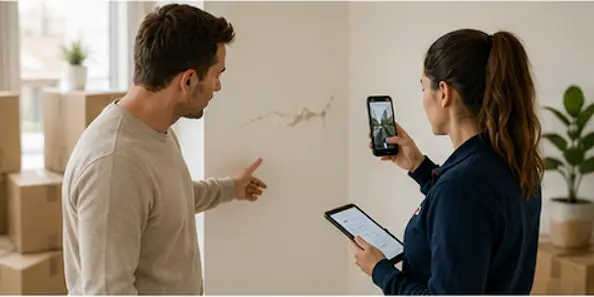
2.12 Wall damage at origin
Why damage occurs: Narrow door; large item; awkward angle.
Liability outcome: Covered where unreasonable handling. Excluded where the customer insisted on moving an item that obviously would not fit.
Customer disclosure: Disclose narrow stairwells, tight corners.
Contractor procedure: Wall protectors; corner padding; remove doors where needed.
Evidence required: Pre-move and post-move walls photos.
2.13 Wall damage at destination
Why damage occurs: Same as 2.12.
Liability outcome: Same as 2.12.
Customer disclosure: Same as 2.12.
Contractor procedure: Same as 2.12.
Evidence required: Same as 2.12.
2.14 Stairwell railing damaged
Why damage occurs: Item exceeded stairwell width.
Liability outcome: Conditionally covered.
Customer disclosure: Disclose.
Contractor procedure: Pre-measure; alternative entry.
Evidence required: -
2.15 Lift damage in apartment building
Why damage occurs: Building's own protection insufficient.
Liability outcome: Covered if the contractor failed to use lift padding.
Customer disclosure: Disclose lift dimensions.
Contractor procedure: Coordinate with building manager; use lift blankets.
Evidence required: Building manager record.
2.16 Driveway/concrete cracked
Why damage occurs: Truck weight on weakened slab.
Liability outcome: Excluded where the slab was pre-weakened. Covered where the contractor parked on an inappropriate surface.
Customer disclosure: Disclose driveway weight limits and known cracks.
Contractor procedure: Walk driveway; use protection boards.
Evidence required: Pre-move driveway photos.
2.17 Piano damaged
Why damage occurs: Improper rigging; weight on legs.
Liability outcome: Conditionally covered, requires specialist; verify booking covered a piano move.
Customer disclosure: Disclose piano in booking.
Contractor procedure: Refuse if not piano-equipped.
Evidence required: -
2.18 Pool table damaged
Why damage occurs: Slate cracked during disassembly.
Liability outcome: Conditionally covered, specialist work; disclose at booking.
Customer disclosure: -
Contractor procedure: Specialist subcontract.
Evidence required: -
2.19 Aquarium leak
Why damage occurs: Insufficient draining; stress on seams.
Liability outcome: Excluded unless the contractor handled improperly.
Customer disclosure: Empty fully before move.
Contractor procedure: Refuse moves of aquarium with water.
Evidence required: -
2.20 Marble/stone furniture cracked
Why damage occurs: Bending under own weight.
Liability outcome: Conditionally covered.
Customer disclosure: Disclose.
Contractor procedure: Always horizontal; specialist support.
Evidence required: -
2.21 Bicycle scratched
Why damage occurs: Pedal contact; chain grease on neighbour items.
Liability outcome: Covered where unreasonable handling.
Customer disclosure: Disclose carbon frames.
Contractor procedure: Wrap individually.
Evidence required: -
2.22 Quick-reference summary table
The following table summarises the 21 scenarios above for at-a-glance use:
| # | Scenario | Default outcome |
|---|---|---|
| 2.1 | Couch torn at corner | Covered (with unreasonable handling) |
| 2.2 | Dining table scratched | Covered |
| 2.3 | Bed frame snapped during disassembly | Excluded (pre-existing joint damage) |
| 2.4 | Wardrobe back panel split | Conditional (flat-pack reassembly stress) |
| 2.5 | Antique veneer chipped | Excluded (unless no blankets used) |
| 2.6 | Glass cabinet shattered in transit | Covered |
| 2.7 | TV cracked in transit | Covered (unless owner-packed) |
| 2.8 | White-goods compressor damage | Covered (with failure to upright/lock) |
| 2.9 | Picture frame broken | Covered |
| 2.10 | Lamp shade crushed | Covered |
| 2.11 | Mirror cracked | Covered |
| 2.12 | Wall damage at origin | Conditional (handling vs customer insistence) |
| 2.13 | Wall damage at destination | Conditional (same as 2.12) |
| 2.14 | Stairwell railing damaged | Conditional |
| 2.15 | Lift damage in apartment building | Conditional (lift-padding use) |
| 2.16 | Driveway/concrete cracked | Conditional (pre-weakened vs inappropriate surface) |
| 2.17 | Piano damaged | Conditional (specialist booking required) |
| 2.18 | Pool table damaged | Conditional (specialist work) |
| 2.19 | Aquarium leak | Excluded (unless improper handling) |
| 2.20 | Marble/stone furniture cracked | Conditional |
| 2.21 | Bicycle scratched | Covered (with unreasonable handling) |
3. Service-specific Exclusions
In addition to the universal exclusions in the Damage Claims Master Part 5, the following are also excluded under this Annex:
- Damage to owner-packed boxes, the AFRA-standard "Owner Packed" rule, the removalist cannot verify contents or packing quality.
- Mechanical failure or compressor damage to a fridge moved upright and left to stand 24 hours before powering on per contractor instruction.
- Damage to items not listed on the inventory.
- Damage to items the customer was told would not survive the move and proceeded anyway (signed acknowledgement).
- Damage to neighbour property at point of access where the customer warranted clear access.
4. High-Risk Items Requiring Customer Disclosure
The following are high-risk items where customer disclosure before the service is essential to preserve a claim:
- Pianos;
- Pool tables;
- Aquariums;
- Large mirrors;
- Marble or stone furniture;
- Bicycles (especially carbon frames);
- Antique furniture;
- Fine art;
- Items above A$2,000 individual value;
- Items requiring two-person lift;
- Items previously repaired.
5. Contractor Procedure
The contractor performing a removalist service through URGENT Pro must:
1. Pre-move walkthrough and inventory, contractor and customer walk through and complete inventory list; condition notes for each major item.
2. Arrival inspection at origin and destination, photograph walls, floors, stairwells, driveways, lifts before any load-in or load-out.
3. Padding and protection, door jambs, floor runners, lift blankets, banister protection.
4. Disassembly protocol, flat-pack items disassembled only after photo of joints; customer warned of structural risk.
5. Sign-off at delivery, customer signs condition note for visible items; 7-working-day window for hidden damage, in line with the AFRA-linked NSW Government contract standard.
6. Claim Evidence Requirements
To support a damage claim under this Annex, the following evidence is required (in addition to the universal evidence standards in the Damage Claims Master Part 8):
- Inventory list with condition notes;
- Pre-move and post-move photos;
- Statement of when damage was discovered;
- Receipts or proof of value for items above A$500; and
- Independent repair quote for items above A$1,000.
7. FAQs
7.1 My fridge stopped working two days after the move, am I covered?
Only if the contractor did not transport it upright or did not advise the 24-hour stand period. Compressor damage requires immediate notification (within the 7-day removalist window).
7.2 What if I packed my own boxes?
Damage inside owner-packed cartons is excluded unless negligent handling by the crew is proved.
7.3 Does the contractor's insurance cover my goods in transit?
Public liability covers damage to your property caused by the contractor; goods-in-transit insurance is a separate, optional product. Confirm at booking. AFRA notes only AFRA-member removalists holding the relevant qualification can sell transit insurance.
7.4 My move was AFRA-accredited but the damage occurred, what now?
AFRA accreditation guarantees $10M public liability and a mediation pathway; the claim goes first to the contractor, then their insurer, then URGENT Pro backstop, then AFRA mediation, then NCAT, VCAT, or QCAT.
7.5 The contractor scratched my new floor, covered?
Yes, where the contractor caused the scratch and the floor was undamaged at the pre-move walkthrough.