
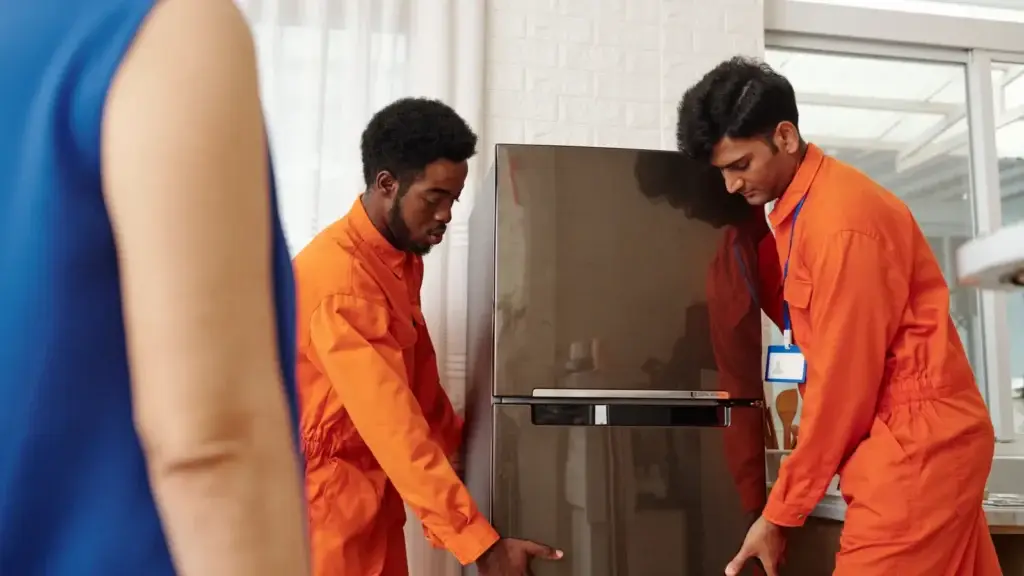
Like all old refrigerators and air conditioners, fridges have to be disposed of properly, as they contain harmful gases that are regulated. There are legal consequences for individuals and entities if the proper legal procedures are not followed when disposing of these appliances.
In Australia, under section 45B(1) of the *Ozone Protection and Synthetic Greenhouse Gas Management Act
1989* (Cth), it is an offence to cause fluorocarbon refrigerant to discharge to the atmosphere, with a maximum penalty set in penalty units under the Act. Refrigerant recovery should only be performed by a holder of a Refrigerant Handling Licence (RHL) issued by the Australian Refrigeration Council (ARC), the body that administers the refrigerant handling licensing scheme.
You can find information about the refrigerant type and charge inside your fridge. Check the label near the door frame or behind the salad crisper. The charge is typically shown in grams.
Why fridge removal costs more than a standard bulky item
Refrigerator removal generally costs more than the average bulky item pickup. When you schedule a rubbish removal service for a fridge, it’s not as simple as taking it to a recycling centre. Fridges contain regulated refrigerants that require special care to dispose of. Before a fridge can be cut up for recycling, it needs to go to a facility where a licensed RHL holder performs refrigerant recovery. That adds time and cost to the process.
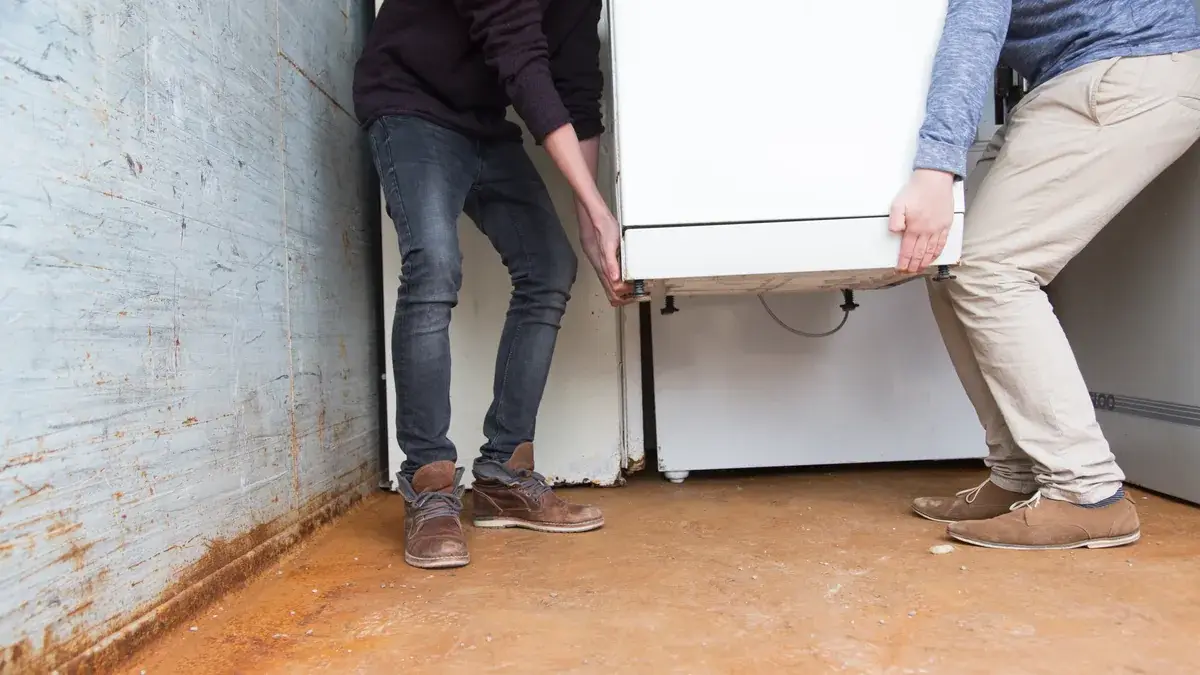
Of all the single item bookings within the Urgent Pro rubbish removal network, fridge collections are among the highest surcharges. This is because many rubbish removal providers don’t account for the fridge surcharge and either absorb the cost into a higher base rate or, worse, don’t dispose of the fridge in an environmentally safe way.
Before the collection day
Collection teams can’t return to take your fridge if it’s not prepared. Give yourself plenty of time to prepare your fridge before your booked collection date to avoid unexpected delays.
Completely empty the refrigerator and remove any food and drink from the freezer compartment. Thoroughly clean the interior of the refrigerator, both the fridge and freezer compartments. Remove any shelf and drawer dividers. Unplug the refrigerator 24 hours prior to collection and allow the ice in the freezer to fully melt. Place towels on the floor to catch the water. Do not use sharp objects to chip away at the ice. This can puncture the refrigerant lines and cause a leak.
To prevent children or animals from entering and being trapped in the refrigerator, councils and tips often require the door to be taped shut or removed. It is easiest to remove the door, but it can be left secured shut. For private collections, a secured door is best for safety during loading and transport.
Don’t try to drain the refrigerant yourself. It is an offence to handle refrigerant unless you hold an ARC-issued RHL.
Your disposal options
If the fridge still works
If the fridge is still working, consider these options first:
- Donate it to charity
- Offer it for free on a local listing site (Gumtree, Facebook Marketplace, etc.)
- Sell it
- Dispose of it
If offering it for free, be aware that you will have to transport the item yourself, and many organisations will only accept it if the door has first been secured shut. Whoever takes the item for free will be responsible for its disposal.
Retailer take-back
Retailers may offer to remove the old fridge when delivering a new one. Appliances Online, The Good Guys and Harvey Norman are examples of retailers that may offer it, but the conditions vary, so check the retailer’s terms at checkout.
Make sure you confirm old appliance removal with your retailer at the time of purchase. Take-back arrangements are often not made by the delivery team unless previously arranged.
Council hard rubbish collection
A number of councils allow refrigerators to be disposed of via their hard rubbish or bulky waste collection services; however, there are conditions that apply. For example, you may need to secure or remove the fridge door prior to placing it on the nature strip.
Some councils arrange refrigerant recovery when collecting fridges, and some don’t take fridges at all due to complexities with disposal.
Check your council’s rules before putting your fridge out. A fridge left on the nature strip without council authorisation will likely be left behind, and you’ll still be responsible for its disposal. Some councils require advance booking for bulk waste that includes refrigeration appliances. Urgent Pro rubbish removal jobs start from $220.
Licensed transfer station or tip
Major council transfer stations and private tips do accept fridges and recover the refrigerant on site. You pay the disposal fee for this service. A standard household fridge weighs between 60 to 120 kilograms, and you will need a large enough vehicle for the fridge and a helper to transport it. This is a better option if you have access to a ute or trailer. Confirm in advance that the transfer station accepts refrigeration appliances. Some will route these to a different drop-off area.
Booked rubbish removal
A booked rubbish removal service will also recover the refrigerant before recycling. The service will send a team to your property to remove the fridge for you. A fridge surcharge is added to the base job rate. Check indicative rubbish removal pricing on the Urgent Pro website before confirming.
Because of the nature of fridge collection, such as not being able to move it yourself or it being in an awkward location, a booked removal is often the best choice when clearing several items at once.
Book a rubbish removal through Urgent Pro for a written quote that includes fridge surcharges, confirmed up front. The rubbish removal service warranty covers issues raised within 24 hours of the job completing.
To compare skip bin hire and booked collections, see skip bin versus booked removal. For e-waste disposal rules that go beyond white goods, and for what the national e-waste scheme actually covers, see the national e-waste scheme explained.
If you are clearing a mattress as well, see mattress disposal in Australia for further information.
Frequently asked questions
Can you put a fridge on the nature strip?
Only if your council accepts fridges in their hard rubbish collection and you are within the scheduled
collection window. The door must usually be removed or secured first. A fridge placed on the nature
strip without council authorisation is likely to be left behind, and you are still responsible for
arranging disposal.
What happens when you dispose of a fridge?
Fridges contain a refrigerant gas in the compressor. The refrigerant must be safely removed by a
licensed technician before the fridge can be crushed, recycled, or disposed of. Under section 45B(1) of
the Ozone Protection and Synthetic Greenhouse Gas Management Act 1989 (Cth), causing fluorocarbon
refrigerant to discharge to the atmosphere is a criminal offence carrying a maximum penalty set in
penalty units under the Act. The gas must be recovered by a technician holding an ARC-issued Refrigerant Handling
Licence.
Do retailers get rid of my old fridge when they deliver the new one?
Retailers may offer to remove your old fridge when delivering the new one. Appliances Online, The Good
Guys and Harvey Norman are examples of retailers that may offer it. Conditions vary, so check the
retailer’s terms at checkout and confirm the arrangement before the delivery day.
What refrigerant does my fridge use?
The label near the door frame or behind the salad crisper names the refrigerant. Older fridges used CFC
or HCFC refrigerants, many fridges made since use R134a, and most new ones use R600a (isobutane). All
types require licensed recovery before disposal.
How much does fridge removal cost?
Rubbish removal is priced from $220 per job as a base, with a fridge surcharge on top to cover
refrigerant recovery. The total cost depends on the provider, the size of the fridge, and whether
other items are being collected at the same time. Collecting multiple items in one booking is more
cost-effective than separate pickups.