
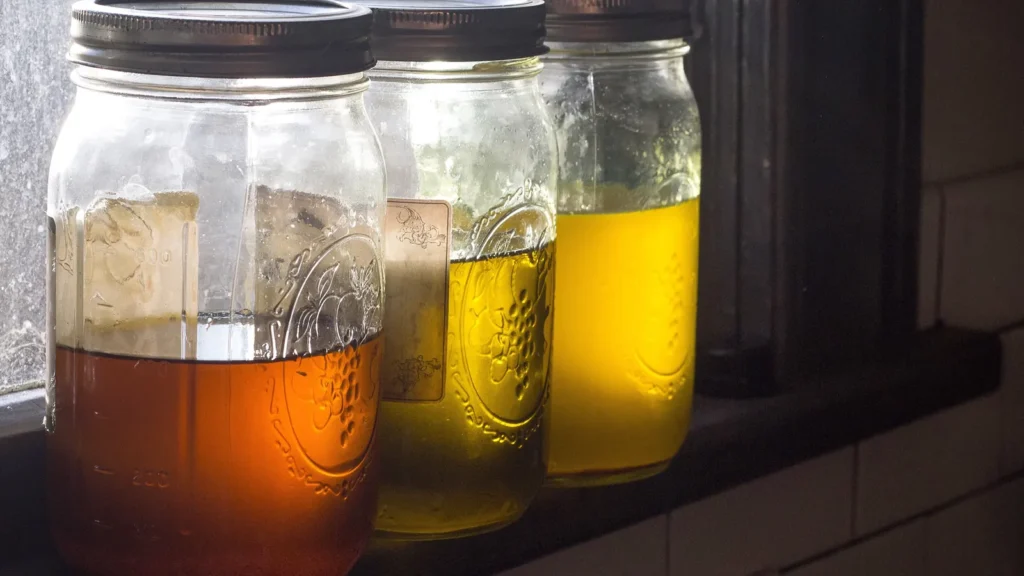
To dispose of cooking oil, let it cool, seal small amounts in a container that will not leak and put it in the general waste bin. Take larger amounts, such as deep fryer oil, to a drop-off point that accepts cooking oil. Never pour oil down the sink: it cools, sticks to the pipes and causes blockages.
Fats, oils and grease (FOG) are a major cause of sewer blockages. Oil does not dissolve in water, and once it coats the inside of a pipe, food and other particles stick to it. In 2021, Water Corporation reported that fats, oils and grease caused 500 of the 918 preventable wastewater blockages its crews cleared across Western Australia, and asked households to put them in the bin instead.
It is not always obvious when cooking creates a disposal risk. After roasting a chicken in a pan, the oil is often discarded by washing it away with hot soapy water. The truth is that the oil in that pan flows and behaves the same way as the oil in a deep fryer. When that hot oil is washed away with soap and water, it flows freely while warm. It then cools and solidifies further down the pipe. This happens repeatedly and eventually causes a blockage that dish soap cannot clean.
The right first step is easy: do not wash that oil down the drain.
Small quantities: the bin method
For small amounts of used cooking oil, the general waste bin is fine as long as the oil has cooled and is sealed so it cannot leak. Allow the oil to cool completely, then pour it into a container with a secure lid, such as a jar or the original oil bottle. Once sealed, the container can go in the general waste bin.
A better way to manage small volumes of cooking oil in the kitchen is to wipe the pan with a paper towel to remove the grease before washing. Paper towel readily absorbs the grease and it goes straight into the general waste. A single serving of pan-fried food requires no more than a wiping of the pan to remove the grease.
What not to do: never pour loose liquid oil into the general waste bin. Seal it first so it cannot leak through the bin bag.
Bulk volumes: deep fryer oil and cooking oil
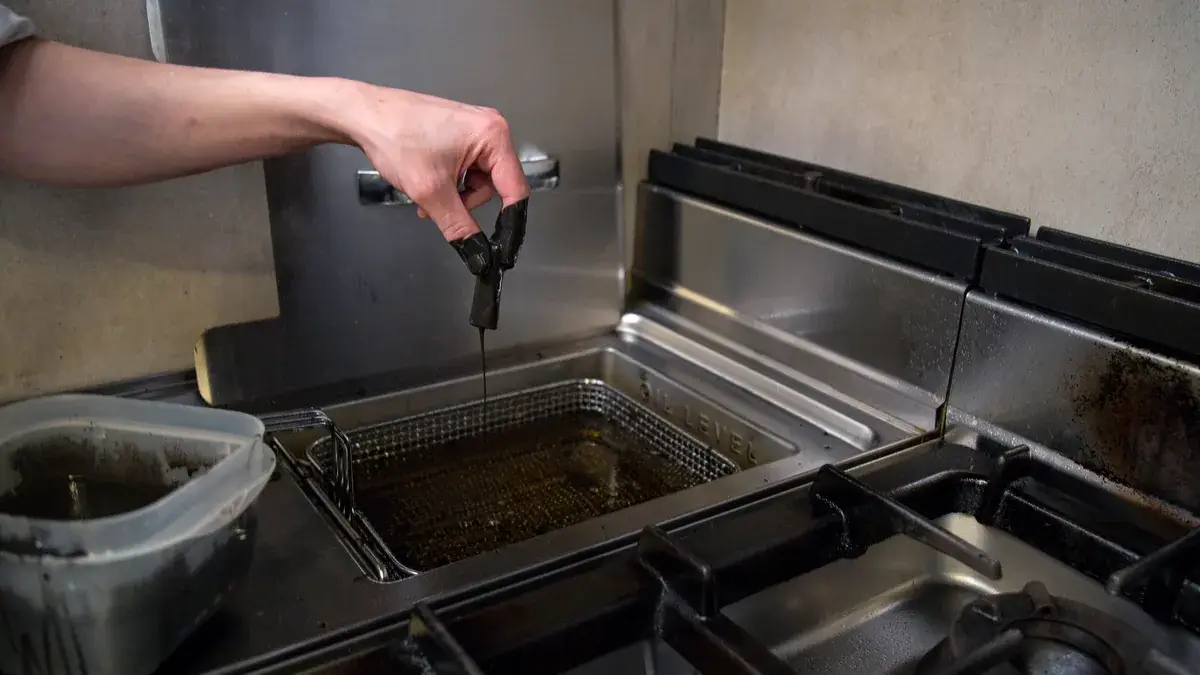
Deep fryer oil and larger quantities of cooking oil are better recycled than binned. Oils are not accepted on a standard rubbish removal booking, so the options below are for the oil itself.
Cooking oil recycling
According to RecyclingNearYou, used cooking oil can be filtered and recycled into products such as biofuel, cosmetics, detergents and stockfeed.
For household cooking oils, the RecyclingNearYou directory is a good place to start. It lets you search for cooking oil drop-off points near you.
Check whether your drop-off point takes animal fats, such as dripping, lard and rendered meat fat, as well as plant oils. If yours does not, seal them in a container and put them in the general waste bin.
Council drop-off facilities
RecyclingNearYou says used household cooking oil can be recycled through your local waste transfer station. Check the facility’s accepted items list on your council’s website, or search RecyclingNearYou, before making a special trip.
For what councils collect at the kerb, hard rubbish and bulk waste collection in Australia covers schedules and accepted items council by council.
Rubbish removal and commercial disposal
A commercial kitchen or food processing business should use a licensed cooking oil collector, which can arrange regular collections.
For general property waste alongside a clean-out, comparing skip hire with a booked removal explains which suits bulky waste.
What not to do
Sink or drain. Cooking oil sticks to pipe walls and accumulates over time. Dish soap and hot water do not break down cooking oil in cooled drain pipe conditions. The problem is just moved along the drain.
Garden or compost. RecyclingNearYou says small amounts of cooking oil can go in a home compost, and in a FOGO bin if your council allows it. Check with your council before using the FOGO bin.
Bin in liquid form. Never put loose liquid oil in the bin. Let it cool, seal it in a container, then bin it.
FAQs
Can I pour oil down the sink?
No. Oil does not mix with water. It cools, builds up in pipes and causes blockages over time. In 2021, Water Corporation reported that fats, oils and grease caused 500 of the 918 preventable wastewater blockages its crews cleared in WA. Soap and hot water do not remove it; they only move it further along the pipe.
Where can I dispose of used cooking oil?
Small amounts can be cooled, sealed and put in the general waste bin. For larger amounts, look for a council resource recovery centre or community recycling centre that accepts cooking oil, or search the RecyclingNearYou website at recyclingnearyou.com.au/cooking-oil. What each site accepts, and how much, varies, so check with the facility before making the trip.
How do I dispose of the oil in a deep fryer?
Once cool, transfer the oil to a sealed container. A drop-off point that accepts cooking oil is the best option. If there is none near you, ask your council how it wants larger amounts handled. If your drop-off point does not take animal fats such as dripping and lard, seal them in a container and put them in the general waste bin.
Can you put cooking oil in the bin?
Yes, in small amounts, once it has cooled and is sealed in a container that will not leak. Never pour loose liquid oil into the bin.