

The fast and short answer: Time is of the essence, so work quickly. For a fresh spill, don’t press down when removing the nail polish. On dried polish, let the acetone soak in and don’t agitate. If it’s a particularly stubborn stain, skip the home treatment and head straight to the pros.
Long answer:
The method varies based on the state of the stain.
Fresh stain: If the nail polish is still wet, don’t press down when removing it. Lift it to avoid making the stain bigger. You can use liquid or solvent to help dissolve the stain, but let it soak rather than scrubbing. Be careful not to use too much liquid or solvent, as it may soak into the carpet backing and cause even more damage.
Dried stain: To remove dried nail polish, use acetone, but be cautious. On nylon carpet, acetone can strip the factory stain-resist treatment from the fibres. On polyester, it can soften the fibre surface with prolonged contact. On wool or natural fibres, avoid acetone entirely, as it can strip the dyes and leave permanent discolouration. Apply acetone to a cloth and press it against the stain. Let it soak in for 20 to 30 seconds. If it doesn’t fully dissolve the polish, it may be time to call the pros.
For wool carpets, skip acetone entirely.
Why does nail polish spread?
Most people think nail polish is a water-based stain. The truth is nail polish is much more complex than that. Nail polish is made up of a variety of chemicals held together by solvents and alcohols, which allow it to be liquid at room temperature. Because these solvents and alcohols are still present and mobile when the nail polish is spilled, they begin to move through capillary action, drawing the rest of the chemicals with them. This is what happens when you apply pressure to a spill, and why pressing on the spill with a cloth in an attempt to remove the nail polish does not work and only drives the stain deeper.
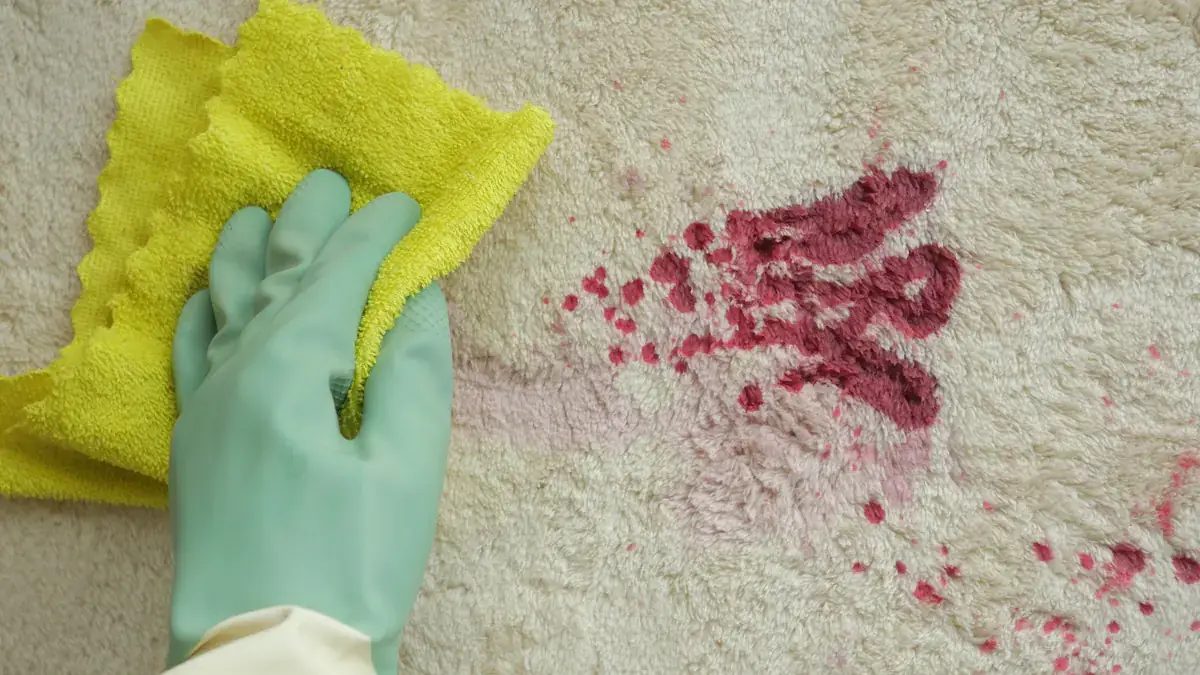
Because capillary action is what draws the solvents through the carpet fibres, using a solvent breaks down the bond that held the polish’s components together and brings them to the surface. It is best to use the least amount of solvent necessary to reach the fibres and blot it up.
Remember to check the carpet manufacturer’s care instructions before treating it. At-home treatment is reasonable for fresh spills on synthetic carpets. For natural fibre carpets, professional assessment is recommended regardless of stain age. For more information on Urgent Pro’s professional carpet cleaning services, visit the carpet cleaning page.
Proper sequence for removing fresh nail polish from carpet
Use a plain white cloth throughout. Coloured cloths can also stain the carpet and add to the problem.
Step 1. Scrape off excess. Use a rounded spoon or card to scrape off as much of the wet nail polish as you can from the fibre. Work outward from the edge. Do not scrape in a way that drags the polish onto a clean part of the fibre.
Step 2. Blot. Use a white cloth. Do not press. Repeat with a new area of the cloth until no more colour is transferred.
Step 3. Cold water. Use a small amount of cold water to rinse the fibre. Blot to remove the excess.
Step 4. Add dish soap and work it in gently from the outside of the stain in toward the centre. Blot to remove the soap and rinse with cold water.
Step 5. Assess before using a solvent. If there is still visible colour, a solvent is next. Carpet manufacturers and cleaning guides advise testing any solvent on a hidden patch of carpet, applying it to a cloth rather than the carpet directly, and continuing the treatment only while colour is still transferring to the cloth. For more information about which solvent to use, see the acetone section below.
The acetone question: when it is safe and when it is not
Acetone is used in standard nail polish remover because it dissolves nitrocellulose. This is what allows it to lift nail polish from nails, and why it works on carpet stains too. However, acetone also interacts with carpet dyes and finishes. How serious that interaction is depends on the fibre type.
| Fibre | Acetone risk | What to know |
|---|---|---|
| Nylon | Low to moderate | Acetone can strip the factory stain-resist treatment from the fibres. That spot will be more prone to re-soiling. Prolonged contact may cause some dye loss. Spot test first. |
| Polyester | Moderate | Can soften the fibre surface or cause surface tackiness. Apply sparingly and rinse quickly. |
| Polypropylene (olefin) | Low | The most solvent-resistant common carpet fibre. Small amounts at room temperature are unlikely to cause fibre damage. |
| Wool and natural fibres | High | Do not use acetone. See the wool section below. |
Non-acetone removers are worth trying first if you are concerned about acetone, or if the carpet is polyester. Most non-acetone removers use ethyl acetate as the active solvent. Ethyl acetate is a gentler option and the better starting point for nylon and polyester. Apply a small amount to a white cloth and press it on an inconspicuous area of the carpet. Wait 30 seconds, then blot. If no colour transfers and the fibres look unchanged, proceed.
Carpet manufacturers and cleaning guides advise never pouring any solvent directly onto the carpet or allowing it to reach the backing, because it can damage the latex that bonds the primary and secondary backing layers together. If solvent saturates the carpet and reaches the backing, the carpet can delaminate and the pile can separate from the backing. Work from the outside edge of the spill inward and blot rather than rub. Once the colour has lifted, rinse the area with cold water and blot dry.
For dried stains, apply acetone or a non-acetone remover to a white cloth, press it firmly against the stain, and hold it there for 20 to 30 seconds. The solvent needs time to soften the film before it can be lifted. Work in small sections and replace the cloth as it discolours.
A stain that has been there for a long time will have a dried film that has become more brittle. Old stains are harder to remove, and the sooner treatment begins, the better the results.
For wool and other natural fibre carpets, do not use acetone. It can remove the natural oils and dyes from the fibres. For natural fibre carpets, lift as much of the stain as you can, blot with a damp, pH-neutral cleaner, then blot with a clean cloth to remove excess moisture. Go no further.
If the stain does not come out with this method, contact a professional who is trained in treating natural fibre carpets. Using the wrong product on wool can cause permanent colour loss. A professional evaluation is recommended before any further treatment is applied.
Chasing the last trace: Stop when no more colour transfers to the cloth and only a faint shadow remains. Continued solvent application at this point prolongs chemical exposure to the fibre without improving the result. A professional can assess whether the remaining shadow is still treatable or permanent.
When to call a professional
Call a professional if the spill is large, the carpet is wool or an unidentified natural fibre, the stain has not responded after two careful home treatment attempts, or prior treatment has already spread the stain. Tell the professional the name of the product you used, so they can select a compatible follow-up treatment.
The blotting principles for pet stains and other organic stains are similar, but the stain removal chemistry is different.
Verified local providers on the Urgent Pro carpet cleaning network have the expertise to identify carpet fibre types and evaluate the treatability of stains, as well as provide an honest outcome estimate before any work begins. Carpet cleaning starts from $156 per job, depending on area, fibre type, and stain complexity.
Examining the bond inspection from the tenant’s viewpoint
If you are renting, a nail polish stain on the carpet is damage rather than fair wear and tear. A property manager can claim against your bond for damage, but not for ordinary deterioration from everyday use of the property. A nail polish stain cannot result from ordinary daily use.
ACT tribunal decisions have treated nail polish stains that professional cleaning cannot remove as damage, not fair wear and tear.
The Queensland Residential Tenancies Authority’s fair wear and tear guidance says dirt, grime and damage are not fair wear and tear, and lists carpet stains from approved pets as an example of tenant-responsible damage.
The best position a tenant can take at the exit inspection is to ensure that a professional treatment is booked if home cleaning does not remove the stain. A cleaning receipt showing a professional attempt to treat the stain is material evidence in any bond dispute.
For a full picture of how carpet stains interact with end of lease obligations, the companion article covers what property managers actually assess and what the clause typically requires. For the full range of stain treatments across wine, coffee, grease, mud, and other categories, see the stain-by-stain carpet guide.
FAQs
My carpet is wool. Can I still use acetone or a nail polish remover?
Do not use acetone on wool carpet. Acetone can strip the acid dyes used in wool fibres and leave permanently lightened patches. Use a pH-neutral, wool-safe cleaner and blot with cool water instead. Do not attempt anything else before consulting a professional who works with natural fibre carpets.
Can I use hairspray to remove nail polish from the carpet?
No. Hairspray is not a spot remover and will only leave a sticky residue. It will not dissolve the nitrocellulose film that nail polish leaves behind. Acetone or a non-acetone remover applied to a white cloth works far better. Be sure to test on a hidden area first.
Will a nail polish stain affect my bond?
It can. ACT tribunal decisions have treated nail polish stains that professional cleaning cannot remove as damage, not fair wear and tear. A nail polish stain that cannot be removed is usually treated as damage, so it can affect your bond. Address the stain before your exit inspection and, if professional treatment is needed, keep the receipt as evidence.
When should I get a professional involved?
Earlier professional intervention produces better results than multiple failed home attempts, especially for stains that have dried or spread. Have a professional clean the stain if home treatment has not improved it after two attempts, if the carpet is wool or a natural fibre, or if the product used made the stain worse.