
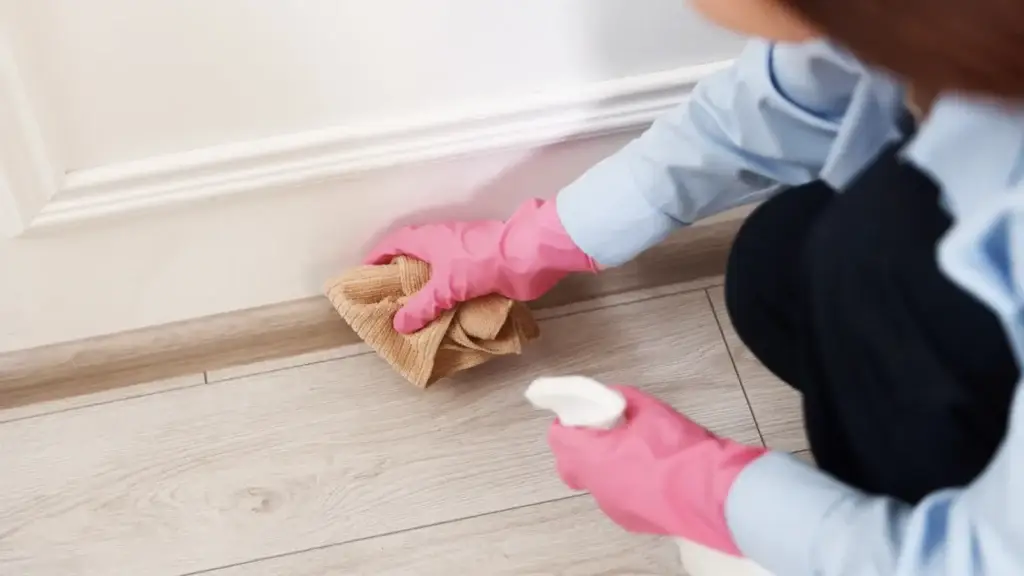
Skirting boards fail final inspections not because tenants are careless but because they are invisible at normal standing height. At inspection, an agent can confirm their condition in two seconds by running a finger along the top edge. A grey dust line or a scuff mark from a chair leg does exactly what a clean board would have prevented: it turns a passed inspection into a re-attend.
Short answer: Vacuuming the top edge lifts loose debris. Wipe with a barely damp microfibre cloth and dry immediately. Most scuff marks are removed with dish detergent on a damp cloth. The rest are removed with a melamine foam eraser. Budget 10 to 15 minutes per room.
Why agents check skirting boards
REIWA’s rent inspection guide lists dust on skirting boards among the things tenants often forget. That is industry guidance, not law, but it matches what property managers commonly flag at a final inspection too.
Dust along the top edge of skirting boards and scuff marks at floor level tell an agent the boards were not cleaned at any point during the tenancy. Skirting boards are a common item in re-attend reports across Urgent Pro’s cities. Scuffs near floor level are caused by furniture legs and vacuum cleaners grazing the boards throughout the tenancy.
For professional house cleaning through Urgent Pro ahead of a final inspection, verified local providers cover skirting boards as part of their standard scope across the whole property.
Know your boards before you start
Depending on what the boards are made of and what paint is on them, the right approach varies. Australian rental properties use several different skirting board materials, and the wrong cleaner on the wrong surface causes damage that becomes a deduction at inspection.
| Surface Type | What To Use | What To Avoid |
|---|---|---|
| White-painted timber | Barely damp cloth, mild soapy water, dry immediately | Excess water, abrasive cleaners, acidic products |
| MDF | Barely damp cloth only, dry immediately | Any standing moisture, which swells edges and joins |
| PVC or vinyl | Damp cloth with a small amount of dish detergent | Solvent-based cleaners |
| Tiled skirting | Damp cloth, soft brush for grout | Acidic cleaners on limestone or marble |
Oil-based or water-based paint?
Skirting boards, doors, and architraves in rental properties built or last repainted before the mid-1990s are likely to have oil-based enamel paint. Water-based acrylic enamel was not widely available for interior timber trims until around that period. Rental properties built after the mid-1990s almost universally use water-based enamel paint on their internal trims.
The field test takes 30 seconds: dampen a cloth with methylated spirits and rub firmly on a small, inconspicuous area. If colour transfers to the cloth, it is water-based paint. If there is no colour transfer, it is oil-based enamel. Another way to tell is to look at the trim colour. If trim that should be white has yellowed or turned cream, it is likely oil-based enamel. Water-based acrylics do not yellow with age.
Oil-based enamel and water-based acrylics both clean well with mild soapy water on a barely damp cloth. The biggest difference is sensitivity: acrylics are more sensitive to excess moisture and strong cleaners, so spot test before cleaning the full board.
The correct cleaning method
- Use the vacuum brush or crevice tool to remove dust along edges, corners, and joins before damp cleaning. This removes most of the surface dust and makes the damp cleaning quicker.
Step 2: Wipe with a barely damp cloth. Dip a microfibre cloth into water and wring it out until it is barely damp. Wipe from left to right, starting at the top edge, then the face, then the bottom edge. Turn the cloth to a clean section after each pass and rinse it as it picks up grime. Work in metre-long sections and change the water when it turns grey.
For MDF boards, this damp-then-dry sequence is more important than for any other surface. Water trapped along edges or joins causes swelling that cannot be corrected by cleaning.
Step 3: Dry immediately. Use a dry section of the same cloth to remove any remaining moisture. This prevents tide marks.
Plain water is sufficient for light dust. For greasy residues in kitchens or bathrooms, add a small amount of dish detergent to the water and rinse with a plain damp cloth afterwards.
If bending down is difficult: a flat microfibre mop head or a soft brush fitted to a long handle reaches the top edge and face of the board from standing height. For corners and joins, a small handheld tool is still more accurate.
Corners, gaps and hard-to-reach spots
Corners, gaps, and other hard-to-reach areas are the trickiest parts of the job. The best tools for these spots are:
- A small paintbrush or old toothbrush for corners and the gap between the board and the floor.
- Cotton buds for mitred joins at corners and narrow gaps where boards meet at doorways.
- A radiator brush for skirting that runs behind and below heating units, which is often missed at a final inspection.
For decorative profiled boards, pull an old clean sock over your hand and tuck a barely damp microfibre cloth inside. Your hand reaches corners and curves better than any flat cleaning head.
Do not use moisture near integrated cable ducts in skirting boards. Water that reaches the cables inside creates a problem that cleaning products cannot fix.
Dealing with scuff marks
Scuff marks on skirting boards are usually from rubber furniture legs or shoe soles. Most marks come off with a slightly damp cloth and a few drops of dish detergent. Apply it, allow 20 seconds of contact time, and then wipe with a clean damp cloth.
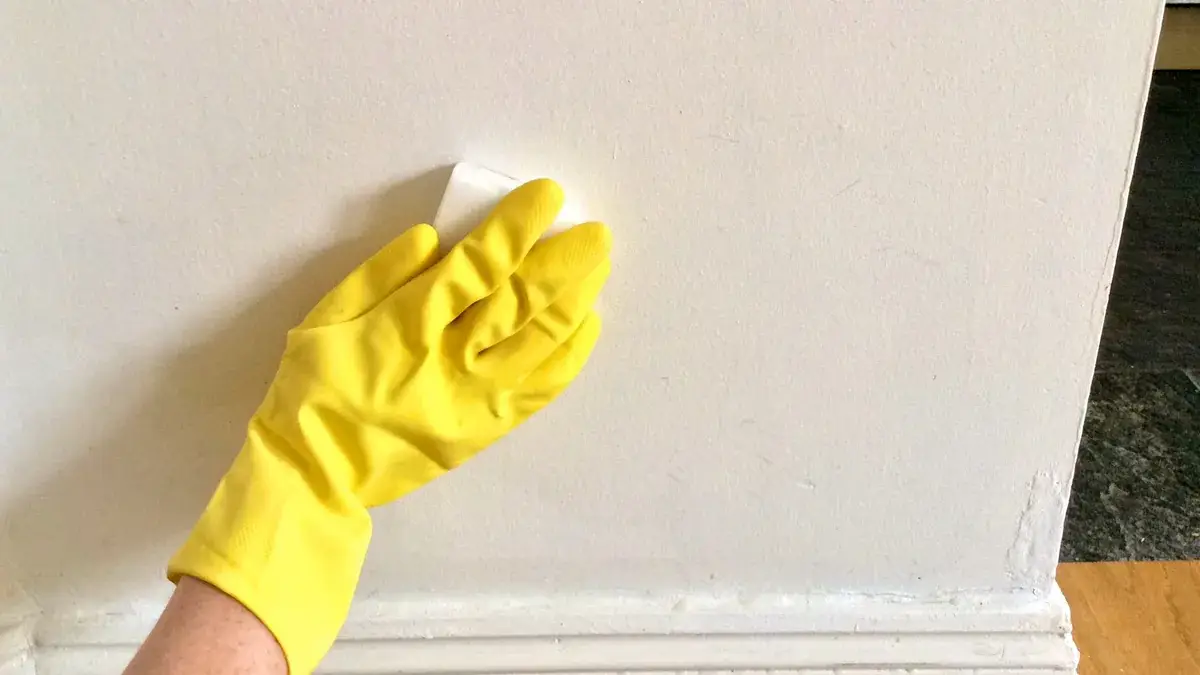
Some marks are stubborn and will not come off with dish detergent. In that case, try a melamine foam eraser. These are available at most hardware and grocery stores. Dampen the eraser, wring it out, and work it gently over the mark only, not over the surrounding paint. It works like very fine sandpaper, so avoid pressing too hard or using it repeatedly in the same spot. Test it on a small area behind a door first to see how it affects the finish.
A mark that has transferred permanently into the paint surface is paint damage, not a cleaning item. This is common with furniture impacts during a move-out. Paint damage cannot be cleaned away and is assessed against the original condition report. Patching small marks and holes before a final inspection is the repair option when cleaning is not enough.
If a chip is gouged out, that is also assessed as damage. The distinction matters for the condition report: a scuff that cleans off is a cleaning item and is the tenant’s responsibility to address. A chip or gouge that cannot be cleaned is a damage item, assessed separately.
How long does it take?
A moderately built-up bedroom or living room takes 10 to 15 minutes. Vacuuming the edge and face takes three to four minutes, wiping takes five to eight minutes, and drying takes two to three minutes. A room where the boards have not been cleaned during the tenancy takes approximately 20 to 25 minutes, with an additional five to ten minutes for scuff treatment.
Bathrooms and kitchens, where product residue and grease build up faster, take 20 to 25 minutes each. A moderately built-up three-bedroom house takes 60 to 75 minutes in total. A tenancy where the skirting boards were vacuumed quarterly reduces the time needed at move-out substantially.
The times given are for one person working methodically. With two people, the time is roughly halved.
Keeping skirting boards clean between inspections
Once boards are clean and dry, rubbing them with a used dryer sheet leaves a light anti-static layer that helps prevent dust from settling back as quickly. It is not a permanent fix and needs to be reapplied after each deep clean. A microfibre cloth rinsed in fabric conditioner, then wrung out and fully dried, has the same effect.
Boards near heating vents or return-air grilles accumulate dust faster than anywhere else in the room. Including these areas in every routine vacuum helps keep the build-up manageable.
Properties with pets require more frequent vacuuming of skirting boards, often weekly. A damp wipe is worth doing every quarter in a typical home; every six to eight weeks in a pet household.
If boards are part of a professional clean
What a standard house clean includes sets out the full scope when booking through the Urgent Pro platform, including skirting boards, corners, and architraves throughout the property.
For what is assessed at a final inspection room by room, the inspection cleaning standards guide outlines what agents check and to what level.
The full range of cleaning services available through Urgent Pro includes house cleaning, end-of-lease cleaning, and carpet cleaning. All bookings use verified independent providers, each covered by their own public liability insurance.
FAQs
How often should skirting boards be cleaned?
Vacuum the top edge when you vacuum the floors. This keeps everyday dust from building up. A damp-cloth wipe-down maintains the boards and reduces the effort required at move-out: every quarter in a typical home; every six to eight weeks in a pet household. Near heating and cooling vents, increase the frequency because dust settles faster in those spots.
What is the best way to remove scuffs from skirting boards?
A slightly damp cloth with a few drops of dish detergent is the right starting point. Most scuffs from shoe rubber come off with this. For tougher marks, try a melamine foam eraser, testing on a section behind a door first. Do not use abrasive scourers as they dull the paint finish. A mark that survives both methods is paint damage, not a cleaning item.
Do agents check skirting boards at the final inspection?
Yes. REIWA’s inspection guidance lists skirting boards among the areas tenants often miss. The top edge is often flagged because an agent can confirm it in seconds by running a finger along the board. Skirting boards are a common item in re-attend reports across Urgent Pro’s cities.
Can I clean painted skirting boards with water?
Yes, with a barely damp cloth. Excess water soaks into the paint film and causes tide marks. It can also cause swelling in MDF boards. Wring the cloth out thoroughly before wiping. For tough grease stains, add dish detergent to the water and rinse with a plain damp cloth. Avoid acid-based and solvent-based products on painted boards.
How do I know if my skirting boards have oil-based or water-based paint?
Dampen a cloth with methylated spirits and rub it firmly on a small, inconspicuous section for about 30 seconds. If colour transfers to the cloth, the paint is water-based. If nothing transfers, it is oil-based enamel. If the trim that should be white has yellowed or turned cream, that is another sign of oil-based enamel. Water-based acrylic paint does not yellow with age.
How do I prevent skirting boards from collecting dust so quickly?
Once the boards are clean and dry, wipe them with a used dryer sheet or a cloth rinsed in fabric conditioner and then fully dried. This leaves a thin anti-static layer that slows dust from resettling. It is not permanent, but it noticeably extends the time between cleans. Boards near heating vents will still collect dust faster than others, regardless of treatment.