

Carpet steam cleaning does not use steam. The process is hot water extraction. A machine forces hot water and cleaning solution into the carpet fibres under pressure, then immediately vacuums it back out, taking the soil with it. The carpet is left moist, not wet. Urgent Pro tells customers to expect 4 to 8 hours of drying time, and it can take longer in humid conditions.
Most of the work gets done before the wand touches the carpet. This guide goes over what you need to know about fibre checks, stain assessments and pre-vacuuming, as well as what to do before the service provider arrives.
At the end of a tenancy, carpet steam cleaning is booked and quoted separately from a bond clean (QLD), vacate clean (WA) or end of lease clean (NSW and VIC). Double check that both services are booked before you vacate the property. You can see how professional carpet cleaning is booked and quoted on the service page.
What Most Steam Cleaning Guides Get Wrong
Many steam cleaning guides repeat the same claims, and several of them don’t hold up against primary sources.
| Claim | What the evidence says |
|---|---|
| It blasts steam vapour into the carpet | Professional carpet cleaning is hot water extraction: liquid water, heated, injected and immediately extracted. Godfrey Hirst’s Australian care guides use “steam cleaning” only as the everyday name for hot water extraction. |
| It uses no chemicals | Both pre-treatment and cleaning solutions are part of the process. The critical questions are whether the product suits the fibre and whether it is rinsed out, so it does not attract new soiling. |
| It kills 99% of bacteria and dust mites | We could find no Australian health authority or standard that supports a kill figure for carpet extraction. The 60°C figure for dust mites is advice for washing bedding. |
| More water means a deeper clean | Excess water takes longer to dry. Slow drying is the main cause of brown patches and a musty smell. |
| Everyone should clean every 6 to 12 months | The frequency depends on how much the carpet is used. Godfrey Hirst’s Australian guarantees specify professional hot water extraction every 12 to 18 months, depending on use. |
| You must vacuum before the cleaner arrives | A pre-vacuum is part of Urgent Pro’s standard carpet cleaning booking, so the provider can control how much grit is removed before any liquid goes in. |
The rest of this guide explains each step of a carpet clean in the order it happens.
What the Machine Is Actually Doing
Professional extractors come in two types. Truck-mounted units run off the van and pump water through a long hose to the wand. Portable units are wheeled into the home and plugged into a power point.
Manufacturer specifications give an idea of the difference between the two. Truck-mounted units are rated at up to 2,500 psi (about 17,200 kPa), while portable units are rated at 100 to 500 psi (roughly 700 to 3,450 kPa), with heaters rated up to about 100°C. These are maximum ratings, and they are not what reaches the carpet. Heat drops along the length of the hose, and the provider uses judgement to turn down the heat and pressure for wool, plush piles and delicate backings.
This is the main difference between a true professional clean and what you can achieve with a supermarket rental machine. It’s not what is in the tank. It’s how hot the water is, how much suction pulls the water back out, and knowing when to use less of both. For a comparison of hot water extraction and low-moisture methods, see hot water extraction versus dry methods.
Before the Provider Arrives: What You Can Do
A lot of people are surprised by how much of a difference preparation makes. In order of importance:
- Tell Urgent Pro the fibre type when you book. If it is wool or a blend, say so. Colour or texture change in an undisclosed wool carpet is excluded from the warranty.
- Disclose pets, stains and spills. Pet urine and set-in stains need different treatments and are quoted as variations, so disclosing them ahead of time prevents a surprise price change on the day.
- Mention laminate or timber next to the carpet. Moisture damage to adjacent laminate or timber flooring is excluded if you did not flag the sensitivity at booking.
- Clear small and fragile items. Take toys, cords, small rugs and ornaments off the floor. The provider only moves what one person can lift safely.
- Move large and heavy items yourself. Sofas, beds and wardrobes are not moved as part of a standard booking, and a provider can decline to move them.
- Plan for drying time. Try to book early in the day, and arrange for children and pets to stay off the carpet until it is dry.
- Be home for the walk-through. Where you are present, the provider walks through the job with you at the end. That is when you can point out anything that has not lifted.
Step 1: Fibre Check, Stain Assessment and Photos
Fibres determine which products and how much water a provider uses. Synthetic fibres such as nylon, polyester and polypropylene tolerate hot water extraction and a broader range of products. Wool needs gentler chemistry and less water. Other fibres, such as jute, viscose and silk, can be damaged by extraction. The provider confirms the fibre before choosing products and water volume.
Stains that appear to be permanent are photographed before they are treated, and the provider documents the type of each stain. Each carpeted area is also photographed before and after the clean. These photos are your evidence, and the provider’s evidence, if a claim is made under the cleaning service warranty terms.
Permanent stains are stains where the fibre has been chemically altered. Examples are bleach, hair dye, some inks, sun fading and urine that has been left long enough to off-gas. No cleaning solution will reverse those changes, and a provider who tells you this before cleaning is being honest with you.
Step 2: Furniture and the Pre-Vacuum
Small furniture is moved and set back on sliders or pads to protect the damp carpet. Loose grit is vacuumed out before any liquid solution goes on the carpet, because dry soil turns to mud when it meets cleaning solution and gets pushed deeper into the pile.
The same logic applies between professional cleans. Grit that is vacuumed out regularly never gets the chance to grind into the pile, which is why vacuuming floors is part of every standard clean when you book regular house cleaning through the network.
Step 3: Pre-Treatment
A cleaning solution is applied to break the bond between soil and fibre, so the extraction pass removes the soil rather than just moving it around. The solution is given time to work before extraction starts.
Different stains need different chemistry. Solvent-based products are commonly used on makeup and grease. Coffee, tea and wine are tannin stains and are treated differently. Pet urine contains organic compounds and needs an enzymatic treatment to break them down.
Heavy soiling, set-in stains, and pet urine and odour treatment are variations to a standard carpet clean, so they change the price. Under Urgent Pro’s process, the provider must speak to you about any stain variation before starting, including the price and the likely outcome (whether the stain will be completely removed, partially removed or not removed at all). Keep in mind that the result can’t be guaranteed, especially if the stain has been there for a long time. For more on what moves carpet cleaning prices, see our cost guide.
What Changes on Wool Carpet
Wool is where the method changes the most. The WoolSafe Organisation, an independent body that certifies products as safe for wool, tests each product against its published product testing criteria. A certified product must contain no optical brighteners and no oxidising or reducing agents. It must not be too alkaline, and testing must show it does not increase re-soiling after it is applied.
WoolSafe’s criteria are based on alkalinity and buffering rather than a single pH number, so treat any claim of an official WoolSafe pH range with caution.
Australian manufacturers are firm on method too. Godfrey Hirst’s Australian wool care guide (under its Hycraft brand) says do-it-yourself steam cleaning, shampooing and dry cleaning are not recommended. It wants the work done by a professional cleaner who is a member of a professional association and works to the current Australian Standard.
Step 4: The Extraction Pass
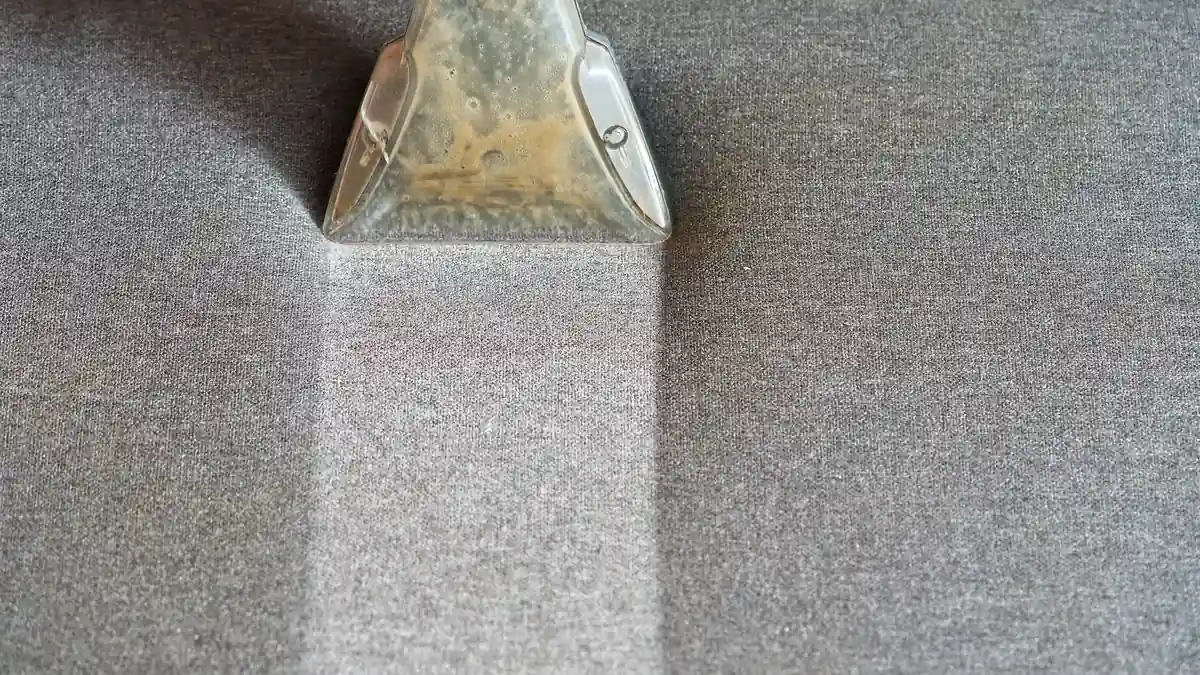
This is the core of the job. The provider draws the wand across the carpet in overlapping passes, injecting heated solution and vacuuming it back in the same stroke. Extra vacuum-only passes at the end pull out more water and shorten drying.
Heavily soiled areas, usually hallways, the path from the back door and the spot in front of the couch, may get a second wash pass. That is a judgement call rather than a default, because every extra pass adds water, and more water means slower drying.
Stairs take far longer than flat areas because the wand is repositioned for every tread. Wool gets lower water volumes and slower passes so the backing does not saturate, which is what leads to shrinkage and separation.
Step 5: Drying, and Why a Stain Can Come Back
Carpet dries from the tips of the fibres down. As moisture moves upward, it pulls dissolved soil from the backing and underlay along with it. This is called wicking. A carpet can look clean when the provider leaves and show a stain the next day.
Cellulosic browning (tan or brown patches) can also appear after a clean. Australian carpet chemical manufacturers describe the same cause in their technical sheets: a cellulose fibre such as jute backing, plus over-wetting or high-alkaline chemistry, plus slow drying. The slower the drying, the greater the risk.
Drying conditions vary a lot between Australian cities. The average relative humidity at Perth Airport at 3pm is about 37% in January, compared with about 70% at the Gold Coast Seaway. Perth and Melbourne are most humid on winter mornings, while Sydney, Brisbane and the Gold Coast are most humid in summer. The same clean behaves very differently from one city to another, which is why we cover what slows drying after the clean separately.
What Carpet Steam Cleaning Cannot Fix
Stains that have chemically altered the fibre will not fully clear. The surface contamination and smell are usually removed, but the colour will not change back to the original.
Traffic lanes through hallways and lounges are mostly compressed, worn pile. Cleaning improves them but cannot restore pile height. During a final inspection, agents can tell the difference between worn carpet and dirty carpet, and only the latter is a cleaning problem. If you are moving out, whether your lease requires a carpet clean depends on your state and on whether pets were approved.
Burns, tears, and frayed or lifted edges are repairs and need a different trade.
Pet urine or water that has soaked into the underlay will keep wicking up through a clean carpet, bringing the odour and stain back with it. The only permanent solution is to replace the underlay.
The Standard Behind a Professional Clean
The current Australian and New Zealand Standard for carpet cleaning is AS/NZS 3733:2018, Textile floor coverings: Cleaning maintenance of residential and commercial carpeting, published in December 2018. Standards Australia’s current listing for the standard shows it replaced the 1995 edition, which some cleaning websites still quote.
The standard matters to your carpet’s guarantee, and therefore your wallet. The Carpet Institute of Australia states that most carpet manufacturers require carpets to be maintained in line with AS/NZS 3733:2018. Godfrey Hirst’s Australian guarantees, for example, require hot water extraction by a trained professional every 12 to 18 months, depending on use. Keep the tax invoice from each clean. It shows the provider’s name and ABN, and it is your evidence if a guarantee claim ever comes up.
The 7-Day Warranty, and Why Payment Is Held
Carpet cleaning booked through Urgent Pro comes with a 7-day warranty from completion. It covers a free re-clean if a cleanable stain did not lift, if residue is still visible, or if wicking can be traced back to the provider’s method or post-clean care. To arrange a re-clean, contact Urgent Pro and lodge a claim. Once the claim is accepted, the re-clean is scheduled within 7 days.
Payment to the provider is held for the duration of the warranty and released only once it ends without a claim or the claim is resolved. The hold and the warranty protect you in case a claim has to be made, and they apply every time you book a verified carpet cleaning provider on the Urgent Pro network.
The warranty doesn’t cover stains documented as likely permanent, wicking from contaminated underlay, wear patterns, or stains that occur after the clean. It also depends on your part: letting the carpet dry as advised and keeping the room well ventilated. Walking on the carpet, re-furnishing it or moving belongings onto it before it’s dry can reduce your warranty cover.
What to Do in the First 24 Hours
Keep foot traffic off the carpet until it is completely dry, as damp pile crushes easily and picks up soil from shoes.
Open windows and doors, or run your air conditioning on fan or dry mode. Airflow is the biggest drying factor you control.
Don’t point a heater directly at the carpet. Direct heat can shrink some fibres.
Put pads or sliders under any furniture legs that go back on damp carpet, to avoid rust and tannin stains transferring into the pile.
If a stain reappears as the carpet dries, don’t treat it with a supermarket product. Products containing oxygen bleach or high-pH cleaners can set the stain permanently or strip the dye and make it worse. Photograph it and contact Urgent Pro on 1300 105 453 within 7 days of the clean. You can also browse the other cleaning services on offer if your move-out needs more than carpets.
FAQs
How long does a professional carpet steam clean take?
It depends on the area, the number of rooms and stairs, the fibre type and how many spots need pre-treatment. Your quote is calculated from those variables, and a time estimate is given when the booking is confirmed. Drying takes 4 to 8 hours indoors, longer in humid weather.
Do I have to vacuum before the provider arrives?
No. A pre-vacuum is part of a standard booking. The best thing you can do to prepare is tell Urgent Pro the fibre type and about any pets and stains when you book.
Do I have to move furniture before the provider arrives?
Clear small and fragile objects. Heavy furniture is not moved as part of a standard booking, and a provider can refuse to move larger items. If you need that area cleaned, clear it before the booking.
Will a deep steam clean kill dust mites?
Not in the way it is often claimed. The 60°C figure comes from ASCIA advice on washing bedding, a temperature held for a whole wash cycle. ASCIA also says no vacuum, spray or dry cleaning process completely removes house dust mites from carpet. Extraction does remove the soil and allergen-laden dust that builds up in the pile.
Is carpet steam cleaning safe for wool carpet?
Yes, when the provider knows it is wool. Wool needs gentler, wool-safe products and less water. Always disclose wool at booking, because colour or texture change in an undisclosed wool carpet is excluded from the warranty.
Will steam cleaning remove every stain?
No. Stains that have chemically altered the fibre, such as bleach, hair dye, some inks and long-set urine, will not fully clear. The provider assesses and photographs these before starting, and stains documented as likely permanent are outside the warranty.
Does steam cleaning count as a professional clean for my lease?
A booking through a verified provider produces a tax invoice with the provider’s name and ABN, which is the evidence agents usually ask for. Whether your lease can require a professional carpet clean at all depends on your state and on whether pets were approved, so check the lease wording before you book.
What if a stain comes back a day or two after the clean?
Don’t treat it yourself. Photograph it and contact Urgent Pro within 7 days of the clean. Where the stain is cleanable and the cause sits within the original job, the provider returns for a free re-clean.