
Short answer: Carpet shampoo is both a product and a cleaning method. Professional carpet cleaning is a different process that extracts the cleaning solution and the loosened soil from the fibres in the same pass. The two are not interchangeable. For lightly soiled synthetic carpet, DIY shampooing can refresh the surface. For anything deeper, wetter, or made from natural fibre, it creates more problems than it solves.
What carpet shampooing actually does
Carpet shampooing applies a detergent solution to the carpet pile, then works it in with a rotating brush machine. The friction lifts surface soil and the shampoo encapsulates it in foam. Depending on the machine and method, the foam either dries and is vacuumed away the following day, or is extracted immediately after application.
The appeal is obvious. Hire machines are available at hardware stores across Australia for a fraction of the cost of a professional booking, and they look simple to operate. The problem lies in the rinsing step. When the cleaning solution is not fully extracted from the fibre, surfactant residue remains on the pile. That residue is hygroscopic, meaning it stays moist and slightly tacky, and it attracts soil from foot traffic and the air. Technical documentation on carpet shampoo chemistry identifies unrinsed surfactant as the primary cause of accelerated resoiling after a shampoo clean. The carpet ends up attracting new dirt faster than it did before cleaning, so it looks grubby again sooner than expected. This is not a problem specific to cheap machines. It is a chemistry problem that depends entirely on how thoroughly the solution is rinsed and extracted after cleaning.
Leading carpet manufacturers back this up. Shaw Industries’ care guides warn that unrinsed shampoos can lead to fibre entanglement and matting. Several Australian carpet suppliers require professional hot water extraction as the only approved cleaning method for maintaining carpet warranties. Where that warranty applies to a rental property, the method used matters from the first clean.
The Carpet Institute of Australia rates rotary shampooers as generally suitable for cut-pile synthetic carpets. It does not endorse them for loop pile, wool, or natural fibre. That distinction is where most DIY cleaning goes wrong.
What professional hot water extraction does differently
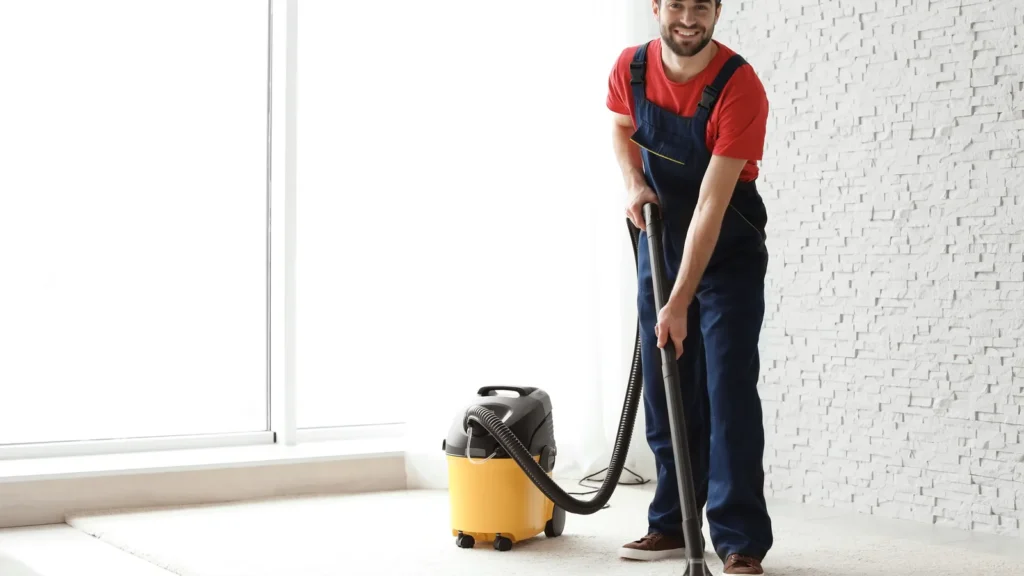
Professional carpet cleaning uses hot water extraction, which most people call steam cleaning. The process is similar to shampooing in that a cleaning solution is applied to break down soil in the pile. The critical difference is in how the solution and soil are removed. Hot water extraction performs the extraction step in the same pass, injecting heated solution under pressure and immediately pulling it back out along with the loosened soil. Shampooing moves soil into foam, which is then dried and vacuumed away later.
A hire machine from a hardware store is technically an extractor, not a shampooer. The Rug Doctor Mighty Pro X3 available at Bunnings operates at 28 psi of solution pressure with no on-board heater; the water temperature depends on what comes out of your laundry tap. The Britex BR-11 runs at a similar 24 to 25 psi. A truck-mounted professional unit delivers heated water through a heat exchanger at temperatures of around 116 to 118 degrees Celsius, with solution pressure reaching 1,000 psi or more. Even at the lower working pressure used at the wand on carpet (closer to 300 psi), the gap is roughly tenfold in pressure and far greater in heat. For an objective side-by-side of how professional carpet cleaning methods compare and where DIY options sit against them, that article covers the full breakdown.
Both the Rug Doctor and Britex hold Carpet and Rug Institute (CRI) Seal of Approval certification. They are genuine extractors, not shampooers. What they lack compared to a truck-mounted unit is sustained heat, suction airflow, and pressure, all of which determine how deeply soil is removed and how quickly the carpet dries. Typical drying time after a hire-machine clean is 12 to 24 hours. After a professional truck-mount clean, a well-ventilated Australian home is usually dry in 4 to 8 hours. What affects carpet drying time and why it matters before a final inspection is covered separately.
When DIY shampooing is acceptable
There are situations where rotary shampooing or hire-machine extraction is a reasonable choice.
For synthetic cut-pile carpet in reasonable condition, nylon, polyester, or polypropylene, with light surface soiling, a well-rinsed hire-machine clean can noticeably improve the appearance without the cost of a professional booking. The key to getting a decent result is the rinse. Running the machine a second time with clean water only, then extracting that water, removes much of the detergent residue that causes resoiling. Skipping this step is where most DIY results disappoint.
For a rental property where carpets were professionally cleaned before the tenancy and are now only lightly soiled at the end of a short lease, a thorough hire-machine extraction may produce a result the property manager accepts at inspection. Whether that satisfies the lease requirement depends on the outcome and the state you are in, not on the method used. That position is covered in the lease section below.
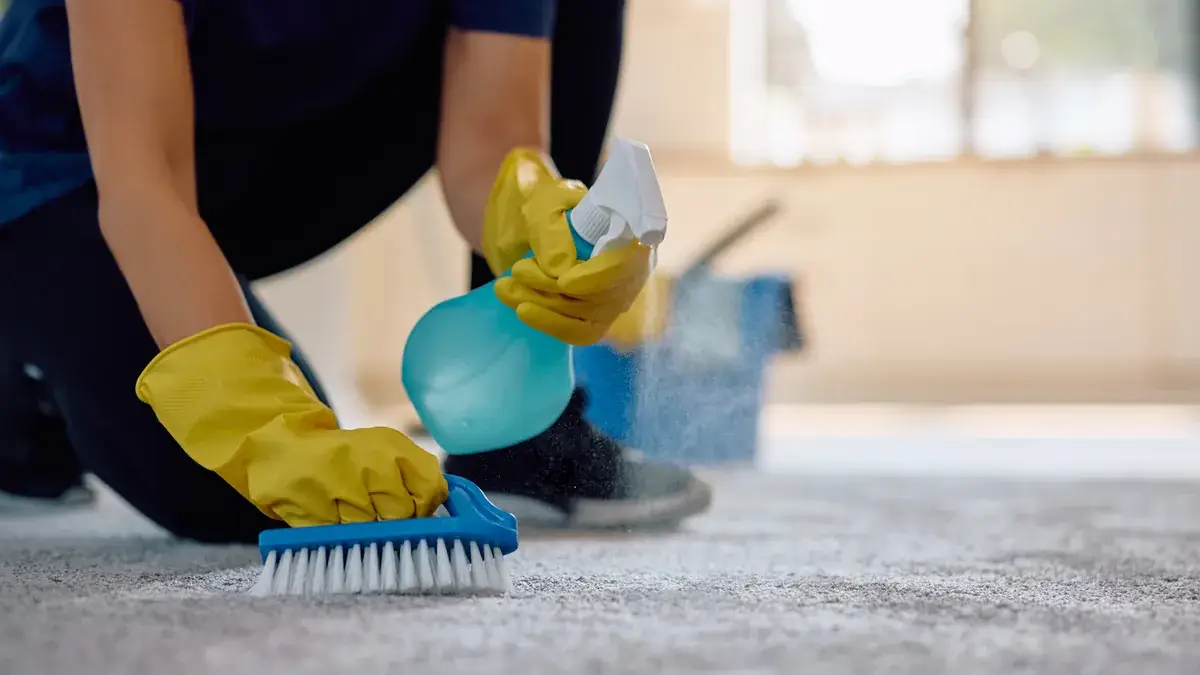
For a small, isolated stain on an otherwise clean synthetic carpet, shampooing is often the wrong tool. Targeted spot treatment with the right product for the stain type will produce a better result with less risk of over-wetting the pile.
When shampooing is not enough
Professional extraction is the right choice, not an optional upgrade, in a number of situations that come up regularly across Urgent Pro’s bookings.
For carpets that are heavily soiled, have visible traffic-lane darkening, or have embedded grime built up over months, a rotary shampoo reaches the surface layer only. It does not get to the compressed soil at the base of the pile. The carpet looks improved immediately after and then darkens again quickly as the residue left behind attracts new soil.
For pet stains and odours, the source of the smell is typically in the carpet backing and the underlay, not just the pile surface. A shampoo machine cannot treat what is below the pile. Professional hot water extraction combined with an enzymatic pre-treatment is needed to address contamination at that depth. For detailed guidance on what works and what does not, removing pet stains and odours from carpet covers the process and the limits of each approach.
For set-in stains, including coffee, red wine, or old pet accidents, the outcome depends on matching the right chemical pre-treatment to the specific stain type. A professional provider identifies the stain category during the pre-clean assessment and selects accordingly. Hire machines generally come with a single all-purpose solution that has no awareness of the chemistry of the stain it is being applied to.
When a professional carpet clean is booked through Urgent Pro, verified independent providers assess the carpet at the start of the job, identify stain types, apply the appropriate pre-treatment, and follow the extraction process set out in the Urgent Pro Cleaning Services Manual for each fibre type. That is a meaningfully different process from applying one solution with a hire machine and hoping for the best. How a professional carpet steam clean works explains each stage of the job and what the provider is checking at each point.
The fibre risk that catches most people out
This is where DIY shampooing causes its most serious and most expensive damage, and where most competitor articles say nothing.
Wool, silk, jute, sisal, and seagrass all react badly to the processes that work safely on synthetic fibre. Alkaline cleaning solutions shrink wool fibres and cause dye bleed. Rotary brushes distort the pile of wool and delicate loop constructions. Over-wetting causes backing damage and extended drying times that create mould risk underneath the carpet.
Under Urgent Pro’s carpet cleaning pricing and warranty framework, providers charge a premium for natural-fibre carpet because it requires pH-neutral products, reduced water volumes, and close attention to drying. Under the Urgent Pro Cleaning Service Warranty (UP-C07a clause 6.3(d)), where a customer does not disclose that a carpet is wool or another natural fibre at the time of booking, colour change or texture damage resulting from standard extraction falls outside the service warranty. That exclusion exists because the damage follows from incomplete disclosure, not from the cleaning method itself. The same principle applies to DIY cleaning: if you do not know what your carpet is made of, you cannot know whether the product you are using is appropriate for it.
To check fibre type, look at the manufacturer’s label under the edge of the carpet near a doorframe, or test a small area in a concealed spot before applying any cleaning product or moisture to the main surface.
According to the Carpet and Rug Institute’s guidance, thorough rinsing is essential to remove detergent residues that may cause rapid soiling, and failure to rinse completely can accelerate soiling in the fibre. This applies regardless of the cleaning method, but the risk is highest when the equipment does not deliver sufficient suction to fully extract the rinse water.
Misidentification of fibre type is the most common cause of carpet damage claims seen across Urgent Pro’s bookings. A rotary shampoo machine applied to a wool carpet that was believed to be synthetic is the scenario that generates the most expensive outcomes and the most disputed claims. What carpet cleaning costs in Australia explains how fibre type, room count, and condition all affect the quoted price, and why natural-fibre jobs sit at the higher end of the range.
A note on carpet cleaning and your lease
Many tenants want to know whether a DIY shampoo or hire-machine clean satisfies a lease clause that requires a professional carpet clean.
No Australian state tenancy authority defines a professional clean by equipment or method. The standard applied at the final inspection is whether the carpet is in the same condition it was at the start of the tenancy, fair wear and tear accounted for.
The position varies significantly by state. In New South Wales, a lease term requiring professional carpet cleaning is prohibited under the Residential Tenancies Act 2010 unless it is attached to a pet approval. NSW Fair Trading publishes the current list of prohibited lease terms. In Victoria, Consumer Affairs Victoria’s guidelines allow a professional-cleaning clause only under specific conditions set out in the Residential Tenancies Regulations 2021, and even then a renter who achieves a professional standard through their own effort can satisfy the requirement. In Queensland, the Residential Tenancies Authority states that a lease cannot require a tenant to purchase any specific cleaning service or use a particular provider, though the same condition standard applies to carpets throughout.
The practical reality across Urgent Pro’s bookings is that a dated receipt from a professional clean is evidence, not a legal obligation in most states. It helps a tenant demonstrate, after a disputed inspection, that the carpet was cleaned to a standard. It is not a substitute for the carpet actually being in an acceptable condition. Getting the carpets professionally cleaned and then allowing pets back onto them before the final inspection defeats the purpose entirely.
For the full state-by-state legal detail, the carpet cleaning lease clause guide covers the legislative position in each state with primary source references.
FAQs
Does carpet shampoo leave residue?
Yes, if the cleaning solution is not fully extracted after the clean. Surfactant residue that remains on the fibre stays tacky and attracts dust and foot-traffic soil, so the carpet re-soils faster than it did before cleaning. Running a second pass with clean water and extracting it removes much of this residue, but a hire machine’s suction may not eliminate it entirely.
Is a hire machine the same as professional steam cleaning?
A hire machine is a genuine extractor, not a shampooer, and holds industry certification for soil removal. The difference is performance. A hire machine operates at roughly 25 to 28 psi with tap-temperature water. A truck-mounted professional unit operates at higher pressure with heated water and significantly stronger vacuum airflow, removing more soil from deeper in the pile and leaving less moisture behind. Drying time reflects this directly.
Can I shampoo a wool carpet myself?
Wool requires pH-neutral products and low moisture volumes. Standard carpet shampoos are often alkaline, and a rotary machine can distort the pile of a wool or delicate loop carpet. If you are not certain of your carpet’s fibre type, check the manufacturer’s label under a doorframe edge, or test a concealed area first. When in doubt, book a professional provider who can confirm the fibre before any product is applied.
Does carpet re-soil faster after shampooing than after extraction?
It can, but the method label is not the determining factor. The mechanism is well documented in carpet chemistry literature: unrinsed surfactant residue is hygroscopic, stays slightly tacky on the fibre, and acts as a magnet for foot-traffic soil and airborne dust. Formulation research published in US Patent 4,203,859 found that some shampoo formulations accelerated resoiling faster than untreated carpet when tested under foot traffic over two weeks. A second study (US Patent RE30337) recorded a visible resoiling difference between shampooed and treated samples at 15 days. No credible source provides a head-to-head comparison of shampooing versus hot water extraction measured in days. The ANSI/IICRC S100 standard treats properly performed shampooing and hot water extraction as equivalent restorative methods. What separates the two in practice is rinse and extraction quality: a hire machine that leaves more moisture and detergent behind will resoil faster than a truck-mount that removes both thoroughly.
What does a professional carpet clean cost in Australia?
Professional carpet cleaning starts from $156 per job for a small synthetic-carpet booking in average condition, with the price scaling by the number of rooms, stair flights, fibre type, and level of soiling. Pet stain and odour treatment is priced separately. The cost guide linked earlier covers the full range and the variables that push a quote up or down.