
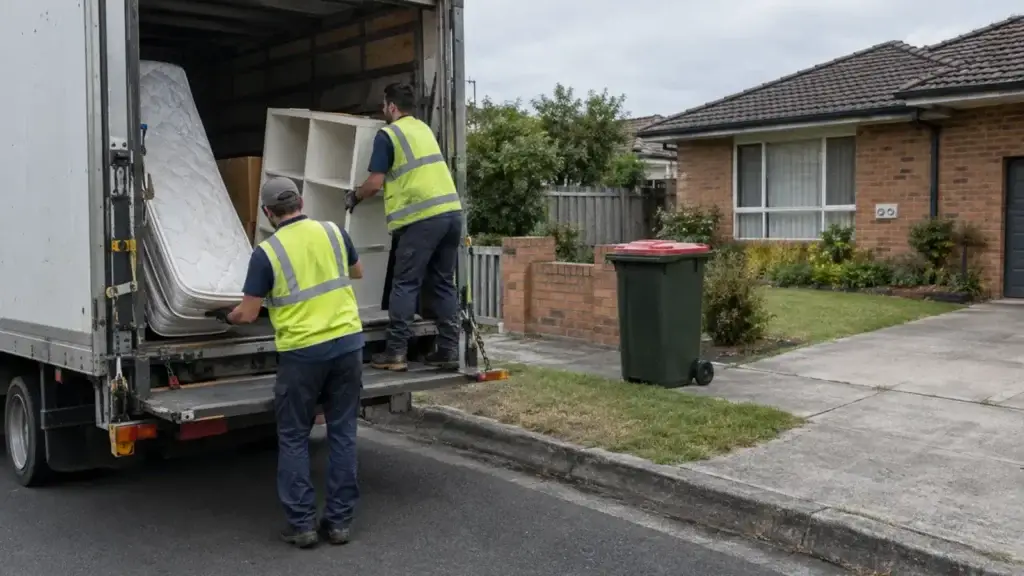
Most tenants book the cleaner, then realise they still have things to get rid of. That is backwards, and it costs money. A professional bond cleaner or vacate cleaner cannot do their job around furniture, boxes, or accumulated junk. If they arrive and the property is not completely empty, the job either gets scoped down, delayed, or you pay a variation to cover the extra time. The correct order is clear first, clean second, carpet last. Getting that sequence right is the single thing that prevents most tenants from paying for the same clean twice.
This article covers what agents actually check for at the final inspection, what needs to go before that day, what you can expect to pay for removal, and the order of steps that gets the best result.
Review Your Tenancy Agreement and Original Condition Report First
Do not make assumptions about what is expected. Pull out your tenancy agreement and the original property condition report from your move-in and read them before you book anything.
The property condition report records the state of the property at the start of your tenancy, including photos in most cases. Under your tenancy agreement, you are required to return the property in a similar condition, allowing for normal wear and tear. Minor scuffs from everyday use, small carpet wear in traffic lanes, and faded paint are examples of fair wear and tear. Holes in walls from shelving, damaged fittings, paint removal, and rubbish left behind are not. Understanding what the property condition report records and how it is used is the foundation for knowing what work is actually your responsibility before the final inspection.
Before you start cleaning, get any major works and repairs done first. A wall can be painted before a clean, but it is much harder to paint skirting boards after they have already been cleaned. Easily overlooked items like filled picture hook holes, loose handles, broken light fittings, and torn fly screens should all be attended to before any cleaner arrives. Walk every room in daylight, open every cupboard and wardrobe, and test every door, window, lock, and tap.
What Agents Actually Check in an Empty Property
“Empty” means more than furniture gone. Agents check systematically, and a single missed area can hold up the handover.
Every room, every storage space. Every office cupboard, kitchen pantry, laundry cabinet, linen press, and overhead shelf. A half-used bottle of cleaning product left under the sink is enough to be noted on the exit report.
The garden and all outdoor areas. Garden tools, hoses, broken outdoor furniture, old pots, bags of soil, and children’s play equipment. These are all checked as methodically as the interior. A landlord can make a claim against your bond for the removal of these items, and the cost they arrange is nearly always higher than what you would have paid to organise it yourself.
The garage, shed, and storage areas. These are the most commonly overlooked spaces at move-out. Tenants clear all the main rooms, pack the truck, and forget the garage. Old sporting equipment, paint tins, building materials, tyres: everything must be gone before the inspection.
Driveways and hard surfaces. Oil and paint soaked into a driveway are condition issues, not cleaning issues. If the driveway was in clean condition at the start of your tenancy, you are required to return it that way.
What Items Are Most Often Left Behind
These are the things that cause the most problems at move-out.
Furniture the removalist would not take. Removalists move belongings; they are not waste disposal services. Anything a removalist company refuses to move becomes a separate rubbish removal job. Book that early.
Mattresses. Old mattresses are the most frequently abandoned item at Australian rental properties. Many city councils have transfer stations that accept them, but they are not collected through kerbside services. A professional rubbish removal service picks them up from the property without you needing to hire a vehicle.
Unwanted white goods. If you moved a bar fridge, spare washing machine, or chest freezer into the rental during your tenancy, you are responsible for removing it. However, check your property condition report carefully first. Any white good listed as an existing item at the start of the tenancy belongs to the landlord and must stay.
Garden and green waste. Mulch, tree trimmings, and other garden waste quickly build up to volumes that exceed standard green waste bins. A rubbish removal service or a dedicated green waste collection is the practical solution.
Modifications and renovation waste. Any minor property modifications made during the tenancy need to be reversed before you leave. Painting leaves drop sheets, empty paint tins, and wall anchors to deal with. Check your lease agreement to confirm exactly what needs to be undone before you move out.
Paint tins. These cannot go in a standard bin, and most rubbish removal providers will not collect large quantities of paint. Most local councils have transfer stations where small volumes of household paint can be dropped off. Larger quantities require a specialist waste service, which takes time to book, so arrange this well in advance. For a practical overview of responsible rubbish disposal options and what different services accept, that article is a useful reference even outside Melbourne.
Hazardous materials. Used gas cylinders, spent batteries, pool chemicals, pesticides, and any asbestos-suspect material must be removed by a licensed specialist service. Standard rubbish removal providers will refuse to collect these items, correctly. Do not leave them at the property and do not put them in a skip bin. Doing either creates problems for the waste contractor and the property, and the cost to resolve it comes out of your bond.
What Rubbish Removal Costs at Move-Out
Rubbish removal is priced per job, based on volume, item type, and access conditions at the property.
The minimum rate on the Urgent Pro platform is from $220 (GST-inclusive), covering a small load, typically a single large item or a small partial trailer load from a standard metro property. Most move-out clear-outs exceed this.
Volume is the primary driver. A quarter-trailer load, a half-trailer, a full trailer, and a multi-load whole-house clear-out are all priced differently.
Item type affects disposal costs. Mattresses incur a per-item surcharge. White goods containing refrigerant (fridges, freezers, and air conditioning units) require degassing before disposal at an additional cost. E-waste (televisions, monitors, computers) goes to specialist depots, which also adds to the disposal cost.
Access affects the job time and therefore the price. Items inside the house that need to be carried out cost more than items already at the kerb or in the driveway. Each flight of stairs adds a surcharge. Restricted truck access adds a variation.
Only consider quotes that include disposal costs to the receiving transfer station. Disposal costs can add significant price movement to an otherwise fixed service. Always confirm this is included before the team arrives.
The Sequence That Actually Works
The order of these steps matters. Each one depends on the previous being complete.
Step 1: Identify, record, and sort everything. Walk every room, every outdoor space, and every storage area and make a list of everything that needs to go. Sort items into what goes to the new place, what gets donated or sold, and what goes to rubbish removal. Do this three to four weeks before your lease end, not the week before. Getting this right early prevents last-minute chaos across every service that follows.
Step 2: Make minor repairs. Fill holes, replace broken light globes, fix door screens, and tighten loose handles. Do this before cleaning so that any repair dust and debris is removed in the clean. Tradespeople like electricians and plumbers are harder to book and more expensive as the month progresses. The last week of the month is the worst time to be chasing a plumber at short notice.
Step 3: Book rubbish removal after the removalist has been. The removalist takes what you are keeping. Everything left behind that will not fit in the bin goes with the rubbish removal team. Avoid booking these two services on the same day where possible, as both need clear access and one running late affects the other. If you are weighing up hiring a bin instead, how skip bins and removal services compare covers why a deadline and a bin on the driveway rarely work together.
Step 4: Book the professional clean after the property is completely empty. This is the critical step in the sequence. A bond clean, vacate clean, or end of lease clean requires the property to be completely empty. Cleaning around furniture or boxes means surfaces are missed. If rubbish or belongings are still present when the cleaner arrives, the job either triggers a variation (you pay more on the day) or the cleaner declines until the property is cleared (you rebook and pay again). An empty property gets a thorough clean. A cluttered one does not.
Step 5: Book carpet cleaning after the main clean is finished. Carpet cleaning is a separate booking from the bond or vacate clean. The rooms need to be empty and the main clean complete before carpet cleaning starts. The provider pre-vacuums before the extraction wand goes down. Boxes or furniture still in the rooms means areas get missed and you may need to rebook. Do not schedule these two services back to back on the same day.
Step 6: Do your own walk-through before the agent arrives. Once every service is done, walk the property yourself with your original condition report in hand. Check every room, every cupboard, under every sink, the garage, the shed, and the garden. Stand at the kerb and look at the exterior as a visitor would. The agent will do this methodically. Do it yourself first.
Take dated photos of every room, every repaired area, every outdoor space, and every appliance. Keep receipts for rubbish removal, cleaning, carpet cleaning, and any repair work. Photos do not substitute for the work being done properly, but they document your position if there is a disagreement over condition after the inspection.
How Clearing Affects Your Bond
Clearing the property is necessary but not sufficient on its own. The final inspection assesses cleaning, damage, and condition all at once. A cleared property that has not been professionally cleaned will still fail. A professionally cleaned property with items still in the garage will still fail.
The most common reasons bond is withheld are leaving items behind, inadequate cleaning, and damage caused during the tenancy. Items left at the property fall into the condition category. If the agent records “items remaining at property” on the exit report, the landlord has grounds to arrange removal at their own cost and deduct it from your bond. That cost is set by whoever the landlord engages, and it is nearly always higher than what you would have paid to sort it yourself.
For a full picture of what most often causes bond to be withheld and how to avoid each one, that article covers the ten most common failure points at the final inspection.
Book all services at least one to two weeks before your lease end, and earlier if your lease ends on the last day of the month. End-of-month bookings for rubbish removal, cleaning, and carpet cleaning are in heavy demand. Leaving it too late means higher prices, reduced availability, and services under time pressure that affect the result.