
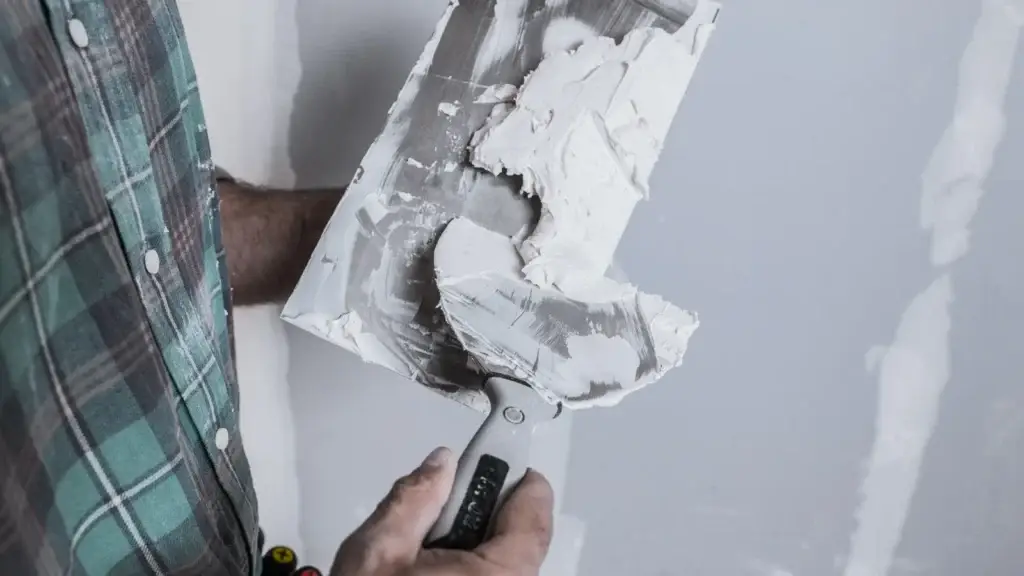
Depending on the job, plastering falls into two separate price categories. Patch repairs to plasterboard walls, the kind usually found in rental properties prior to final inspections, are handyman work, and a handyman provider on the Urgent Pro network can handle multiple patches in a single visit. Full plastering of rooms and ceilings, or plastering in new construction, is a job for a licensed plasterer and is quoted separately. Knowing which category your job falls into determines who you need to call and what you need to budget.
Plasterboard Patching and Plastering
There are definite price differences between plasterboard patching and plastering work. Patching is generally the work of a handyman. It usually means filling and sanding nail or screw holes with ready-mix filler, cutting away damaged areas and backing them, and smoothing joints of the three-coat plaster system as required, sanding between coats. Patching work also includes completing the surface to a standard where it is ready for the primer coat of paint. In rental properties, the patching work usually consists of covering doorknob and doorstop holes, impacts from door stops, and screw holes from picture hooks before a final inspection.
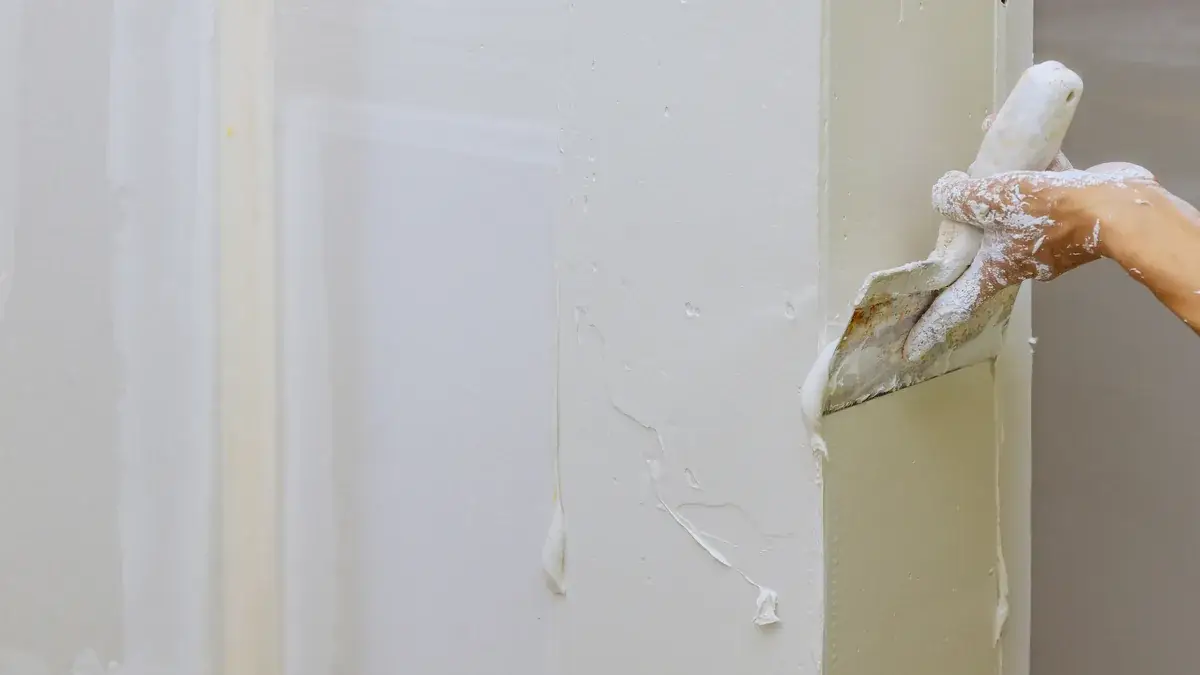
Plastering work is licensed trade work. Skim-coating raw board in new construction, plasterboard linings in renovations, and cornice and ceiling work are considered plastering work, and the licensed plasterer quotes it for the job.
Generally speaking, if damage can be removed, backed, and filled, it is patching work. If the work includes replastering an entire wall or room from bare board, a licensed plasterer is required.
What affects the price?
Urgent Pro handyman jobs start from $220 per job, and multiple small patches in one visit usually cost less per patch than separate call-outs, because the call-out cost is shared. The final price for a handyman booking depends on these variables.
Size of the repair. A nail or screw hole is quick to fill. An impact from a heavy object may need a backing board, compounding and sanding, which takes more work.
Number of patches. Doing a pre-inspection sweep of all wall damage in one visit is cheaper than calling someone out for each hole.
Ceiling versus wall. Ceiling work usually costs more because of the ladder time.
Texture matching. Textured surfaces are more difficult to repair and may require a specialist.
Access. A high wall or ceiling may require a working platform, and some providers charge for it. Quoting for access is common.
Drying time between coats. Each coat of compound has to dry before the next goes on, so a repair is spread over more than one visit unless a rapid-set compound is used.
Joint compound and sandpaper are usually included in the quote, but other materials such as plasterboard sections may be quoted separately.
Water damage requires the plasterboard to be removed and replaced, and any mould growth should be remediated before the plasterboard work begins. Heritage and decorative plasterwork, including cornice work, ceiling roses and the restoration of historical plasterwork, is specialist work and is quoted by the specialist.
Who can legally do the work by state?
This is the question no other pricing guide answers. But it is the one that saves or costs real money. Each state has different thresholds for licensing plasterboard work. Patch repairs on plasterboard, for typical rental property repairs that cost well below each state’s threshold, can legally be done by a handyman. A plastering contractor’s licence is not required.
| State | Regulator | Licence threshold | What a handyman can legally do |
|---|---|---|---|
| WA | Building Services Board (Building and Energy) | Building contractor registration required at $20,000 or more, for builder work (building work needing a permit) | Patch repairs, which cost far less than the threshold |
| NSW | Building Commission NSW | Contractor licence required for residential building or trade work, including dry plastering, valued at more than $5,000 (labour and materials incl. GST); penalty up to $22,000 for an individual under the Home Building Act 1989 | Patch repairs for work of $5,000 or less |
| QLD | Queensland Building and Construction Commission (QBCC) | QBCC licence required for building work over $3,300; a handyman is exempt if the value is no more than $3,300 and it is not electrical or plumbing work | Patch repairs for work of $3,300 or less |
| VIC | Building and Plumbing Commission (BPC), which replaced the VBA on 1 July 2025 | Registration required for domestic building work where the cost exceeds $10,000 | Registration applies to domestic building work over $10,000, and a small patch repair costs far less |
Pre-inspection batch repairs covering multiple holes in a rental property will typically fall well under the threshold in each of these states. Replastering a whole room or ceiling usually goes over the NSW and Queensland thresholds, so use a licensed plasterer. The WA and Victorian thresholds are higher, but full-room plastering is still a job for a licensed plasterer.
The requirements for dry plastering licences in NSW, including the $5,000 threshold and the $22,000 penalty for unlicensed work, can be found on the nsw.gov.au website. Information about Queensland’s licensing requirements, including details on the handyman exemption, is available on the QBCC website.
What is the standard timeframe for a plaster repair?
A small repair takes minutes of work spread over several visits because each coat must dry; allow a few days unless the job uses a rapid-set compound, which can be finished in a day. Rushing the process produces a poor finish.
Check the compound’s instructions for drying time between coats. A three-coat repair covers the tape coat, second coat, and finish coat, and each coat needs to be dry before the next one goes on and before the surface is sanded and primed.
In Queensland and other humid coastal areas, allow more time for drying. During summer months, humidity can significantly extend drying time.
A plaster repair is finished when the patch has reached the same colour as the surrounding compound throughout, with no lighter areas remaining in the centre. Sanding or painting before the compound is fully dry can cause shrinkage cracks through the topcoat.
Rapid-set compounds are powders mixed with water that set rather than air-dry, which is why a three-coat repair can be finished in a day. They are harder to sand than standard compound, so the finish coat needs to be feathered carefully to remove hard edges.
Questions to ask before you book
Is this handyman work or does it require a licensed plasterer? Full room skim-coating is work for a licensed plasterer. Most patch repairs require a handyman.
What does the quote include? When getting a quote for patch work it is important to find out what is included, because joint compound and sandpaper are usually part of the price, while plasterboard sections, primer, and paint are typically extra.
Does the provider have the relevant insurance? Providers on the Urgent Pro network carry $10M public liability insurance.
Is a police check required? For in-home handyman work where the provider has unsupervised access to the property, providers on the Urgent Pro network hold current police checks.
What is the warranty on the work? The work is covered by the Urgent Pro handyman service warranty. Ask any independent provider for the same in writing before work begins.
Booking through Urgent Pro
Plaster patch repairs through Urgent Pro’s handyman service cover the cost of a call-out, standard materials, and a paint-ready finish. The quote is confirmed before the work begins and takes into account the scope, number of patches, and level of access required. Providers on the Urgent Pro network carry their own public liability insurance and hold current police checks.
For the cost of other common pre-inspection repairs, see what handyman services cost in Australia.
Frequently asked questions
How much does it cost to patch a wall in Australia?
Handyman bookings through Urgent Pro start from $220 per job and can cover several patches in one visit, so the call-out cost is shared across them. The final price depends on the size and number of patches, whether any are on the ceiling, texture matching, and access.
How is full plastering priced?
Full plastering of a room, a ceiling or a new build is licensed trade work, so a licensed plasterer quotes it for the job. The quote depends on the area, whether ceilings are involved, the finish and access. Ceiling work usually costs more because of the ladder time. Get the quote in writing before work starts.
Can a handyman legally do plasterboard patching in Australia?
Yes, for jobs valued under the state’s licensing threshold. In WA, builder registration is required at $20,000 or more; in NSW a contractor licence is required above $5,000; and in QLD a licence is required above $3,300. In Victoria, registration applies to domestic building work over $10,000, and a small patch repair costs far less. Replastering a whole room or ceiling usually goes over the NSW and Queensland thresholds, so use a licensed plasterer. The WA and Victorian thresholds are higher, but full-room plastering is still a job for a licensed plasterer.
How long does joint compound take to dry between coats?
Check the compound’s instructions for drying time between coats. A small repair takes minutes of work spread over several visits because each coat must dry; allow a few days unless the job uses a rapid-set compound, which can be finished in a day. Humid climates may take longer. The compound is fully dry when the centre is the same colour as the rest of the patch, with no white or wet-looking areas remaining.
Does a plaster patch need to be primed before painting?
Yes. Unless the entire wall is being replastered, a plasterboard sealer or primer is needed before painting. Levelling a patch makes the surface even to the touch; however, the porous nature of joint compound causes it to absorb paint at a different rate than the surrounding plasterboard, resulting in an uneven sheen through the topcoat.