
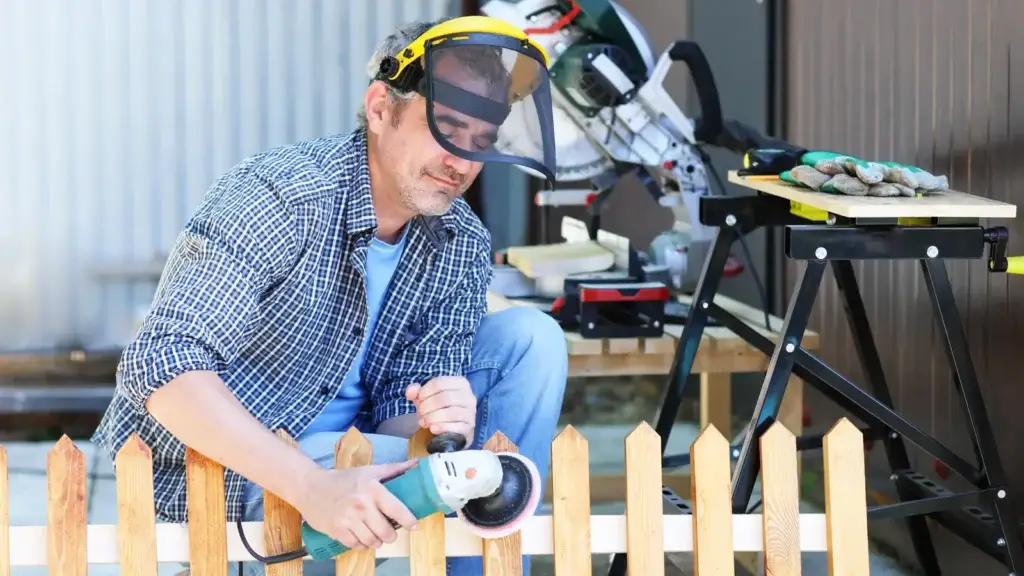
A handyman can handle many types of maintenance work. Mounting a TV on the wall is a good example. However, adding a power point behind it to tidy up the cables requires a licensed electrician. Adding a power point has always been a licensed electrician’s work, regardless of how minor the job seems.
The central challenge of property maintenance is knowing which work a handyman can take on and which belongs to a licensed trade. Most property maintenance is handyman work. However, some tasks that seem minor are restricted to licensed trades in every state, regardless of the cost.
Handyman work covers general repairs and various types of property preparation, such as door and tile work. A handyman can handle many tasks in preparation for the sale of a property, but some work is restricted to tradespeople. Handymen are limited to work up to certain value thresholds in each state. Work that disturbs the water supply or drainage systems always requires a licensed trade, and structural work typically does.
Short answer: A handyman covers general repairs, assembly, mounting, door and tile work, and property preparation without a contractor licence, within value thresholds that vary by state. Electrical, gas and plumbing that disturbs the water supply or drainage system always require a licensed trade from the first dollar, regardless of how small or straightforward the job appears. Structural work typically needs a licensed builder.
What services does property maintenance cover?
Property maintenance covers the ongoing repairs and upkeep that keep a residential or investment property functioning, safe and presentable. For a landlord or property manager, this typically means repair jobs between tenancies (patching walls, adjusting sticking doors, resealing wet areas), repairs flagged on routine inspections, and condition fixes before a sale or professional photography.
Most of those jobs fall within handyman scope. The restrictions arise when a job requires a specialist trade. Each state has its own regulations for building work, and the threshold is set by the total value of the job, including both labour and materials combined. Attempting to split one job into smaller invoices to stay under a threshold is not permitted.
Urgent Pro’s verified local handyman providers operate across Perth, Melbourne, Sydney, Brisbane and Gold Coast, covering all five cities where the platform runs.
What a handyman can do without a licence
In Australia, there is no specific handyman licence. The threshold above which a residential building contractor licence is required varies from state to state, and the type of work being performed also affects the threshold. For example, in some states, painting above a certain value requires a contractor licence (in WA, painting contractor registration applies above $1,000), while replacing a tap washer does not. A termite treatment is a different matter again, requiring a pest control licence.
| State / Territory | Contractor Licence Threshold (inc. GST) | Governing Legislation | Regulator |
|---|---|---|---|
| Queensland | $3,300 | Queensland Building and Construction Commission Act 1991 | QBCC |
| New South Wales | $5,000 | Home Building Act 1989 | Building Commission NSW |
| Victoria | $10,000 (registration is not required for work involving only one of plastering, tiling, electrical, glazing, floor coverings, plumbing or gas-fitting) | Domestic Building Contracts Act 1995; Building Act 1993 | Building and Plumbing Commission |
| Western Australia | Builder work valued over $20,000; painting contractor registration above $1,000 | Building Services (Registration) Act 2011 | Building and Energy (LGIRS) |
Urgent Pro operates in Perth, Melbourne, Sydney, Brisbane and Gold Coast, so the rows above are the states that apply to work done through the platform. For any other state or territory, confirm the current position with the state regulator before engaging a contractor.
These thresholds apply to general building work only. Specialist work, meaning electrical, plumbing, drainage, gasfitting and (in some states) air conditioning, sits entirely outside the threshold framework. A licence is required for that work from the first dollar, regardless of the job’s total cost.
Within those thresholds, handyman work typically covers:
| Task Category | Examples |
|---|---|
| Furniture Assembly | Flat-pack wardrobes, beds, desks, outdoor settings, IKEA-style furniture |
| Mounting and Installation | TV brackets, shelves with wall anchors, mirrors, curtain tracks, towel rails, blinds, battery-operated smoke alarms |
| Wall Repairs | Gyprock patching, plaster filling, paint touch-ups, small hole repairs |
| Door and Window Work | Hinge adjustment, door planing for fit, latch and handle replacement (non-keyed mechanical components), flyscreen repair and replacement |
| Tile and Wet-Area Maintenance | Grout recolouring and replacement, silicone resealing around baths, showers and benchtops |
| Non-Regulated Minor Plumbing | Tap washer and jumper valve replacement, shower head replacement, toilet seat and cistern component replacement |
| Minor Outdoor Maintenance | Fence paling repair, gate adjustment and realignment |
| Property Preparation | Pre-sale touch-ups, post-tenancy condition repairs, general handover fixes |
A note on minor plumbing. In Queensland, the Queensland Building and Construction Commission specifically classifies replacing a shower head, tap washer, jumper valve, or cistern components inside a toilet as unregulated plumbing work, meaning no plumbing licence is required. Other states apply a similar principle for maintenance of existing fittings that leaves the supply and drainage connections undisturbed. If a task requires isolating the water supply, however, it moves into licensed plumbing scope.
A note on smart home devices. Replacing a battery-operated or wireless smart device, such as a smart plug, wireless doorbell or battery smoke alarm, is handyman work. Hard-wired smart switches and smart lighting connected to the fixed wiring are a different matter entirely and require a licensed electrician. As a general rule, if the device touches the wiring in any way, treat it as electrical work.
What always needs a licensed trade
The following work requires a licensed trade regardless of the job’s cost or how routine it appears. For most licensed trade work, you are entitled to a compliance certificate confirming the work meets the relevant standard. Keep it with your property records. Without it, an insurer may reject your claim for a loss arising from that work. The absence of certificates is also routinely flagged during building inspections and conveyancing.
Electrical work. Any work on a hard-wired electrical installation requires a licensed electrician. This includes, but is not limited to, light switches, power points, ceiling fans where wiring is involved, hard-wired smoke alarms, downlights, switchboard work, and wiring installed in walls and ceilings. In NSW, electrical wiring is classified as specialist work and requires a contractor licence regardless of the cost of the work. On 5 December 2025, Building and Energy, the electrical regulator within WA’s Department of Local Government, Industry Regulation and Safety, secured a $20,000 fine in Joondalup Magistrates Court against a Perth man for installing power points, ceiling fans, exhaust fans and downlights without the required electrical licences. In every state, you can verify an electrician’s licence through the relevant state regulator’s public register before work begins. In WA, Building and Energy’s licence register is searchable for electrical contractors and workers.
Gas work. Any work on a gas line, gas fixed appliance, gas cooktop connection, or LPG fitting connected to a fixed supply requires a licensed gasfitter. There is no dollar threshold, and no category of minor gas work.
Plumbing (supply, drainage and sewerage). In NSW, plumbing, draining and gasfitting are specialist work, meaning a licence is required regardless of the cost of the job. In other states, plumbing work that disturbs the water supply, drainage or sewerage system, including tap replacement at the supply line, dishwasher connections, hot water system work, and sewer access, requires a licensed plumber. The line is whether the task isolates a supply line or disturbs a drainage connection.
Structural work. Any work affecting load-bearing walls, roof framing, foundations or structural connections typically needs a licensed builder; confirm with your state regulator. The cost of the work does not matter; its structural nature is what triggers the requirement.
Asbestos. Work near or on materials that may contain asbestos, including pre-1990 fibro, weatherboard, older flat-sheet cladding, and vinyl floor tiles with mastic adhesive, must stop if asbestos is suspected. For non-friable (bonded) asbestos, the rules on removal vary between states and by the area of the building involved. For anything beyond a very small repair, a licensed asbestos removalist is the recommended choice. Friable (powdery) asbestos always requires a licensed removalist.
Waterproofing varies by state. In NSW, waterproofing is a trade category with a $5,000 threshold. Elsewhere, check the regulator before engaging anyone for new wet-area waterproofing work. Resealing silicone around existing surfaces is maintenance work and falls within handyman scope.
A good handyman will stop working when the job moves outside handyman scope. The provider will document the situation, advise you of the licensing requirement, and point you in the right direction to engage the correct trade. A handyman who continues to work beyond their licenced scope is a warning sign, not a reassurance.
For guidance on who is responsible for property repairs in each Australian state and how landlord and tenant obligations are divided, the repair responsibilities guide covers the rules in detail.
Police check and insurance requirements
A handyman working in a rental property while the tenant is at work, or in a vacant property, is in a position of significant trust. Urgent Pro requires all handyman providers to hold a current police check and a minimum $10 million public liability insurance policy.
The insurance is the provider’s own policy. If a provider causes damage to your property during a job, the claim is made against their public liability cover. Urgent Pro does not insure the work; it requires and verifies the provider’s insurance during the onboarding process and tracks it for currency through the Certificate of Currency on file.
Property managers who engage maintenance contractors have their own obligations in this area. Under the model Work Health and Safety laws, which apply in most states, a property management business is a person conducting a business or undertaking and has a duty to take reasonably practicable steps to ensure the safety of contractors working on properties under management. Victoria’s Occupational Health and Safety Act 2004 imposes similar duties. Engaging maintenance providers through a platform that verifies police checks, insurance and licensing gives a property manager a record of those checks.
You can read how providers are vetted in the consumer rights section of the blog, covering the five checks every provider must pass before activation.
What a standard property maintenance visit includes
A standard Urgent Pro handyman visit includes:
- Attendance with appropriate hand tools, power tools and personal protective equipment
- Use of stud-finders and cable/pipe detection equipment before any wall is drilled (a required professional step, not a billable extra)
- Basic consumables including screws, anchors and drill bits suited to the task
- Up to 60 minutes of on-site work time
- Photography of the work area before work begins
- Walk-through at completion to confirm the job meets the agreed scope
- A load test at completion for anchored items such as shelves, TV brackets and mirrors, before sign-off
Work that runs beyond 60 minutes, requires major materials, specialist fixings such as masonry anchors or structural brackets, or height work beyond a standard step ladder is priced as a variation. Variations above $50 require your approval before the provider continues. Variations above $200 require written approval.

What it costs and what changes the price
Handyman visits through Urgent Pro start from $220 (GST-inclusive) for a small, single, straightforward task in standard metro conditions. For the variables that change the final price, the handyman cost guide covers each one in detail.
The main factors that move a quote above the base rate are:
- Number and complexity of tasks
- Whether the provider needs to supply major materials (timber, hardware, fittings)
- Specialist fixings required (masonry anchors, heavy-duty structural brackets)
- Work at height beyond a standard step ladder
- Outer-metro or regional location (travel premium)
- Same-day or public holiday bookings
The detection equipment is included in the base rate as a professional standard, not as an extra.
The full schedule of indicative service prices across all Urgent Pro services is on the pricing page.
Warranty. There are three tiers to the Urgent Pro handyman service warranty, depending on the type of work performed. Assembly work carries a 7-day warranty. Door, tile, silicone and plaster patching work carries a 14-day warranty. Anchored installations, including shelves, TV mounts, mirror mounts and towel rails, carry a 30-day warranty. All periods run from the time the job is completed.
Frequently Asked Questions
What is property maintenance?
Property maintenance covers the ongoing repairs and upkeep required to keep a property functional, presentable and in good condition. This usually includes assembly and installation work, repairs to doors, plaster and tiles, minor outdoor repairs, and condition fixes done between tenancies or before the sale of a property. Work requiring a licensed trade (electrical, gas, regulated plumbing and structural) sits outside handyman scope.
How are handymen and licensed tradespeople different?
A handyman can legally carry out general repair and maintenance work up to a value threshold in each state, from $3,300 in Queensland to $20,000 in Western Australia. A licensed tradesperson holds a state-issued occupational licence for a specific regulated category. Electrical, plumbing and gasfitting work requires a licensed trade from the first dollar, structural work typically needs a licensed builder, and most licensed trade work must be accompanied by a compliance certificate confirming it meets the required standard.
Can a handyman do electrical or plumbing work?
Hard-wired electrical work and gas work always require a licensed trade, and structural work typically needs a licensed builder. There is no dollar threshold below which unlicensed electrical or gas work is permitted. A handyman can handle plumbing maintenance that does not involve isolating any water supply or sewerage line. Replacing a tap washer, shower head or toilet cistern components is work a handyman can perform. Any task that requires isolating a water supply or accessing a sewerage line needs a licensed plumber.
What is a compliance certificate and why does it matter?
A compliance certificate is the document a licensed electrician, plumber or gasfitter issues after completing regulated work. It confirms the work meets the relevant Australian standard and is subject to inspection by the state regulator. Keep compliance certificates with your property records. Without them, an insurer may reject claims arising from that work, and their absence is commonly flagged during building inspections and conveyancing. Your state’s building commission or regulator can advise on the specific certificate required for each type of work.
How much does a property maintenance visit cost?
Handyman bookings start from $220 (GST-inclusive) for a single task in standard metro conditions. Other factors, such as the scope of the work, materials required and access conditions, will affect the total cost. Confirm the task list in your booking and approve any on-site variations before work proceeds.
What happens if the work fails after the provider leaves?
Urgent Pro’s handyman warranty covers defects in workmanship for 7 days on assembly work, 14 days on door, tile, silicone and plaster patching work, and 30 days on anchored installations including shelves, TV mounts and mirror mounts. Contact Urgent Pro within the applicable period and the provider will return to rectify the fault. Your rights under the Australian Consumer Law also apply alongside the warranty and are not limited by it.