
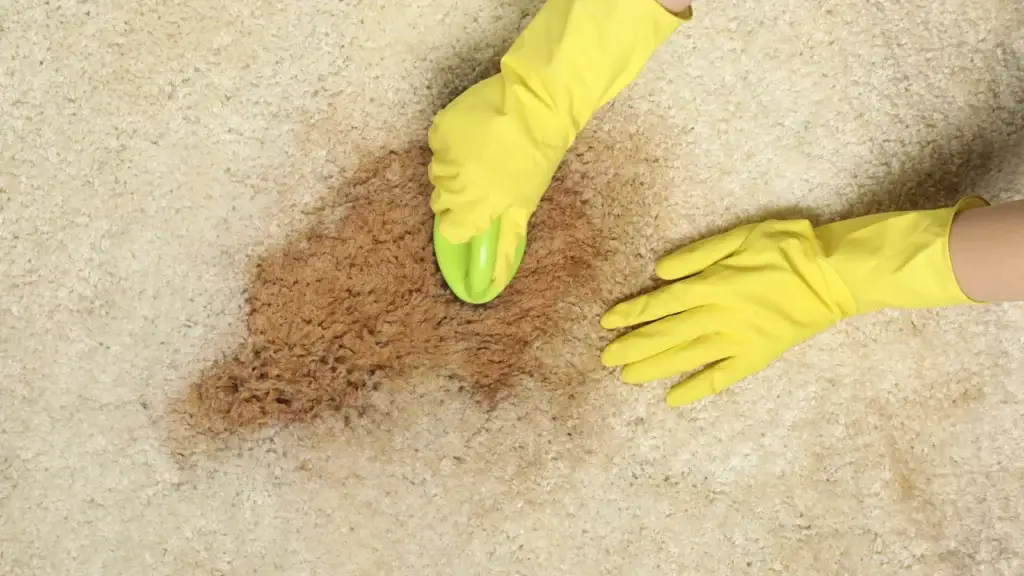
The mystery of why the grease stain looks like it has disappeared when the carpet is wet and then comes back dark and stronger hours later has to do with how moisture moves through carpet fibres. The carpet fibres act like a wick in a candle: as moisture moves through the fibres and up to the surface and evaporates, the oil re-deposits on the top fibres. As the water evaporates, oil can wick up from the backing and the stain can return.
There is a second problem that compounds the first. When you use dishwashing liquid to clean a grease stain, the surfactants in the soap temporarily hold the oil in suspension. That is exactly what you want. But if you do not rinse the stain thoroughly before drying, soap residue is left in the fibres, and soap residue is sticky. It attracts more soil once the carpet is dry, which is why an inadequately rinsed grease stain often looks worse a week later than it did on the day.
A third problem compounds both: oily residue left in carpet fibres grabs dry dust and foot traffic. An untreated or partially treated grease spot does not stay the same shade. It gets darker, even without any new spills, because it keeps collecting airborne soil.
The correct sequence for grease never starts with water. It starts with absorption.
Fresh Grease: Absorb Before You Clean
If the grease is fresh and still wet, blot up as much of the excess as possible with a dry cloth, pressing straight down rather than rubbing. Rubbing spreads the stain and pushes oil deeper into the pile. Once you have blotted up what you can, do not add water.
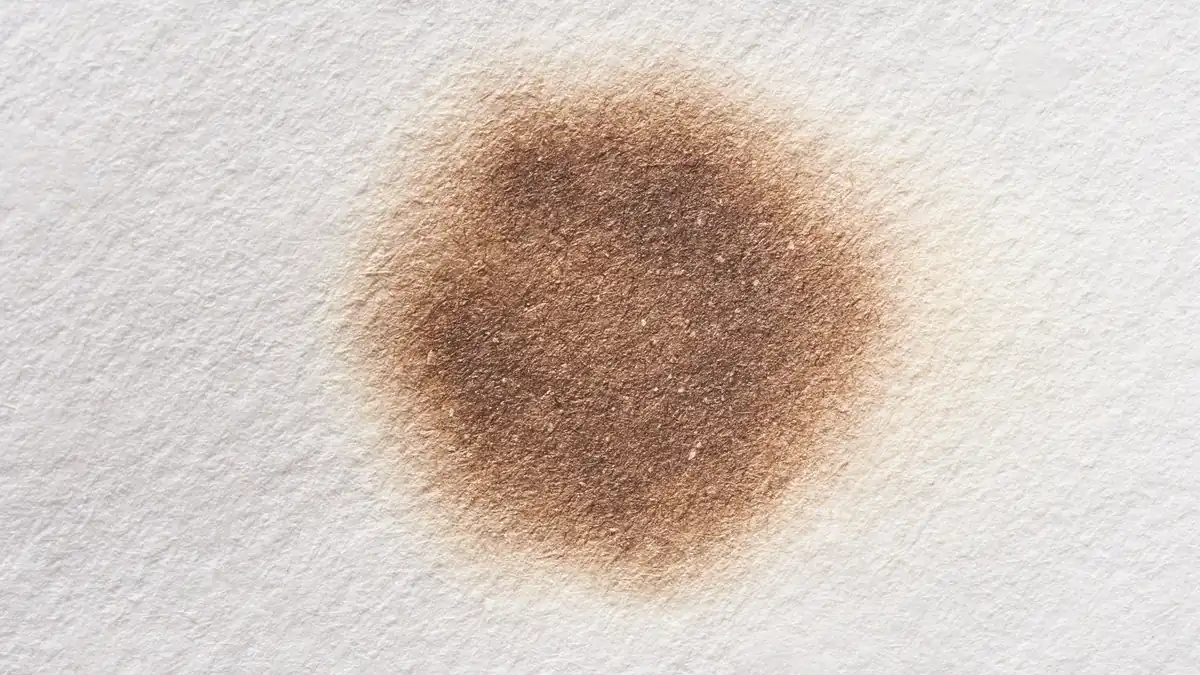
Cover the remaining stain with a generous layer of bicarb soda (baking soda), cornflour, or talcum powder. All three work by drawing oil away from the pile before it bonds further. Leave it for at least fifteen to twenty minutes. For a heavy spill, such as cooking fat, pan drippings, or a dropped piece of greasy food, leave it for thirty minutes. Vacuum up the powder. If it clumps and feels greasy when vacuumed, repeat: that clumping means absorption is still working.
After absorbing, apply a small amount of dishwashing liquid to a clean cloth and work it into the stain in a circular motion from the outside edge inward. Dishwashing liquid is a degreaser formulated to cut cooking oil, and it works on carpet fibres through the same chemistry. Use cool to lukewarm water, just enough to work the dishwashing liquid through, never hot: hot water on a fresh stain can drive the oil deeper. Blot with a clean cloth and repeat. Rinse thoroughly by blotting with a cloth dampened in cold water, then press dry with an absorbent towel.
This sequence handles most fresh grease on the pile surface. For oil that has already penetrated to the backing and keeps returning despite cleaning, professional carpet cleaning booked through Urgent Pro is the appropriate next step, covered below.
If you are treating rental-property carpet, it may well be polypropylene. Polypropylene is a budget carpet fibre that is common in rentals. It is also oleophilic: it naturally attracts and bonds with oil. A grease stain bonds more readily with polypropylene than with nylon and penetrates the pile more quickly. The absorption step is not optional on polypropylene carpet. It needs to happen before any liquid is applied.
Dried Grease: The Approach Changes
Once grease has dried and bonded with the fibres, absorption is no longer useful. The oil has already set.
Apply a small amount of dry-cleaning solvent or a proprietary carpet degreaser to the stain. Work it in gently with a soft brush from the outside edge inward. Blot with a clean cloth. Repeat until no more colour transfers to the cloth.
Rubbing alcohol (isopropyl alcohol) also dissolves dried oil. Apply it to a cloth rather than directly to the carpet, and blot rather than scrub.
For grease that has been sitting for several days and attracted a layer of dust and dark soil, bicarbonate of soda followed by dishwashing liquid is still the correct approach, but you may need to work through three or four passes rather than one or two. Old grease has bonded to the fibres and gathered embedded grit; each pass of the dishwashing liquid solution lifts a layer of that accumulated soil.
Before applying any solvent or cleaning product, test in a hidden spot first, especially on wool or wool-blend carpet.
Mistakes That Make Grease Stains Worse
Most grease stains that become permanent were made worse by the wrong initial response.
Rubbing the stain. Rubbing pushes grease deeper into the pile and spreads it outward. Always blot, pressing straight down rather than working side to side.
Adding water before absorbing. Water without surfactant cannot emulsify oil. It pushes the grease deeper into the backing and gives wicking more material to work with during drying. Always absorb with bicarb soda or cornflour first.
Using too much liquid at once. Over-wetting soaks through to the underlay, extends drying time, and increases the wicking problem. Use damp cloths, not wet ones.
Using hot water. Cool to lukewarm water works for grease. Hot water can force oil deeper into the fibre structure.
Treating every carpet fibre the same. Polypropylene is oleophilic. It bonds with oil faster and more tenaciously than nylon or wool. On polypropylene, speed and absorption matter more than on any other fibre type.
Leaving it to deal with later. A grease stain that is two minutes old responds to blotting and bicarb soda in one pass. The same stain at two days old has bonded to the fibres and attracted a layer of embedded soil that needs repeated treatment to shift. The window for easy removal is the first fifteen minutes.
Why the Stain Comes Back and How to Stop It
If the stain reappears after the carpet dries, oil has wicked back from deeper in the pile. The remedy is to draw the oil upward before it re-deposits on the surface fibres.
Place several layers of white paper towels directly over the stain, weight them down with something heavy, such as a stack of books, and leave them for several hours. The weight and absorbency of the paper towels draw oil up and out of the pile rather than letting it resettle on the surface fibres. Remove the paper towels, repeat the degreasing step, then apply fresh paper towels and weight them again. Two or three cycles often clear what a single cleaning pass does not.
A stain that returns after three or more attempts has penetrated the carpet backing. At that point, no DIY method can reach it. What is needed is professional extraction equipment that draws contamination out from below the pile level.
When to Book a Professional Carpet Clean
| Method | Best suited to | Limitation |
|---|---|---|
| Bicarb soda | Fresh spills on pile surface | Cannot draw oil from backing |
| Dishwashing liquid | Moderate grease, pile level | Over-wetting risk if misused |
| Rubbing alcohol | Dried oil, pile level | Not effective below the backing |
| Weighted paper towels | Wicking from backing to pile | Addresses symptom; does not extract |
| Professional hot water extraction | Oil in the backing; repeated return stains | Requires booking, drying time |
Professional hot water extraction addresses oil that has reached the backing in a way that consumer equipment cannot replicate. A professional may use heat once the grease has been lifted, but hot water on a fresh stain can drive the oil deeper. Commercial extraction machines generate suction strong enough to pull contamination from the backing itself, not just the pile surface. A technician applies a solvent-based spotter before extraction, which breaks the oil’s hydrophobic bonds and makes it possible for the hot water and suction to carry it away. Without that pre-treatment step, hot water alone moves the oil but cannot extract it.
A domestic steam mop applies heat and limited moisture but has no meaningful extraction suction. It is not effective on grease that has reached the backing and can make wicking worse by introducing moisture without removing the contamination.
Understanding why extraction method matters for oil stains helps make sense of why domestic and professional approaches produce such different results on the same stain. For a breakdown of what pre-treatment adds to the overall price, see what pre-treatment adds to carpet cleaning quotes.
Booking through Urgent Pro’s carpet cleaning network puts verified local providers on the job, with pre-treatment assessment carried out before extraction starts. If the property also needs a full clean, the carpet and the house clean alongside it are separate bookings that can be co-ordinated through the same platform.
Carpet drying time and what affects it covers the variables worth planning around after any professional treatment, including ventilation, pile depth, and humidity.
Frequently Asked Questions
Why does a grease stain keep coming back after I clean it?
The oil has soaked into the pile and is wicking back up through capillary action during drying. Cleaning solution only temporarily emulsifies the grease, and as the water evaporates upward through the fibres, it re-deposits the oil at the surface. Using less liquid and applying the weighted paper-towel method during drying both help. If the stain keeps returning after several attempts, it has reached the backing and professional hot water extraction is needed.
How long should I leave bicarb soda on a grease stain?
At least fifteen to twenty minutes for a fresh spill on the pile surface. For a heavy spill, thirty minutes. For a stain that has been sitting for several hours, leave it overnight before vacuuming. The bicarb soda draws oil out of the fibres as it sits, so the longer the contact time, the more oil is absorbed before the cleaning step begins.
Is dishwashing liquid safe on carpet?
Yes, in small amounts. It is usually safe on synthetic carpet; test in a hidden spot first, especially on wool or wool-blend carpet. Apply a small amount to a cloth rather than directly to the carpet, and rinse thoroughly by blotting with clean water after treatment. Leaving soap residue in carpet fibres attracts soil once the carpet dries, which is why rinsing matters as much as the cleaning step itself.
Can steam cleaning remove grease from carpet?
Professional hot water extraction is one of the most effective methods for oil-based stains because it combines solvent pre-treatment, heat once the grease has been lifted, and strong extraction suction to pull contamination from the backing. A domestic steam mop applies heat and some moisture but lacks the suction needed to draw oil from the backing, and is not effective on set grease.
Why does my carpet get darker in the spot I cleaned?
That is the oily residue left in the fibres attracting dry dust and foot traffic. An incompletely removed grease stain acts as a soil magnet: the oily film bonds with airborne particles, and the spot darkens gradually without any new spills. The fix is a repeat of the bicarb soda absorption step followed by the dishwashing liquid treatment to lift the residual oil film.
Will a grease stain fail a final inspection?
A visible grease stain can be noted as a cleaning item at a final inspection. A stain that has permanently discoloured the fibre or damaged the pile may be treated as damage. The RTA’s fair wear and tear page sets out the difference. Dealing with grease stains when they happen, rather than leaving them until move-out, gives the best chance of full removal.