
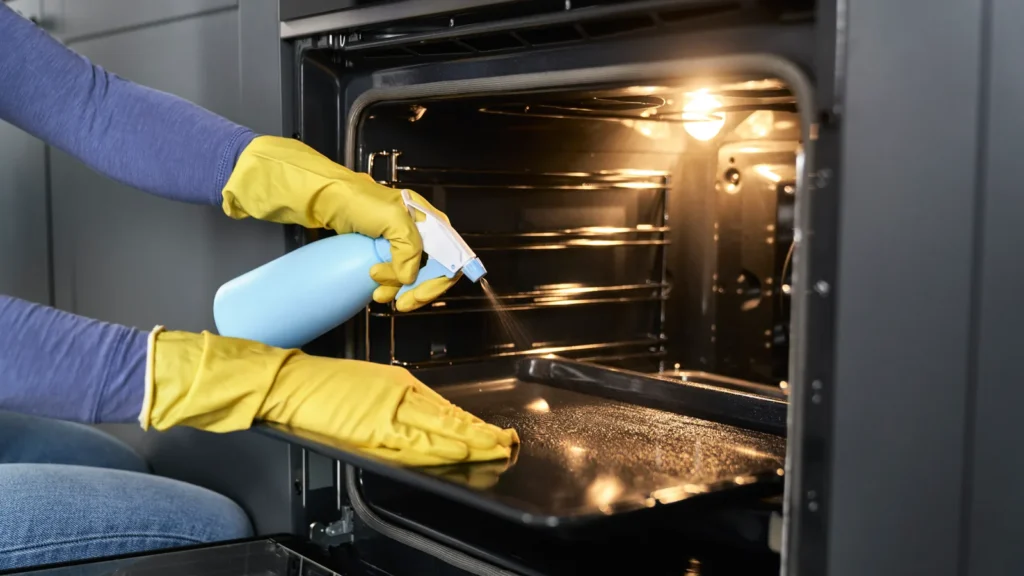
With a final inspection coming up, cleaning your oven could determine whether you get your bond back. Across Urgent Pro’s marketplace operations, oven cleaning is the most frequent cause of failure during final property inspections across Sydney, Melbourne and Perth.
Understanding what an inspecting agent actually looks for, and what “clean” means for each individual component, is what separates a pass from a callback. The same standard applies to the other stove components inspected in the same pass, covered below.
Why the Oven Fails More Often Than Any Other Item
To avoid losing part or all of your bond, it is essential that you understand why ovens fail during end of lease inspections. Three factors explain why the oven is the most frequently failed item on exit inspection checklists across all states.
The first factor is that agents always check the oven. The oven appears on every exit inspection checklist in every state. Compared to other items that may be skimmed during a quick walkthrough, the oven is always opened, always inspected with a torch, and always tested for smell. Reviewing what agents flag most at a final inspection before the clean starts is the most practical way to prioritise your time correctly. The same room-by-room standard applies across the rest of the property, so see what agents check room by room for the full breakdown.
The second factor is that ovens take a long time to clean properly. Cleaning a heavily neglected oven during a bond or vacate clean may take several hours. Because time is always tight during these jobs, other items are prioritised and the oven gets rushed. That is the most common cause of a failed oven inspection.
The third factor is that the inspection standard is component-specific, not general. For ovens, passing means each individual component meets the standard: every pane of the door glass, the gap between the glass panes, the interior walls and roof, the fan, the seal groove, and the rangehood above. A smeared door glass fails the inspection even if the racks are spotless.
When an oven fails inspection, the cost to remedy it is added to the bond claim. That typically ranges from $50 to $150 for the oven alone, billed at the agent’s chosen provider rate. In Queensland, bond claims and disputes are administered by the Residential Tenancies Authority. Each other state has an equivalent body with similar evidence requirements for any cleaning deduction.
What Agents Actually Look For, and How They Check It
Understanding how the inspection is conducted matters as much as knowing the checklist.
The torch technique. A torch is the primary tool agents use to assess oven surfaces. Property managers angle a torch low across the glass and interior walls because a grease or dirt streak may only be visible when light is shone across the surface at an angle. Grease smears that look completely clean under flat kitchen lighting show up immediately under raking light. Use your own phone torch as a self-check before handing the keys back to the agent.
Door glass. Both sides are inspected: the outer surface and the inner surface. There is often a gap between the glass panes where grease collects over the course of a tenancy. This gap is only accessible by partially disassembling the oven door. Because of this, grease between the panes is frequently missed even during professional cleans.
Interior walls, roof and floor. The interior walls collect grease from splatter over months of cooking. The floor of the oven also collects food and grease, particularly beneath the element. Every surface is checked as part of the standard inspection pass.
Racks and trays. A shortcut often taken is cleaning the racks by putting them through a dishwasher. This does not remove baked-on carbon the way a proper soak in hot soapy water does. The dishwasher removes surface grease only. Baked-on deposits require 3-8 hours of soaking followed by scrubbing with a non-scratch pad.
The oven fan. The fan on the back wall of the oven collects grease and is often missed during a standard clean. It is one of the first areas a thorough agent checks with a torch. Cleaning services available across all five cities on the Urgent Pro network include the fan guard as a standard item, not an optional extra.
The door seal groove. The door gasket groove collects grease and carbon. Agents press a cloth into the groove to check it. Residue there is immediately visible.
The rangehood above. The rangehood filter is inspected in the same pass as the oven. A grease-saturated filter fails immediately. It is common for rangehoods and ovens to fail together on the same inspection. In New South Wales, cleaning evidence for bond disputes is assessed by NSW Fair Trading where a landlord and tenant cannot resolve the matter directly.
The smell and smoke test. After the visual inspection, agents often switch the oven on briefly. Residue on the elements or interior surfaces leaves an odour when heated and produces smoke. A properly cleaned oven runs odour-free.
The Parts Most Commonly Left Dirty
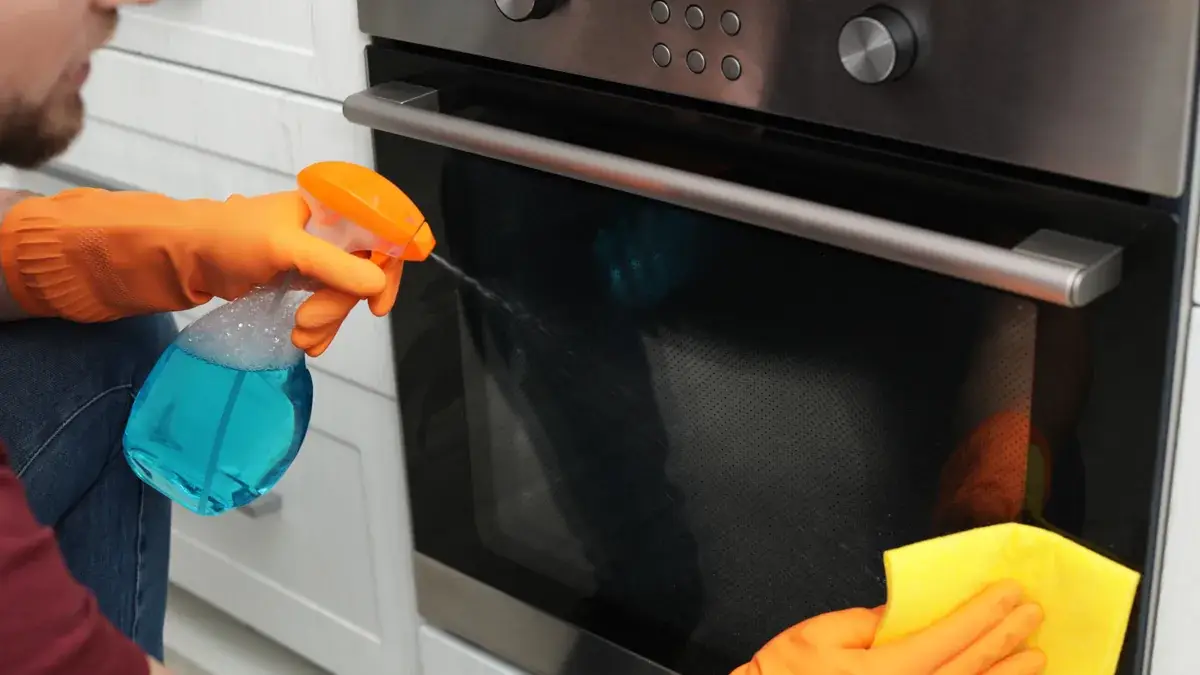
Across Urgent Pro marketplace jobs, these are the components most consistently left in unsatisfactory condition at the oven inspection.
Oven racks run through a dishwasher instead of soaked. Agents notice baked-on carbon when they run a cloth along the rack wire. The only way to remove it is to soak the racks in hot soapy water for 3-8 hours, then scrub with a non-scratch pad. A dishwasher cycle does not accomplish this. Racks that have not been cleaned during the tenancy typically need an overnight soak.
The element tray and bottom panel. Many ovens have a removable panel above the heating element. Grease and food debris collect beneath it. This panel is rarely cleaned during a routine service unless the provider specifically checks for it.
The door seal groove. The groove behind the rubber gasket is often wiped around rather than cleaned into. Agents press a cloth into the groove. Residue shows on the cloth immediately.
The fan guard and blades. On fan-forced ovens, the guard is often sprayed with cleaner but not scrubbed. Residue on the blades behind the guard is missed unless the guard is physically removed. Providers working through the QLD inspection checklist room by room are expected to cover the fan as a standard line item.
The end of lease standard for all kitchen appliances in NSW and VIC is set out in what NSW and VIC inspections require.
How Long It Actually Takes
The time it takes to clean an oven depends on how heavily it has been used.
- Lightly used (6 months or less, cleaned at move-out): 45 minutes to 1 hour
- Moderately used (12-month tenancy, not cleaned during): 2-3 hours active cleaning plus a 3-4 hour soak for the racks
- Heavily used (multiple years, significant build-up on all surfaces): 3-4 hours active cleaning plus an overnight soak and a commercial chemical cleaning product
WA tenants following the Perth vacate cleaning checklist will find the oven standard is the same as every other state. A heavily carbonised oven takes the same amount of work in Perth, Brisbane, or Melbourne. The location does not change the time required.
Commercial cleaning products are not always sufficient on heavy build-up. If the oven has significant carbon deposits that DIY methods cannot shift, a specialist oven cleaning service is the more reliable option. Arranging that service yourself before the inspection is almost always less expensive than the rate a property manager will charge after a failed one.
If the Oven Fails at Inspection
If the oven fails at the final inspection, the agent gives the tenant a set period, usually
24-72 hours depending on the state, to remedy it before the landlord arranges their own cleaning and deducts the cost from the bond.
For tenants who booked through the Urgent Pro network, how the re-clean warranty works covers the conditions and the process for requesting a re-attend. When contacting the provider, tell them exactly what the agent told you about the component that failed. Reporting only that the oven failed gives the provider very little to work with and may result in a full re-clean when only one targeted component needed addressing.
The torch self-check is a good use of your time before handing back the keys. Your phone works perfectly for this. Turn the kitchen lights off and angle the torch across the oven surfaces at a low angle. Agents check for grease build-up and residue in exactly this way. Apply the same standard to yourself before the agent arrives.
Booking an end of lease clean with enough lead time to carry out the torch self-check and address anything before the inspection date is simpler than managing a re-attend after a failed one.
FAQs
How far in advance of the inspection should I clean the oven?
The oven should be cleaned at least the day before the inspection, preferably two days before. A quick check to see if the oven is giving off fumes or smell requires letting it cool and doing a final wipe. Cleaning the oven on the morning of the inspection leaves no time to address issues found during the torch test. Allow time to fix problems, not just time to clean.
What happens if the oven fails the exit inspection?
Per state law, the agent is required to give tenants a short period, usually between 24 to 72 hours, to remedy the oven. If tenants do not address it within that time, the landlord has the right to arrange cleaning and deduct the cost from the bond. The cost to clean an oven typically ranges from $50 to $150, and landlords may charge the bond at their chosen provider’s rate, even if that rate is above the market rate.
Do I need to clean the oven fan and rangehood as well?
Yes. Agents check the rangehood filter for grease saturation. The fan guard and blades are checked with a torch on fan-forced ovens, which are standard in most Australian rental properties. Both are inspected to the same standard as the oven interior, and both commonly cause a kitchen inspection to fail even when the oven interior itself passes.