
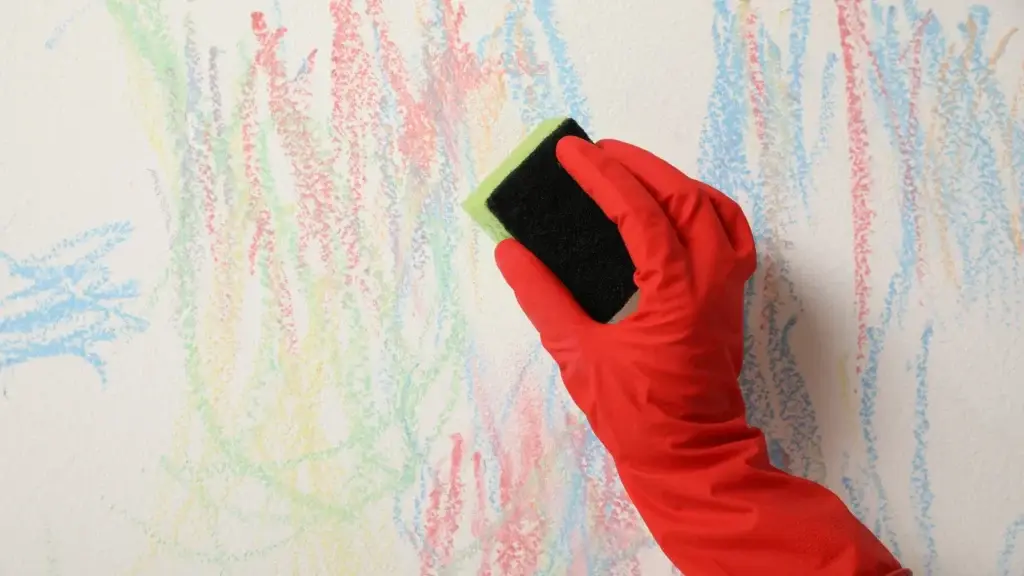
Each of these marks has a different composition, and each one requires a different removal approach. The biggest mistake people make is reaching for the same product regardless of the mark or the wall finish. Using the wrong method on the wrong paint is how a mark that would have cleaned up in five minutes becomes a repair job that needs a professional.
The most important variable in every case is not the mark. It is the paint finish on your wall.
Know your paint finish first
Most homes are painted with water-based acrylic paint. In living areas and bedrooms, the typical finish is low-sheen or satin. Kitchens and bathrooms commonly use semi-gloss. Ceilings are usually flat or matt.
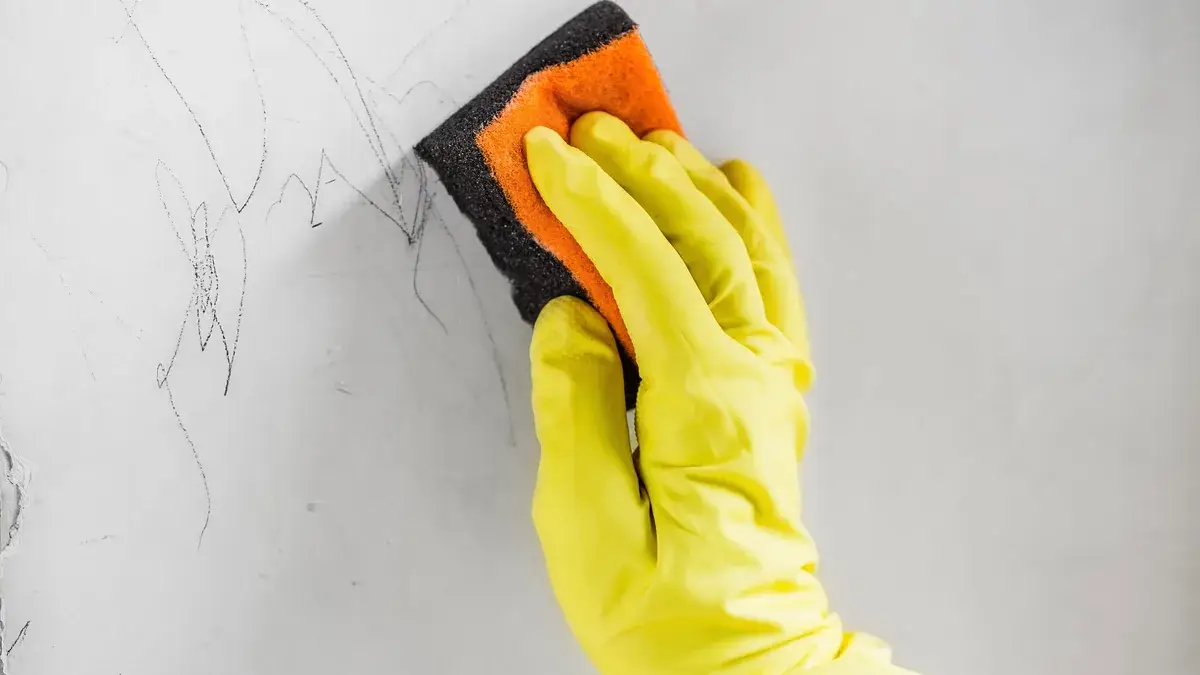
Flat and matt finishes are the most vulnerable to cleaning damage. Paint manufacturers advise against abrasive cleaners on flat and matt paint, because they can burnish the surface and leave a permanent shiny patch. A melamine foam sponge is mildly abrasive, so avoid it on matt walls. A burnished patch cannot be cleaned out and usually needs repainting to fix.
Low-sheen and satin finishes are more forgiving and will tolerate gentle scrubbing. Semi-gloss and gloss respond best to cleaning and are the most durable.
If you are unsure of the finish, test any method in a hidden spot first, such as behind a door or inside a wardrobe, before working on a visible area. In some cases the wall may already show burnishing or surface damage from a previous cleaning attempt. Where that has happened, a handyman through Urgent Pro can assess whether the wall needs a touch-up coat or a more involved repair.
Crayon
Crayons are wax-based, which means the marks behave like oil-based stains. The key to removing them is using a product that dissolves or displaces the wax rather than simply scrubbing at it.
Light marks on low-sheen or satin paint: A melamine foam eraser (the white block style sold as a magic eraser) removes light crayon marks without any cleaning product. Dampen it slightly and use light, circular pressure. Rinse the area with a clean damp cloth when done. A melamine foam sponge is mildly abrasive, so avoid it on matt walls. The result on a matt surface is a burnished patch that reflects light differently from the surrounding wall and is visible in raking light.
Darker or larger marks on any finish: Apply a small amount of non-gel white toothpaste to a soft cloth and work it gently over the mark in a circular motion. The mild abrasive in toothpaste is much finer than melamine foam and requires less physical pressure to be effective. Rinse thoroughly with a clean damp cloth. Use non-gel toothpaste only; gel varieties do not carry the mild abrasive needed and can leave a residue.
Alternative for low-sheen and satin: A paste of bicarbonate of soda and a small amount of water applied to a soft cloth works in the same way as toothpaste and is worth trying if the marks are substantial. Apply to the cloth, not the wall, rub gently in a circular motion, then rinse.
Crayon on flat or matt paint: Eucalyptus oil applied to a cloth dissolves the wax without any abrasive action. Apply a small amount to the cloth, press it against the mark for thirty seconds, then wipe gently. Follow immediately with a clean damp cloth to remove the oil from the surface. This is the correct approach for delicate finishes because it works through chemistry, not friction.
Stickers
Stickers use pressure-sensitive adhesive that bonds to paint on contact. Old stickers bond harder and are more likely to pull paint when removed cold. The correct sequence is heat first, mechanical removal second, residue treatment third.
Hold a hairdryer on low about five centimetres from the sticker for twenty to thirty seconds. The adhesive softens and the sticker lifts more cleanly, usually in one piece. Peel slowly from one corner at a low angle against the wall surface.
For remaining adhesive residue, apply eucalyptus oil or a citrus-based cleaner to a cloth and dab the area gently. Both dissolve pressure-sensitive adhesive effectively. Do not rub; dabbing lifts the dissolved adhesive off the surface rather than spreading it further into the paint. Follow with a clean damp cloth to remove the solvent.
For sticker residue that has hardened over months or years, repeat the heat step before applying the cleaner. Avoid acetone, nail polish remover and methylated spirits on painted walls, because solvents can soften or strip the paint.
Scuff marks
Scuff marks from shoes, furniture or rubber stoppers are usually on the surface rather than in the paint. The majority clean up with a damp cloth and a small amount of dish detergent. Apply the detergent to the cloth, not the wall, and rub gently in the affected area. Rinse with a clean damp cloth.
For marks that resist this, a melamine eraser with very light pressure will work on low-sheen or satin surfaces. On flat or matt paint, use a clean pencil eraser applied with minimal pressure: it removes surface marks with less abrasive contact than the foam block.
A scuff that has transferred colour from furniture or rubber, where a different pigment has bonded into the surface layer, may clean up with the detergent method or may need a touch-up coat. Test cleaning before reaching for a paintbrush.
Blu Tack
Blu Tack contains mineral oil that keeps the putty pliable. Over time, that oil can leach into porous or absorbent surfaces and create a shadow stain that is separate from the putty itself. This is why Blu Tack left on a wall for months is a different problem from Blu Tack left there for a week, and why the adhesive bond also strengthens significantly the longer it stays in place.
The removal process has two distinct stages: removing the putty, and treating the oil shadow.
Stage one, removing the putty: Do not pull Blu Tack from the wall. Pulling is the most common cause of paint being lifted with it, particularly on older or delicate surfaces. Roll a fresh piece of Blu Tack into a ball, press it firmly against the old piece, then roll it slowly across the surface. The fresh putty bonds to the old piece and lifts it away. Bostik, the maker of Blu Tack, advises rolling rather than pulling in its removal guide. Repeat with a fresh piece until all visible putty is gone. If the Blu Tack has been there for months, take extra care as the bond will have increased with time.
Stage two, treating the oil shadow: Apply a small amount of citrus-based cleaner or sugar soap to a cloth or piece of paper towel, then dab, do not rub, the oily mark. A citrus-based cleaner is one of the options Bostik suggests for this residue, and it works by dissolving the mineral oil so it can be lifted away when you blot with a dry cloth. Follow the cleaning cloth with a clean dry cloth to lift the dissolved oil from the surface.
Eucalyptus oil on a cloth is a useful natural alternative for the oil shadow where a citrus cleaner is not available. Apply to a cloth, dab the mark, then follow immediately with a clean damp cloth to rinse.
A washing powder paste, made by mixing a small amount of powder with water, also draws oil out of paint when left on the mark for a few minutes and then rinsed. This is worth trying on persistent shadows where the oil has had time to penetrate the surface.
Old or heavily applied Blu Tack may pull paint fibres from the wall when removed even with the rolling method, leaving a rough or discoloured patch. This is physical damage to the paint surface, not a cleaning item. It requires filling, sanding and repainting to correct properly.
When it is a bond issue
The test that determines whether any of these marks affects a bond is straightforward: can they be cleaned off before the final inspection? A mark that cleans up completely is a cleaning item and carries no bond consequence. A mark that leaves a permanent stain or physical damage to the surface is damage, which sits beyond fair wear and tear under tenancy law in every Australian state.
State tenancy authorities treat damage as the tenant’s responsibility, and a mark that cannot be cleaned off is usually treated as damage rather than fair wear and tear. The RTA’s fair wear and tear guidance says dirt, grime, grease and damage are not fair wear and tear.
The same applies to Blu Tack shadows that cannot be cleaned off and to sticker residue that has stained the paint permanently. If cleaning fails, the damage needs to be repaired before the keys go back.
Where marks have caused surface damage that cleaning alone cannot resolve, how to fix a hole in a wall covers the repair process, from nail holes to larger damage. Understanding what end of lease cleaning covers and what it does not is also worth checking before the final inspection, since wall marks and wall damage are separate items that a cleaning team does not rectify.
If both cleaning and repair work are needed, book a handyman through Urgent Pro to assess and quote. Repair work including Gyprock patching, sanding and surface preparation carries a 14-day warranty under the handyman service warranty.
Frequently asked questions
Will a magic eraser damage my painted walls?
On low-sheen or satin paint with light pressure, a melamine eraser typically removes marks without visible damage. On flat or matt paint, it causes burnishing, which is a permanent sheen change in the rubbed area that cannot be cleaned out. Paint manufacturers advise against abrasive cleaners on flat and matt paint for this reason. Always test in a hidden spot first and use minimal pressure regardless of finish.
What is the best way to remove crayon from walls?
The right method depends on the paint finish. Non-gel white toothpaste on a soft cloth works on most finishes and removes the wax through gentle abrasive action. For matt or flat paint, eucalyptus oil on a cloth is the safer choice because it dissolves the wax without any abrasive contact. For light marks on low-sheen or satin, a melamine eraser dampened with water also works. Always rinse the area with a clean damp cloth after any method.
How do I remove Blu Tack without pulling the paint off?
Roll it off rather than pulling it. Press a fresh ball of Blu Tack firmly against the old piece and roll it slowly across the surface. The fresh putty lifts the old piece away cleanly without the sudden force that pulling creates. If the putty has been on the wall for months, the bond will have strengthened with time and the rolling method becomes even more important.
Is a scuff mark fair wear and tear?
It depends on whether it cleans off. A minor scuff from normal furniture use that comes off with a damp cloth and detergent is within fair wear and tear. A mark that leaves the surface permanently discoloured after reasonable cleaning, or that transfers a different colour into the paint layer, is beyond fair wear and tear and can be assessed as damage at a final inspection.
Will Blu Tack or crayon marks affect my bond?
If the marks clean off completely before the final inspection, no. State tenancy authorities treat damage as the tenant’s responsibility, and a mark that cannot be cleaned off is usually treated as damage rather than fair wear and tear. The practical approach is to attempt cleaning before the inspection and arrange repair of anything that cannot be cleaned. Where surface damage needs professional attention, a handyman quoted through Urgent Pro carries a 14-day warranty on repair work under the handyman service warranty.