
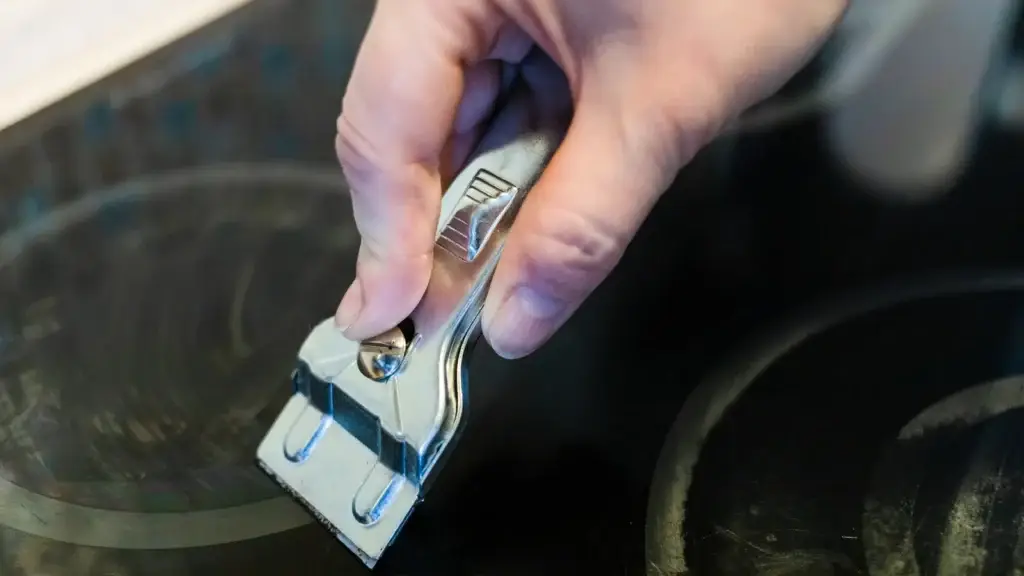
A glass stovetop is a special type of material known as glass-ceramic. Unlike regular glass, certain cleaning tools can permanently scratch a glass-ceramic surface. A scratched panel cannot be polished back to smooth.
Short answer: Allow the stovetop to fully cool before cleaning, except for sugar and melted plastic, which need dealing with straight away (see below). Always remove loose debris before wiping anything, to avoid scratching the surface. Apply a small amount of cooktop cleaning cream (or a paste of bicarbonate of soda and water for burnt-on food) to the stovetop and let it sit for 5 to 10 minutes to soften food and grease. Use a sharp razor scraper held at a low angle (roughly 20 to 45 degrees; check your manual) to lift stubborn residue. Rinse the stovetop and buff dry with a microfibre cloth. Never use scouring powder, abrasive pads, or steel wool, and avoid ammonia and chlorine glass cleaners.
Safer tools for a glass-ceramic stovetop
A glass-ceramic cooktop looks like glass but is a different material, and the wrong cleaning tool will mark it permanently.
Prior to any final inspection, the condition of the glass cooktop is closely monitored as part of a standard professional house clean. Providers who attend pre-inspection jobs across all five cities report scratched glass cooktops as one of the most prevalent issues they encounter, almost always caused during the cleaning process rather than the cooking process.
Cooktop manufacturers warn against abrasive cleaning materials, and the warning is not cautious language: abrasive pads and powders will permanently damage a glass-ceramic surface.
The usual causes of permanent scratching are:
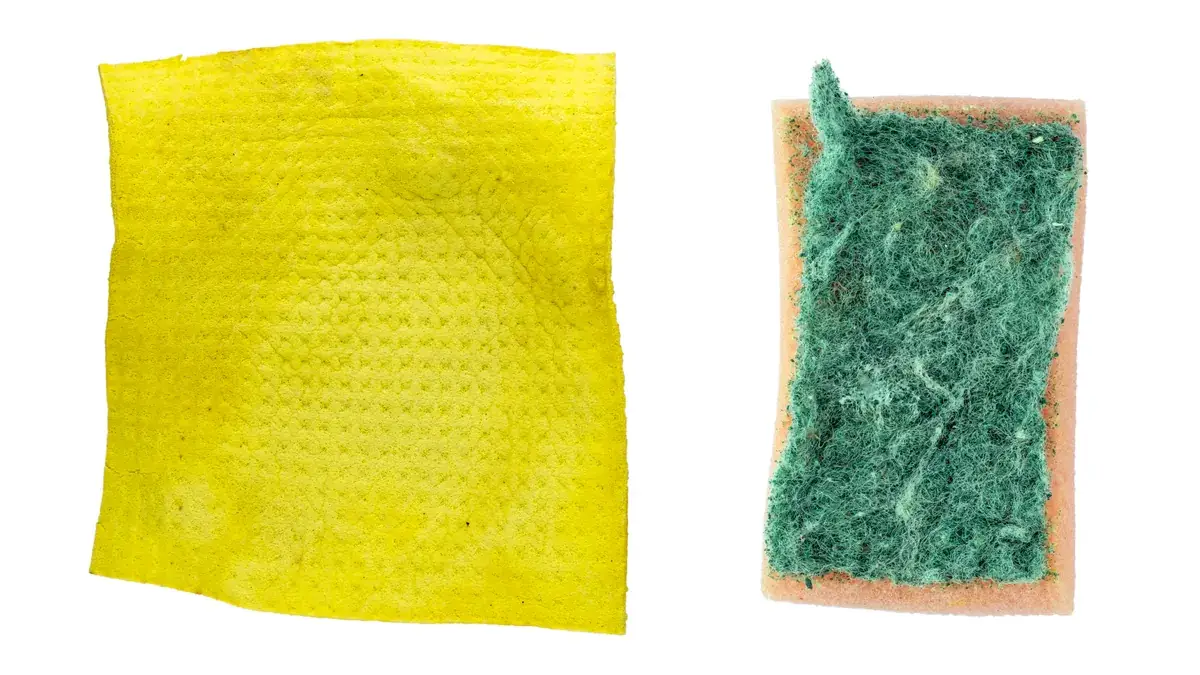
Abrasive scouring pads and powders. Scouring pads used to remove stuck-on food are abrasive, and contact with glass-ceramic causes immediate and permanent scratching. Scouring powders present the same problem in loose form. Ammonia and chlorine glass cleaners do not scratch mechanically, but manufacturers such as Bosch warn that they can damage or permanently stain the surface.
Loose crumbs and salt crystals under a cloth. This is the mechanism most people do not expect. A grain of salt or a fragment of dried food caught between a wiping cloth and the cooktop surface is dragged across it under pressure, producing fine scratches identical to those from a scouring pad. Always clear loose debris off the surface before applying any cloth or cleaner.
Sliding pots instead of lifting them. A single crystal of dried food or mineral residue sitting under the base of a pan can score a visible ring across the cooking zone in one movement.
Tools that won’t permanently damage the glass
| Safe to use | Not safe |
|---|---|
| Microfibre cloth | Green or grey abrasive scouring pads |
| Soft cloth or paper towel | Abrasive side of a kitchen sponge |
| Sharp single-edge razor scraper, held at a low angle (20 to 45 degrees; check your manual) | Steel wool of any grade |
| Plastic scraper | Scouring powders of any kind |
| Cooktop cleaning cream | Ammonia-based glass cleaners |
| Bicarbonate of soda paste | Bleach or chlorine-based cleaners |
| Sharp, clean scraper blade | Dull or nicked scraper blades |
A razor scraper surprises many people, but manufacturers permit a sharp scraper held at a low angle, roughly 20 to 45 degrees depending on the manufacturer, so check your manual. A vertical blade will gouge the cooktop permanently, and so will a dull or nicked one. The technique is the angle, not just the tool.
The correct order for daily cleaning
- Make sure the surface is fully cool, except for sugar, syrup or melted plastic (see the section below). Applying product to a warm cooktop bakes it in before it can be wiped away, leaving a filmed residue that is harder to remove than the original spill.
- If there are crumbs, salt, or other debris, brush or gently lift them off the surface first. Do not wipe with a cloth while loose particles are still sitting on the cooktop.
- Apply a small amount of non-abrasive cooktop cleaning cream to the surface.
- Work in gentle circular strokes with a folded microfibre cloth using even pressure.
- Wipe clean with a damp cloth, then buff dry with a clean dry microfibre cloth to prevent water spotting.
The whole process takes two to three minutes on a well-maintained stovetop. Fresh spills come off with almost no effort. The same spill reheated several times bonds to the glass-ceramic progressively, and what took two minutes this week may take twenty minutes and a razor blade by the end of the month.
How to remove burnt-on food safely
Carbonised residue that has been reheated more than once cannot be removed with a cloth alone. More pressure with the wrong tool causes more damage. More time with a softening agent is the correct response.
- Confirm the cooktop is fully cool. Sugar and melted plastic are the exception, covered in the next section.
- Apply a thick paste of bicarbonate of soda and a small amount of water over the burnt area. Bicarbonate of soda is a mild, non-abrasive cleaner, so it is safe on the surface.
- Cover the paste with a folded damp cloth and leave it for 15 to 20 minutes. The mild alkalinity softens the carbonised residue; the warmth trapped by the cloth speeds the process.
- Hold a sharp single-edge razor scraper at a low angle (roughly 20 to 45 degrees; check your manual) and push it forward under the softened residue. Keep the blade at that angle throughout.
- Remove the residue and paste with a damp cloth.
- Polish with cooktop cleaning cream and buff dry.
Sugar, syrup and melted plastic: the exception to “let it cool”
Manufacturers such as GE, Samsung Australia and Bosch say that sugar, syrup and melted plastic should be removed straight away, while the cooktop is still hot. Use a scraper and wear an oven mitt, then clean the cooktop fully once it has cooled. Sugar that cools and is then reheated can pit the glass, and a pitted panel needs replacing.
Stubborn stains and discolouration: what can and cannot be reversed
Some discolouration on a glass-ceramic cooktop is permanent. Knowing the difference is important before a final inspection.
Reversible:
- Fresh grease and food residue removes completely with the sequence above.
- White mineral haze from water or steam: loosen with white vinegar on a soft cloth, then follow with cooktop cleaning cream.
- Grey metal transfer marks from aluminium or stainless pan bases: these are metallic deposits sitting on top of the surface, not scored into it. They look like scratches but lift with cooktop cleaning cream and a soft cloth.
Permanent or likely permanent:
- Sugary spills left to cool and reheated. Reheated sugar can pit the glass, and the damage cannot be reversed. If pitting or indentation has already formed, the glass panel requires replacement.
- Aluminium or copper boil-dry deposits. When a pan with a thin aluminium or copper overlay boils dry, the residue bonds to the glass-ceramic and becomes permanent if the cooktop is heated again before it is removed.
- Rainbow or iridescent marks on the cooking zone. Some marks are a change in the glass-ceramic itself rather than a stain, and cleaning will not remove them. A technician should assess them.
- Damage from ammonia or chlorine cleaners. Manufacturers such as Bosch warn that these glass cleaners can damage or permanently stain the surface, and the damage cannot be cleaned away.
- Scratches. Any scratch that has physically displaced material from the surface is permanent. Light polishing compounds can reduce the visibility of very fine marks but cannot restore the surface.
Cleaning before a final inspection: the standard agents apply
The distinction at a final inspection is between soiling and damage, and each has different consequences.
Soiling (grease, carbonised food, mineral deposits) is the tenant’s job to clean. The Queensland Residential Tenancies Authority states on its fair wear and tear page that dirt, grime and grease are not fair wear and tear. Consumer Protection WA says the property must be handed back in a similar condition to how it was received, and clean. A soiled stovetop must be cleaned before handover.
Scratching is damage, not wear. The Queensland RTA’s example is scratches on kitchen benchtops from cutting food, and the same reasoning applies to a cooktop: scratches that cannot be polished out are damage. A scratched glass cooktop panel may require full panel replacement rather than cleaning, and the cost sits with whoever caused the scratching, whether during cooking or during a cleaning attempt using the wrong tool.
Pre-existing condition is always the starting point. Scratches or permanent discolouration already documented in the ingoing condition report are protected: the tenant cannot be charged for damage that preceded the tenancy. Check the stovetop against the entry report before you start cleaning it.
For the full picture of what agents check at a final inspection, including the standards applied to appliances across each state, that article covers the exit comparison process in detail.
Professional clean versus DIY
A stovetop that has had months of carbonised build-up takes significantly longer to clean than one maintained regularly, and the risk of scratching increases with both the effort required and the temptation to reach for a harder tool when progress is slow. Ovens follow the same pattern, covered in the limits of chemical-free oven cleaning.
This starts with understanding what falls within a standard clean’s scope. During a routine visit, the provider carries out a quick clean of the stovetop surface. Removal of heavy, carbonised build-up that requires extended soaking and scraping sits in deep clean territory. Whether a deep clean is warranted depends on the actual condition of the cooktop; booking the wrong scope means paying for a job that only addresses the easy areas and leaves the stovetop looking the same.
When tenants are approaching a handover, the question becomes whether the time and risk of DIY cleaning outweigh the cost of a professional job. Would you rather spend a few hours of your own time and risk damaging the surface, or have it done properly? Booking a house clean through Urgent Pro connects you with verified local providers who assess the cooktop condition before the price is confirmed. The range of cleaning services available covers both standard and deep clean scope, booked separately to match what the surface actually needs.
FAQs
Can you use a razor blade on a glass stovetop?
Yes, if it is held correctly. Manufacturers permit a sharp scraper held at a low angle, roughly 20 to 45 degrees depending on the manufacturer, so check your manual. Push forward under lifted residue rather than digging down, and never use a dull or nicked blade. Hold the blade vertical and apply downward pressure and the result is permanent damage.
How do you remove burnt-on food from a glass cooktop?
Make a thick paste of bicarbonate of soda and water and apply it to the burnt area. Cover the paste with a damp cloth and leave it for 15 to 20 minutes. Once softened, use a razor scraper at a low angle to lift the residue off. Wipe clean, then finish with cooktop cleaning cream. If the residue is stubborn, more soaking time is the answer, not more scrubbing force.
Is baking soda safe on a glass stovetop?
Yes. Bicarbonate of soda is a mild, non-abrasive cleaner. It is far safer to apply the paste and leave it to work than to use it dry and scrub it aggressively into the surface.
How often should I clean my stovetop?
After every cook, or at minimum once a week for a household that cooks daily. Fresh spills take two to three minutes to remove. The same spill reheated several times may take twenty minutes and a razor blade. Regular light cleaning is safer and significantly more efficient than infrequent, heavy scrubbing sessions, which is also when scratching is most likely to occur.
What causes rainbow colouring on a glass cooktop, and can it be cleaned off?
Rainbow or iridescent patches on the cooking zone are usually a change in the glass-ceramic itself rather than a stain, and some marks are permanent. Have a technician assess it. Whether it creates an issue at a final inspection depends on whether it was already documented in the entry condition report at the start of the tenancy.