
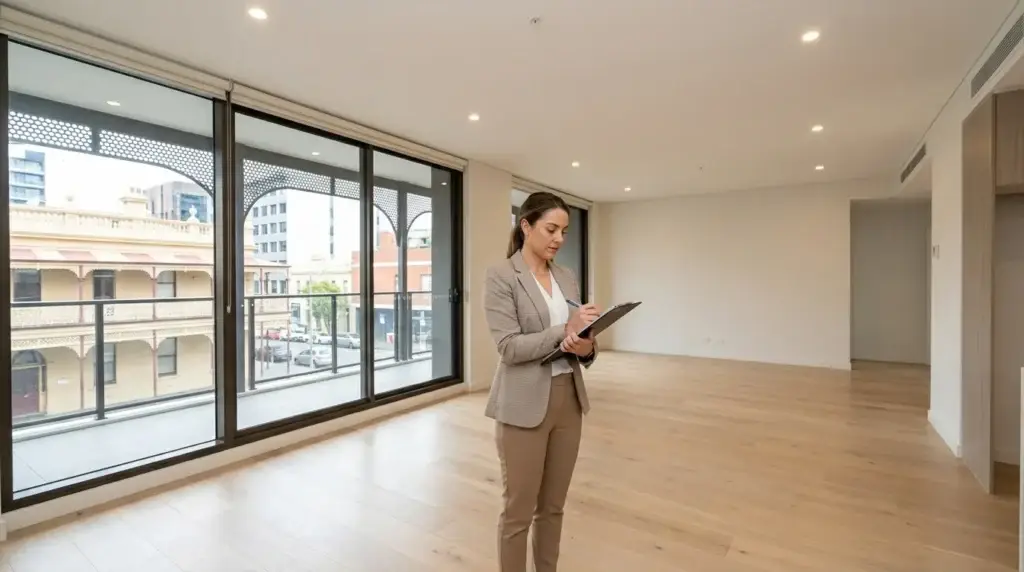
A property condition report is a written record of a rental property’s condition completed at the start and end of a tenancy. The entry and exit reports are compared side by side to determine whether the tenant caused any damage. That comparison is what decides whether your bond is returned in full.
What a Property Condition Report Actually Is
Most tenants sign their lease, receive a copy of the condition report, glance at it, and file it away. That document is one of the most important pieces of paper in the entire tenancy. At the end, when an agent is standing in the property making notes, the entry report is the only thing in the room that proves what the place looked like when you moved in.
A property condition report records the state of every room, fixture, fitting, and surface in the rental at a specific point in time. It is not a cleaning checklist. It is not a maintenance request form. It is a legally significant document that creates the baseline for every bond-related decision that follows.
Understanding how it works, and what makes one hold up in a dispute, is the clearest thing you can do to protect your bond before you even book a vacate clean or end of lease service.
Every Australian state and territory requires a property condition report, but the names, forms, timelines, and dispute processes differ significantly across the country. The document goes by several names depending on where you live: property condition report, condition report, entry condition report, exit condition report, ingoing report, outgoing report, or in common usage, a bond report or move-out report. In Western Australia it is formally prescribed as the Property Condition Report (Form 1) under Section 27C of the Residential Tenancies Act 1987. In Queensland, the Residential Tenancies Authority (RTA) uses specific ingoing and outgoing inspection forms. In New South Wales and Victoria, prescribed forms exist under each state’s residential tenancies legislation.
How the Report Is Completed and Delivered
The entry condition report must be completed before you move in, while the property is empty and in its pre-tenancy state. It is filled out room by room, item by item: walls, doors, windows, floor coverings, kitchen appliances, bathroom fixtures, external areas, and anything else in the property. For each item, the condition is recorded in writing. Not just a tick. A specific description of what is there and what state it is in.
In WA, the landlord or property manager must provide two signed copies within seven days of you taking possession. You then have seven days to review both copies, note any items you disagree with, and return one marked-up copy.
If you do not return it within those seven days, Section 27C of the WA Residential Tenancies Act deems you to have accepted the report as a true and accurate description of the property’s condition. That is not a technicality. It has real consequences. If something was recorded incorrectly and you did not raise it within the window, it becomes significantly harder to challenge at the exit inspection.
The practical lesson: receive the report, read it carefully, and walk through every room with it in hand. Note anything that does not match what you see. Marks on walls. Worn patches on carpet. Stains that were already there. Pre-existing rust on tapware. If it is not in the report and you do not add it, you may be held responsible for it at the end.
For Perth tenants booking a vacate clean in Perth, agents cross-reference the exit condition against the entry report item by item. A verified independent provider who understands WA inspection expectations makes a material difference to the outcome.

Why “Good Condition” Is Not Good Enough
The most common mistake on both entry and exit reports is vague description. “Good condition.” “Clean.” “OK.” These phrases look like they say something, but in a bond dispute they say almost nothing.
At the exit inspection, the agent compares the exit report against the entry report item by item. If the entry report says “carpet: good condition” and the exit report notes a stain near the lounge doorway, there is no way to tell whether that stain was already there. The agent can, and often will, record it as damage.
Contrast that with an entry description that reads: “carpet: beige, short pile, light wear in the traffic path from entry to kitchen, no stains visible.” At exit, if a new stain appears near the doorway, the entry description makes it clear that stain was not documented on arrival. That is the difference between a claim sticking and being rejected.
Consumer Protection WA notes explicitly on the Form 1 itself that photographs do not substitute for accurate written descriptions. Photographs support the written record. They do not replace it.
The test for any description is simple: if someone reads this entry description at the exit inspection twelve months from now, will they be able to tell whether the condition has changed?
What the Report Covers Room by Room
A standard property condition report covers every room and area in the property. In WA, the Form 1 structure includes entry and hallways, lounge and dining areas, the kitchen (with specific line items for the oven, rangehood, stovetop, cupboards, and benchtops), each bedroom, each bathroom with separate line items for the bath, shower screen, toilet, and exhaust fan, the laundry, and all external areas including the garden, lawn, driveway, letterbox, clothesline, and outbuildings.
For Perth properties specifically, the report should address fly screens and louvre windows. Both are common in WA construction and consistently inspection-sensitive. Alfresco areas, which are standard in post-2000 Perth homes, are included in the outdoor section. Evaporative cooling vents and ducted reverse-cycle air conditioning returns are fixture items that agents pay close attention to. Hard water staining on shower screens and tapware is one of the most frequently disputed items in Perth bond inspections. If it was there when you moved in, it needs to be documented.
For furnished properties, every piece of furniture must be listed with its condition noted. A furnished tenancy without a complete furniture inventory in the entry report leaves the landlord with no documented baseline to claim against at exit. It also leaves you with no proof that damage to a piece of furniture was pre-existing.
What Happens at the Exit Inspection
At the end of the tenancy, the agent completes the exit condition report and compares it directly against the entry report. In WA, the exit report must be completed within 14 days of the tenancy ending, and you are entitled to be present at the exit inspection. Attending is worth doing. You can address concerns on the spot rather than receiving a list of deductions after the fact.
Where the exit condition is worse than what the entry report recorded, and the difference goes beyond fair wear and tear, the agent may claim against your bond for cleaning costs, repairs, or replacement.
Fair wear and tear is the distinction that causes the most friction. A worn patch on a carpet in a high-traffic area after a five-year tenancy is wear and tear. A stain caused by something spilled and left is damage. The entry condition report is the document that makes this distinction provable. Without a clear baseline, the line between pre-existing wear and tenant-caused damage becomes a matter of opinion. Opinion rarely favours the tenant.
A professional vacate cleaning service can address the cleaning component of your exit obligations, but the condition report handles everything else. Damage, wear beyond normal use, items requiring repair or replacement: these are separate from cleaning, and they are what the report is designed to document.
Two other tasks happen alongside the clean that the condition report directly affects. Rubbish and bulky items left behind can become a bond claim. Clearing bulky items before handover removes that exposure entirely. Furniture you are not taking also needs to leave before the agent arrives. House removalists can be coordinated around your clean date so the property is empty at inspection.
How Bond Disputes Work, State by State
The condition report is the central piece of evidence in any bond dispute. Where that dispute is resolved, and how, depends on which state you are in.
| State | Form name | Entry delivery | Tenant response window | Deemed acceptance? | Exit report deadline | Dispute forum |
|---|---|---|---|---|---|---|
| WA | Property Condition Report (Form 1) | Within 7 days of possession | 7 calendar days | Yes, explicit in s27C | Within 14 days of end of tenancy | Commissioner for Consumer Protection (from March 2026); Magistrates Court on appeal |
| QLD | Entry Condition Report (Form 1a) / Exit Condition Report (Form 14a) | At or before key handover | 3 business days | Yes | Within 3 business days of vacating | Queensland Civil and Administrative Tribunal (QCAT) |
| NSW | Condition Report (Schedule 2 form) | Within 7 days of key handover | 7 calendar days | Yes | As soon as possible after vacating | NSW Civil and Administrative Tribunal (NCAT) |
| VIC | Condition Report (Consumer Affairs Victoria prescribed form) | Before or at start of tenancy | 5 business days | Yes | Within 10 business days of end of tenancy | Victorian Civil and Administrative Tribunal (VCAT) |
A note on WA specifically: as of March 2026, most WA bond disputes are now handled in the first instance by the Commissioner for Consumer Protection through the Determinations Branch of Bonds Administration, not the Magistrates Court. If you cannot agree with the landlord on bond deductions, the Commissioner reviews the evidence, including both condition reports and photographs, and makes a determination. Either party can appeal to the Magistrates Court if they disagree with the outcome.
For QLD tenants managing a bond clean, the RTA exit condition report uses specific forms. The RTA publishes its exit condition report guidance at rta.qld.gov.au. The report is what the clean is measured against, and what QLD agents check room by room follows the same structure.
For WA tenants, Consumer Protection WA publishes the official Form 1 and guidance at consumerprotection.wa.gov.au. The report is what a vacate clean is measured against, and what Perth agents check room by room follows the same structure.
For NSW, NSW Fair Trading’s guidance on condition reports and rental bonds is at fairtrading.nsw.gov.au.
What the Condition Report Cannot Do
The condition report documents condition. It does not guarantee your bond back. Bond return depends on several factors at once: the cleaning standard at exit, whether damage goes beyond fair wear and tear, whether rent is paid to date, and whether any other valid claim exists.
A thorough condition report protects you from unfair claims for damage that was already there. It does not protect you from claims for damage that genuinely occurred during the tenancy, from cleaning costs where the property was not returned reasonably clean, or from rent arrears.
The most practical use of the condition report is this: read it carefully when you receive it, add anything that is missing, photograph everything you note, and keep both the report and your photographs for the entire tenancy. At exit, photograph the same areas in the same rooms. That matched set, entry photograph next to exit photograph, is the most effective evidence format in any state’s dispute process.
FAQs
What is a property condition report in a rental property?
A property condition report is a written record of a rental property’s condition, completed at the start and end of a tenancy. Entry and exit reports are compared side by side to determine whether the tenant caused any damage beyond fair wear and tear, which directly affects whether the bond is returned.
What happens if I don’t return the condition report in time in WA?
Under Section 27C of the WA Residential Tenancies Act, if you do not return a marked-up copy of the entry condition report within seven calendar days of receiving it, you are legally taken to have accepted the report as accurate. Any items recorded incorrectly that you did not raise become very difficult to dispute at the exit inspection.
Can I dispute items on the property condition report?
Yes. When you receive the entry condition report, you have a set window: seven days in WA and NSW, three business days in QLD, five business days in VIC. Mark any items you disagree with and return the amended copy to your landlord within that window. Anything you do not raise in time is treated as accepted.
Does the property condition report decide my whole bond claim?
The condition report is central to any bond dispute about damage or cleaning, but it is not the only factor. Bond claims can also include unpaid rent, replacement costs for damaged items, or other costs from the tenancy. The condition report protects you against unfair damage claims. It does not eliminate all possible deductions.
What should I photograph when I move into a rental?
Photograph every room from a position that shows the overall condition, then photograph any item noted in the condition report as damaged, worn, or stained. Pay particular attention to carpet stains and worn areas, wall marks and scuffs, bathroom grout and silicone condition, fly screens, window tracks, oven interior, and external areas including the garden and any paved surfaces. Date-stamp everything and store it alongside your copy of the report.