
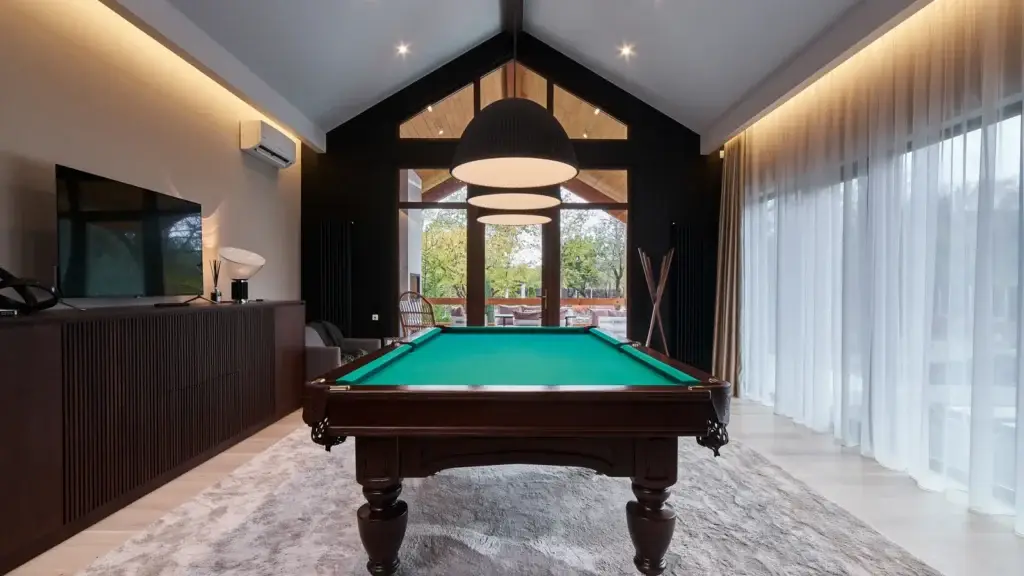
The most expensive mistake in a pool table move happens before the table leaves the room. Most people look at a pool table and see heavy furniture. What they should be looking at is the stone.
Beneath the felt lies a slate bed, and slate is a natural rock that does not flex, bend, or absorb impact. It fractures. Every pool table move that goes wrong does so at that point: someone treated the slate like it was timber.
How Heavy Is a Pool Table?
According to Alcocks, a billiard table manufacturer in East Malvern, Victoria, a standard 8-foot slate pool table weighs 270 to 290 kilograms fully assembled. Of that, about 175 to 195 kilograms is slate, with the remaining weight made up of the timber frame, legs, felt and hardware. In a 3-piece configuration, each slate panel weighs approximately 58 to 65 kilograms. A 9-foot table is heavier: 325 to 345 kilograms total, with each of the three slate panels weighing approximately 70 to 75 kilograms each.
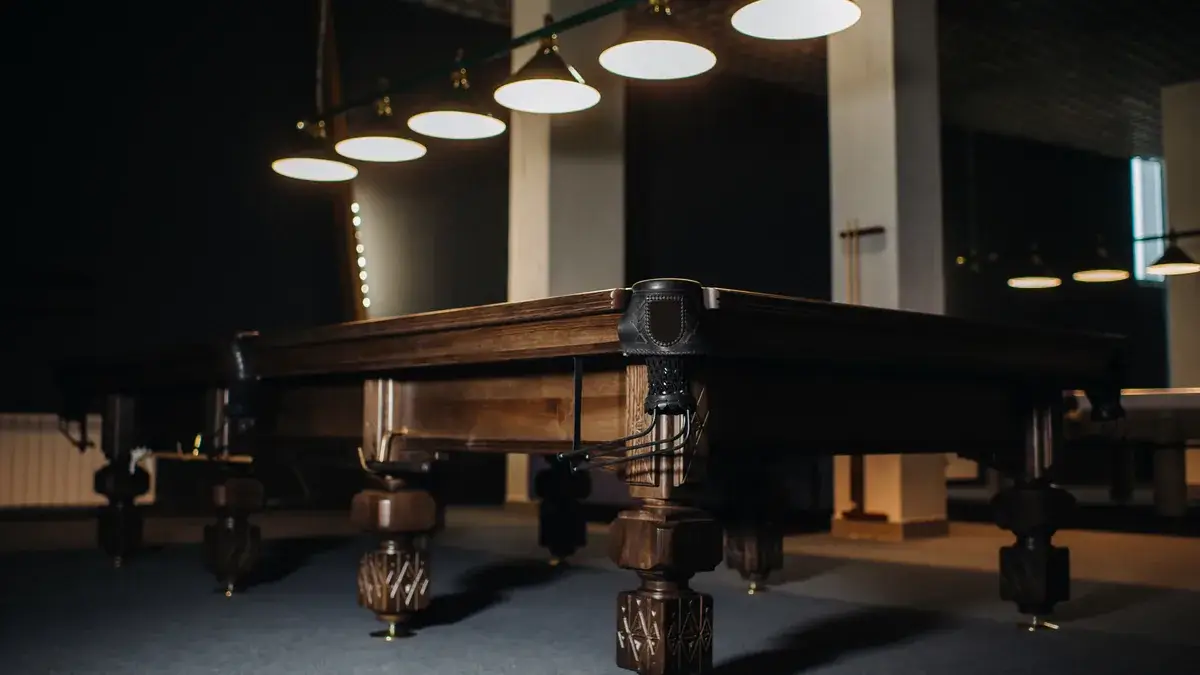
The per-panel weight is what matters for the move. Each section must be lifted out separately, carried through doorways and down stairs, and transported flat in the vehicle. Best Rated Transport, an Australian specialist transport marketplace, confirms that verified pool table operators work to a practical handling weight of 50 to 80 kilograms per panel, which is why at least two operators are needed for every lift. That weight combined with the fragility of the material is what pushes this outside standard furniture removal.
If a panel is dropped, tilted sharply, or allowed to strike another hard surface, it cracks. Replacing a cracked slate panel in Australia typically costs $800 to $2,500, depending on the table size and whether replacement stone is stocked locally or cut to order. That figure does not include re-felting. Felt is often reused if it is in good condition; a retailer or specialist will replace it if it is damaged or worn, which adds $330 to $440 for a standard 8-foot table. A single cracked panel can therefore cost as much as a new entry-level table to fix.
The playing surface must also be level. The World Pool-Billiard Association specifies that a pool table must be flat to within 0.51 mm over its entire length and 0.25 mm across its width. The joints of the slate panels must be level to within 0.13 mm when shimmed. These are the World Pool-Billiard Association’s tournament specifications for the slate itself, and they do not necessarily apply to home tables, so treat them as a benchmark rather than a pass mark. This requires a precision machinist’s level. A spirit level will not give an accurate enough reading. A general removalist does not carry the necessary equipment to do this and most do not have the training.
For the house move beyond the pool table, house removalists on the Urgent Pro network handle standard furniture and can be booked to coordinate around the specialist pool table job.
One-Piece vs Three-Piece Slate: Why the Distinction Matters
The slate configuration affects both how the move is handled and how levelling is performed, and it is the first question a specialist will ask.
With three-piece slate, the total slate weight is divided across three separate panels. Each section is more manageable through doorways and around tight corners. The trade-off is that after every disassembly, the seams must be precisely realigned and the entire table re-levelled from scratch. The seam compound is removed before disassembly and reapplied correctly after the slate is repositioned.
One-piece slate is more common in smaller British-style tables: the 6-foot and 7-foot pub tables that often end up in domestic games rooms. There are no seam alignment issues, but the single panel is much harder to move through a standard doorway. On an 8-foot table, a one-piece slate can weigh 175 kilograms or more as a single piece, which requires specialist equipment to move safely.
Neither configuration can be safely moved while still bolted into the table frame. Both must be removed before the table goes anywhere.
What a Specialist Pool Table Move Involves
A competent move follows a specific sequence at origin, in transit, and at the destination. Any operator who cannot walk through all three stages in detail before accepting the booking is not a specialist.
At origin: Pockets are removed and individually wrapped. Cushion rails are unbolted from the frame. The felt is carefully separated from the slate, assessed for reuse, and rolled around a padded tube. Slate panels are unbolted and lifted individually. Each panel is wrapped and loaded flat in the van, not tilted on its edge. Tilting slate panels vertically during loading is one of the most common causes of fracture. The frame and legs are disassembled last, with all hardware bagged and labelled by position so reassembly does not become a guessing exercise.
In transit: Slate panels travel flat and independently secured. They should not share the vehicle with heavy items that could shift onto them. A van with a liftgate or specialist slate dolly is the appropriate equipment for a standard local move.
At destination: The frame and legs go in first, in the table’s final position. Moving a table after it is partly reassembled risks further damage. Slate panels are laid in sequence and bolted down. Shims are used to level the surface; the seams are then filled and smoothed with a jointing compound. Felt is re-installed and stretched. The specialist checks levelness across the full length, the width, and both diagonals before the job is complete.
Why Using a General Removalist Costs More in the End
Most general removalists will decline a slate pool table. The ones that accept the job without specialist equipment and training are the real risk. Slate panels are large and heavy, and without a precision level, there is no way to confirm the table has been reassembled correctly. Without the right lifting equipment, the loading step carries an unnecessary cracking risk.
What typically happens is a customer books a standard removalist to transport their pool table. The customer discovers the table is not playing level or has visible damage. That customer then books a specialist to fix it. By the time the correction is booked, the customer has paid twice for the move, and the repair is sometimes more expensive than the original specialist job would have been.
Slate damage and levelling failures are common complaints across pool table moves on the Urgent Pro network where customers initially used an unqualified operator.
What It Costs to Move a Pool Table in Australia
Pool table specialists quote the job as a fixed price, not an hourly rate. The fixed price reflects disassembly time, specialist equipment, slate transit requirements, reassembly and levelling. A quote that strips out any of those steps understates the real cost of the job.
For interstate moves, indicative 2026 prices from specialist Australian operators:
| Table type | Short route (e.g. Sydney to Melbourne) | Medium route (e.g. Melbourne to Adelaide) |
|---|---|---|
| Slate, 7-foot | $600 to $900 | $800 to $1,200 |
| Slate, 8 to 9-foot | $800 to $1,200 | $1,000 to $1,600 |
Local within-city moves cost less, but the same specialist requirements apply. The price climbs with stairs at either property, tight doorways or long carries, one-piece slate, and any re-felting required because the existing felt is damaged or worn.
For information on what is and is not covered when things go wrong during a removal, the Urgent Pro service warranty for removalist jobs sets out the damage reporting windows for both visible and concealed damage.
Move It or Sell It?
This question is worth working through before getting quotes, because the answer changes the whole conversation.
Moving is unlikely to make sense if:
- The resale value of the table is close to or below the cost of the move
- The table is a budget model and the move is a long interstate route
- The new property does not have enough space to accommodate the table
- The table already needs re-felting or new cushions
- One-piece slate makes the move significantly more complex and expensive
Moving a quality Australian-made or imported slate table is clearly worth it if the new property has the right room and the move quote is materially below what a replacement would cost.
For home relocations that also include furniture and boxes, house removalists on the Urgent Pro network handle the standard items while the specialist covers the pool table separately. Both jobs can be coordinated through the same booking flow. A guide to what removalists will and will not take on a standard booking covers the full picture of specialist-item categories. For questions about transit coverage, how removalist insurance works in Australia explains what a standard removalist policy typically includes and excludes.
What to Ask Before Booking
Not every operator who accepts a pool table booking has experience with slate beds. These questions separate specialists from generalists who will learn the job at your expense.
Do you load slate panels flat or on their edge during transit? What levelling equipment do you use, and what levelling method and tolerance do you work to on reassembly? Is precision levelling included in the quoted price, or billed separately? Can you provide written confirmation that your goods-in-transit insurance covers slate-bed pool tables specifically? What is your process if a panel cracks during the job?
An experienced operator answers each of these specifically and without hesitation. Vague responses to the loading question or the insurance question are a reason to keep looking. The Urgent Pro service warranty for removalist jobs sets out the damage and reporting standards all removalists on the network are required to meet.
Frequently Asked Questions
Can two people move a pool table?
Not safely, without specialist equipment. Each slate panel on a standard 8-foot Australian table weighs 58 to 65 kilograms. Handling a panel through doorways and onto a vehicle requires purpose-built slate lifters, and the reassembly and levelling stages require a precision machinist’s level and shimming experience. Two people with standard equipment cannot complete the job correctly.
Do you have to replace the felt when moving a pool table?
Not always. Felt is often reused if it is in good condition; a retailer or specialist will replace it if it is damaged or worn. Stapled felt is easier to remove and reuse than glued felt if it is handled carefully during disassembly. If the felt does need replacing, doing it while the table is already disassembled saves a second call-out.
Can a general removalist move a pool table?
Most will decline a slate bed table. Those who accept without specialist equipment are the risk. The loading requirements (flat transit for each slate panel), precision levelling tools, and seam-filling on reassembly are specific to this job. A removalist without a machinist’s level cannot verify the table is correctly set up after reassembly.
Can you move a pool table in a ute or trailer?
A ute or open trailer is not appropriate for a slate pool table. Slate panels must travel flat and independently secured in an enclosed van to prevent them shifting, taking vibration on exposed edges, or being affected by weather. Transporting slate panels upright in a trailer or unsecured in a ute tray is one of the most common causes of transit cracking.
How long does a pool table move take?
Disassembly of a standard 8-foot slate table by a specialist takes 1.5 to 2.5 hours. Reassembly and levelling at the destination takes a similar amount of time. Budget at least a half-day for the complete job at both ends, plus transit time between properties.
What happens if the slate cracks during the move?
Replacing a cracked panel in Australia costs $800 to $2,500 depending on the table size and whether replacement stone is stocked locally or cut to order. Re-felting adds another $330 to $440. Confirm before booking that the operator’s goods-in-transit policy covers slate-bed pool tables specifically, and get that confirmation in writing. If an operator cannot confirm this clearly, the financial risk of a cracked panel sits entirely with you.