

Spring cleaning during September is a tradition for many Australian households. Not only do the days grow longer and the windows need to be opened, but after the long cool months indoors, the house genuinely feels like it needs a deep clean. Unfortunately, the warmer months often come and go with many houses still in need of a good spring clean. A room-by-room checklist helps make the task more manageable.
Before You Begin
While a spring clean can easily be drawn out, the biggest time waster is usually having to redo tasks. This happens when you fail to plan what you will need before you start cleaning a particular area.
There are three key things to keep in mind for the day to be a success.
Be sure to declutter first. The benchtops in your home will no doubt be covered in junk mail and school papers if they have not already been cleared, and a large appliance will obstruct your view when you are trying to wipe down a surface.
Be sure to work in a particular order. It is best to start with the ceiling fan and work your way down to the floor. This prevents dust from falling onto surfaces you have already cleaned.
Be sure to finish one room before moving on. The key to not doubling back on your work is to complete each room fully before starting the next. If an area needs a second pass, do it immediately rather than coming back to it later in the day.
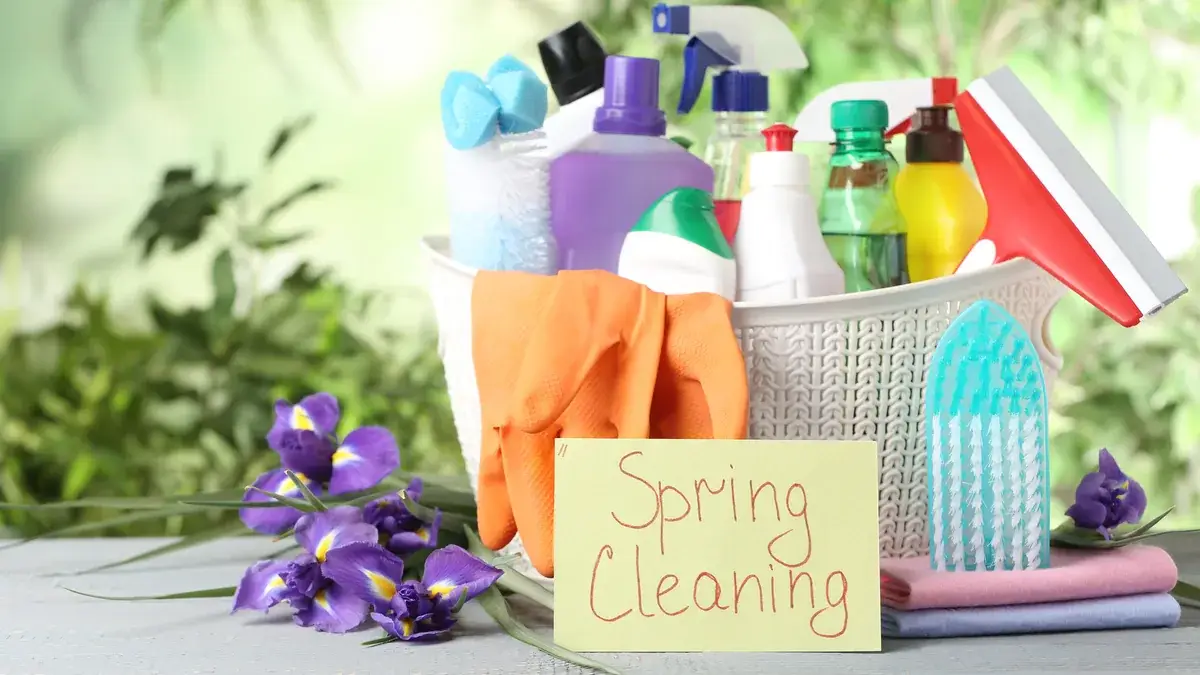
You will want to gather your supplies before you start. Keeping a caddy with all your supplies as you move from room to room helps increase your efficiency. You can also save time by labelling your cleaning cloths by area, as people are less likely to mix them up. Colour-coding for glass, kitchen and bathroom is a simple system that works well.
There are two cautions worth covering before you start. Wear gloves when cleaning, and especially so in bathrooms. Many people assume the only dangers in cleaning come from mixing bleach with similar products, but there are actually many other products that are unsafe to mix with others. As a general rule of thumb, if you have a sensitivity to mould or are someone with asthma, you should avoid cleaning up large amounts of mould yourself.
On timing, pick a dry breezy day when you can leave windows open to allow cleaning solutions to evaporate from surfaces. If you live in an area with significant pollen or bushfire smoke, the air and surfaces will be considerably cleaner after rain, and you can schedule your deep clean right after.
Knowing the Differences
A spring clean is different from your regular cleans because it focuses on things that are not cleaned as frequently. These things usually take longer or require more effort, and are the jobs most people keep postponing because of more time-sensitive tasks.
What is typically included in a spring clean that would not be in routine home maintenance? The interiors of ovens and microwaves, refrigerator interiors, exhaust fan and light fixture covers, ceiling fans, door and skirting boards, A/C filters and vents, blinds, and window tracks and glass. All of these things are usually skipped during routine home cleanings booked weekly or fortnightly.
When determining whether to do a deep clean yourself or book a professional, the guide to when a deep clean is the right choice is a useful reference. A standard clean sets out what a regular house clean covers and what it doesn’t and helps identify where a regular home cleaning ends and a more thorough clean begins.
Springtime is also the moment to reverse your ceiling fans to turn in the other direction for summer. While doing this, take the opportunity to clean the blades. Dust builds up on fan blades through winter and falls onto every surface below the moment the fans run at speed. Making the switch early in spring should be one of the first things you do.
A/C filters and vents also need attention at this time of year. September is often the only month where the A/C and the heater are both used close together, and a blocked filter at the start of summer is the most common A/C complaint.
During winter, fly screens collect grime and fine dust. Remove them and hose them down outside, then let them dry completely before replacing them.
In the kitchen, start with the jobs that need time to work. Putting the oven racks in a sink to soak is a good way to begin because it lets you get on with other kitchen tasks while the racks soak.
Reasons It Is Important to Deep Clean in Spring
Clean oven interior and racks. The cooled and hardened grease inside the oven is even more difficult to clean after months of underuse. Spring is the natural reset point for the oven.
Clean the microwave. Food particles and grease splatter harden to the microwave walls and the turntable during winter.
Clean the fridge and remove old food. Old food and condensation build-up increase the risk of food-borne illness and cross-contamination. Clean the interior before summer temperatures arrive.
Clean the range hood. The filter should be cleaned to remove grease and food build-up that has accumulated over winter.
Clear and wipe cupboards and drawers. Discard expired food from the pantry and wipe shelves before restocking.
Clean behind and under the fridge. Dust and grease build-up in this area attract pests and reduce the fridge’s energy efficiency.
Clean the dishwasher and descale the kettle. Limescale build-up reduces the efficiency of both appliances and should be cleaned at least once a year.
Wipe door frames and skirting boards. Grease travels further than expected in a kitchen environment and builds up on skirting boards nearest the cooktop.
Bathrooms
| Task | Why it Matters in Spring |
|---|---|
| Clean exhaust fan cover and housing | Dust and mould can build up on exhaust fans over winter, and the cover is often missed during regular cleans |
| Scrub grout and reseal if needed | Winter grout absorbs more moisture and mould can grow; spring is the time to treat before the summer mould season |
| Clean behind and below the toilet | Odour can build up over time if this area is not regularly cleaned; it is commonly missed in routine cleans |
| Descale tapware and shower fittings | Descaling is harder the longer the build-up has been left; hot water use through winter accelerates limescale |
| Clean shower door tracks and seals | Soap scum and mould build up on the door and in the seals over time |
| Wipe light fittings and exhaust fan housing | Moisture and dust collect in bathroom light fittings and are rarely cleaned |
| Wash bath mats, shower curtains and towels | Bacteria and odour build up over winter when reduced outdoor drying time means these items get less sunlight |
When cleaning mouldy areas during the spring, open a window to improve ventilation and wear gloves to protect your hands. If the mould keeps returning to the same spot, the problem is moisture rather than cleaning frequency. Find the source first.
Bedrooms
Wash all bedding. Healthdirect identifies dust mites as commonly found in bedding and on mattresses. Washing bedding at a high temperature helps reduce dust mite allergens.
Rotate the mattress. Mattresses should be rotated to allow even wear and to help reduce dust mite build-up.
Vacuum the bedroom thoroughly. Dust and debris collect in corners and under furniture throughout winter. Move items out to reach the edges.
Clean ceiling fans. Before ceiling fan use increases heading into summer, remove dust from the blades. Do this before anything else in the room so the dust falls onto surfaces you have not yet cleaned.
Wipe wall-mounted shelving. Dust and dirt settle on folded clothes and shelving during the winter months.
Clean fly screens. Sand and fine dust collect in screens throughout winter and need flushing out before the warmer months when doors and windows are open constantly.
Store winter clothes and bring out summer clothes. Remove anything that has not been worn through winter and set it aside for donation.
Living and Dining Areas
Vacuum couch cushions. Remove cushions to vacuum the dirt and allergens that collect beneath them throughout winter.
Clean light fittings. Dust and insects collect on light fittings and lamp shades and are often ignored entirely.
Replace the A/C filter and clean vents. Make the switch from heating to cooling and give the vents a thorough clean while you are at it.
Skirting boards and door and window frames. These are magnets for dust and pet hair. Give them a thorough clean before the warm months begin.
Clean window tracks and glass. Spring light reveals streaks and grime from winter condensation immediately. Clean the tracks and the glass before opening windows for the season.
Vacuum behind and under furniture. Dust accumulates in room corners and along edges throughout winter and is not reached in a fortnightly clean.
Test smoke alarms and replace batteries. You are already up there replacing ceiling fan batteries, so do this at the same time.
If you have pets, wash the pet bedding and clean the hair and dander that has built up on furniture and carpet near the door. Vacuum upholstered furniture the pet uses regularly and treat any carpet stains near doorways.
Laundry
| Task | Why it’s Important in Spring |
|---|---|
| Clean the washing machine drum and seal | Front-loader seals can collect mould over the cooler, wetter months; pull back the rubber folds and check before wiping clean |
| Check and clear the dryer vent | Lint that collects in the dryer vent is a fire hazard; the vent and ducting should be checked and cleared annually |
| Clean the detergent dispenser drawer | Residue collects in the dispenser channels and obstructs the flow of detergent over time |
| Dust and wipe the laundry area | The wall and area behind the dryer collect significant dust and lint throughout the year |
Outdoor Areas
Spring is the time to start using outdoor living spaces again. Before the first warm weekend, give outdoor furniture, patios and the BBQ a proper clean.
Wash outdoor furniture and cushion covers. Check care instructions before washing outdoor fabrics; some materials need gentler treatment than others. Outdoor furniture exposed to the elements also fades from UV exposure through summer.
Clean the BBQ thoroughly before using it for the first time in the season. Remove the grease from the previous season, including the grill, burners and drip tray. Grease left in the BBQ through winter becomes harder to remove the longer it waits.
Remove fly screens, hose them down outside and let them dry in the sun before replacing them. The frames can collect significant grime and may need a light clean with a disinfectant solution before reinstalling.
Clean out the gutters. Blocked gutters cause overflow during heavy rain, and autumn leaves and winter debris should be cleared before the spring rains arrive.
Hard outdoor surfaces gather mould and algae during the cooler months. Pressure washing or scrubbing patios and driveways removes these before they become slip hazards.
For coastal properties, a rinse with fresh water in spring removes the salt air residue that accumulates on metal fixtures, railings and outdoor window frames before it causes lasting damage.
The Jobs Worth Leaving to Professionals
Spring cleaning usually includes professional carpet cleaning as part of the seasonal reset. Dust, pet dander and allergens from winter become embedded in carpet fibres and cannot be extracted by vacuuming alone. Routine vacuuming removes surface dirt but the deeper the dirt is embedded, the more effort is required to restore the fibres. Which carpet cleaning method suits your home depends on the carpet type, condition and drying time available.
When treating carpet stains yourself, do not scrub aggressively. Rubbing can spread the stain and damage fibres. Blot gently from the outside of the stain inward, and always check the carpet manufacturer’s care instructions before applying any product.
While you are having the carpets cleaned, have any stains removed from rugs and upholstery as well. Always read the care labels to check whether moisture-based methods are appropriate for the fabric.
Cleaning upper windows and exterior glass on higher floors is best left to professionals. Ground-floor windows are generally manageable yourself.
After the Spring Clean
The point of a thorough spring clean is not to repeat it in six months because the same jobs have built back up. A simple maintenance routine prevents that.
Weekly: Wipe down kitchens, floors and bathrooms. Doing this prevents the build-up of soap scum and grease that requires significant effort to remove at spring.
Monthly: Washing machine and dryer seals, exhaust fan filters, window tracks and appliance filters. These will be a big job come spring if they are left until then.
Seasonally: Put off-season clothes away, clean and vacuum upholstery, check areas prone to mould such as the laundry, and reset your outdoor spaces. It takes around fifteen minutes a month and is considerably easier than finding a full year’s worth of cleaning jobs at once.
FAQs
When is the best time to do a spring clean in Australia?
September and October are the best months. The weather is still cool enough to open the house up comfortably, and you are clearing winter dust and moisture while preparing for the warmer months ahead.
What is the difference between a spring clean and a regular house clean?
A spring clean targets areas and appliances that are not cleaned during a routine visit: the inside of ovens and microwaves, light fittings, window tracks, exhaust fans and skirting boards. It takes considerably longer than a standard fortnightly clean.
What is the best order to clean the house in for a spring clean?
Start with the highest and most hard-to-reach areas such as ceiling fans and light fittings, then work your way down to the floor. Clean the least-used rooms first and finish each room completely before moving to the next.
Do I need to clean my A/C filter every spring?
Yes. The filter needs to be cleaned at the start of the cooling season and again at the start of the heating season. A clogged filter increases energy costs, reduces the A/C unit’s efficiency and circulates more dust and allergens through the house.
Is it necessary to have carpets professionally cleaned every spring?
There is no fixed rule, but a professional carpet clean each spring is a sensible reset for most homes. Winter leaves behind tracked-in dirt and allergens that are difficult to remove with vacuuming alone, and it is particularly worth doing if you have pets.
How long does a typical spring clean take for an average Australian house?
Cleaning a three-bedroom home thoroughly is typically a weekend job for most families. A professional team, splitting the rooms between them and using commercial equipment, gets through a similar scope far faster, usually within a single visit. For how much house cleaning costs and what affects the price of a one-off deep clean, the cost guide covers the main factors.